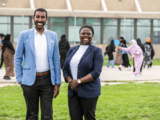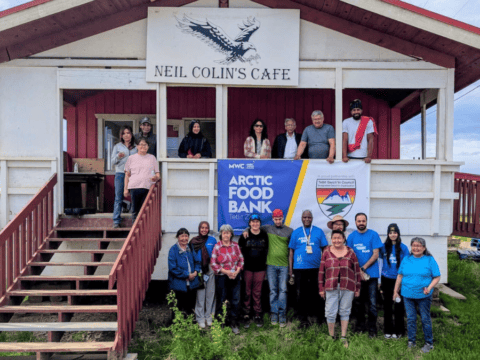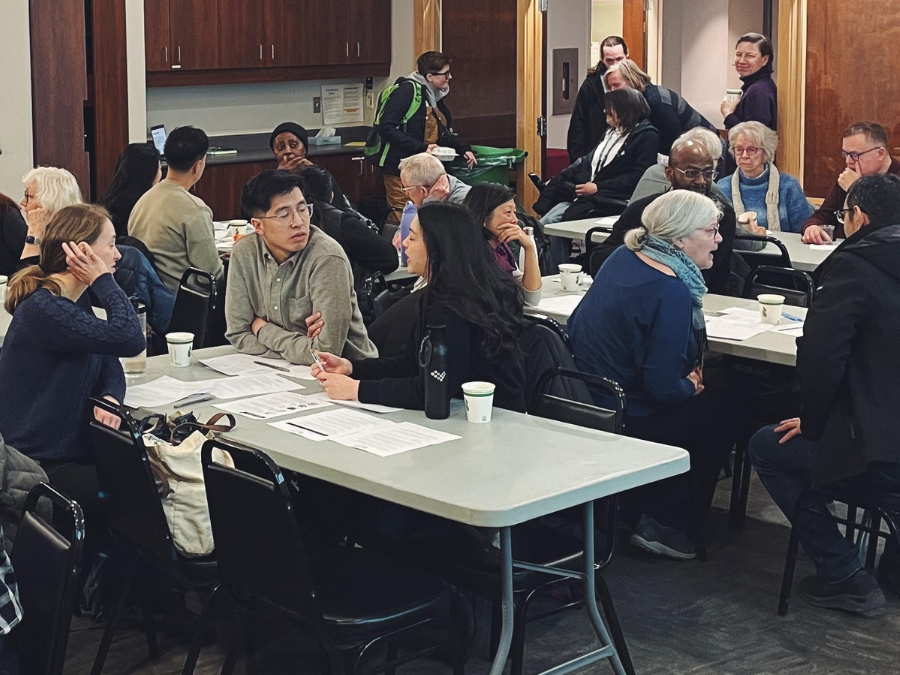
Last year, when Ontario started to shut down safe consumption sites across Toronto, some fellow community organizers and I hosted a gathering where we discussed the benefits of harm reduction and the most likely side effects of these closures.
In attendance were people who represented different perspectives and experiences. While there were tense moments of disagreement, something far more surprising happened: participants with fundamentally opposing convictions stayed in the conversation, even when it became uncomfortable.
You may unsubscribe from any of our newsletters at any time.
Watching this unfold, I thought to myself: this kind of exchange would never have happened online.
We often talk about polarization as a matter of ideology, but after years of community-based work, I’ve come to believe it is just as much about distance — the growing separation between people. That is why I’m convinced a return to neighbouring, and the proximity it creates, can help us contend with the divisions that are fracturing our communities.
For a long time, I assumed that people were simply the sum of their choices and beliefs, which made judgement feel justified. But then I moved a little bit closer, and I started reading the work of neuroscientist Robert Sapolsky, and now I have my doubts.
More on Broadview:
- Mark Carney’s antisemitism announcement sparks mixed reactions from Jewish Canadians
- The gospel according to Malcolm Gladwell
- Russell Brand, Andrew Tate and the performance of faith
In Determined: A Science of Life Without Free Will, Sapolsky argues that humans do not meaningfully possess free will because there are too many forces that shape how we act and who we become — from neurochemistry and environmental factors to trauma, upbringing and genetics. Even if one does not fully accept his conclusions on free will — and I’m not sure that I do — his work offers an important reminder: we are all formed by circumstances, many of them outside our control.
It is in proximity that we begin to understand these forces. Up close, we discover the stories and experiences that have shaped our neighbours, which can make empathy more possible. While it’s easy to dehumanize someone from a distance, it’s a lot harder to do so when you’re sitting in a local coffee shop, hearing about the life that formed them.
I’m learning, though, that distance isn’t the only force deepening divisions. Disgust plays a role too.
In Unclean: Meditations on Purity, Hospitality, and Mortality, professor Richard Beck draws on psychology to explore the role of disgust in our lives. Sometimes, disgust functions as a protective response to potential contaminants, like the smell of rotten meat. Other times, it becomes a socio-moral response that helps police relational boundaries.
While disgust itself is a perfectly normal human experience, it can lead to all kinds of harm when it’s engineered and weaponized to deepen political divides, entrench beliefs and dehumanize whole groups of people, like what is currently happening in online environments.
Neighbourhood life disrupts this cycle by forcing us to relate across differences. It teaches us that we’re better equipped to contend with disgust when the doses are more manageable — unlike the constant triggering that comes with scrolling — and when we are in proximity with real, knowable people we can’t fully curate.
I now realize that for hospitality to emerge the way it did at our harm reduction event, participants had to suspend more than disagreement. They had to suspend both the visceral disgust that often comes with imagining drug use and the socio-moral disgust attached to the stigmas surrounding people who use drugs.
All of this has taught me an important lesson: while disgust is part of our programming, we can learn to temporarily suspend it. When we do, the possibility of more humanizing policies, and a deeper presence with others, increases.
Of course, proximity does not excuse harmful ideas or actions. Moving closer to people may deepen empathy, but it should not stop us from confronting injustice. Yet when we embrace a more local life — moving toward difference instead of retreating from it — something in our posture changes, especially toward those we see as different from ourselves.
***
Steve MacDouell writes at the intersection of urbanism, faith, and community formation while pastoring with FreeChurch Toronto.
Thanks for reading
Independent journalism rooted
in faith and justice is under threat
Broadview is the only media organization in Canada offering thoughtful, values-driven journalism from an inclusive, progressive Christian perspective. But our work depends on your support. If you value what you've just read, please act now.
A gift today helps keep this journalism alive tomorrow.
With gratitude,