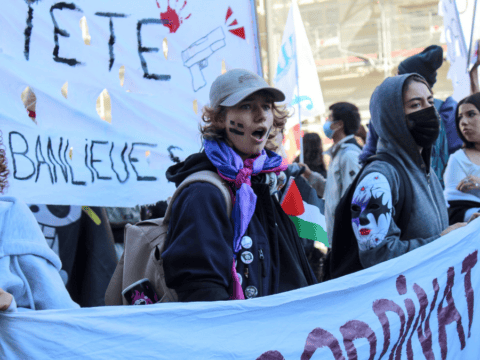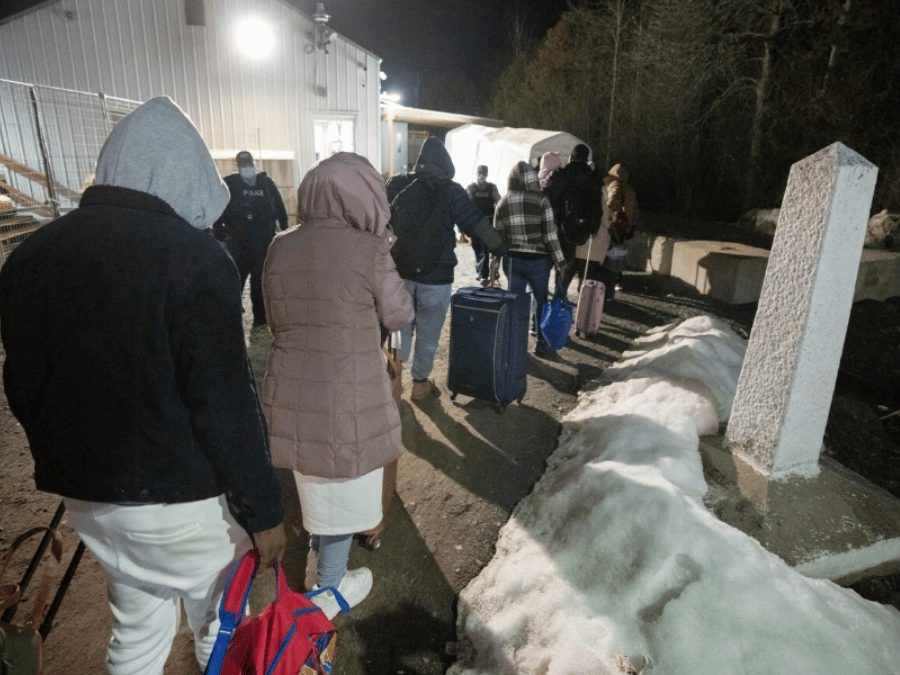
A court is hearing a legal challenge to Canada’s refugee agreement with the United States this week, with the Canadian Council of Churches playing a central role.
The council joins Amnesty International and the Canadian Council for Refugees, along with former refugee claimants, in challenging the federal government’s participation in the Safe Third Country Agreement (STCA). Signed in 2002 and implemented in 2004, the agreement allows Canadian authorities to turn back asylum seekers from the U.S. at the land border, based on the premise that both countries are safe places to seek refuge.
You may unsubscribe from any of our newsletters at any time.
The plaintiffs argue that rejecting 2SLGBTQ+ people, racialized women and children to the U.S. exposes them to an inhumane asylum system and violates their equality rights under section 15 of the Charter of Rights and Freedoms.
“The United States is not a safe place for migrants and refugees, particularly those who are racialized women, children, or LGBTQI+ people,” said Ketty Nivyabandi, secretary general of Amnesty International Canada’s English-speaking section, in a press release.
“The practice of sending some of the most vulnerable people in society back to the U.S. — right into the hands of ICE — is unjust and un-Canadian. And we are in court today to make it stop.”
In 2023, the Supreme Court of Canada ruled that the STCA did not violate section 7 of the Charter, saying legal safeguards known as“safety valves” in Canadian law could protect refugee claimants from unjust treatment. However, the court sent the question of whether the agreement violated claimants’ equality rights back to the Federal Court, setting the stage for this week’s challenge.
Amnesty and the Canadian Council for Refugees filed a separate Federal Court challenge in June, arguing that these “safety valves” are often not available to asylum seekers and that Canada isn’t doing enough to protect people it sends back to the U.S.
The Canadian Council of Churches has also been involved in previous challenges against the STCA. Rev. Janet Anstead, its general secretary, says the organization has supported displaced people since the end of the Second World War, when member churches sponsored refugees.
More on Broadview:
- How former asylum seekers are helping current ones navigate Canada’s bureaucratic maze
- I’ve struggled with my son’s decision to become a soldier, but we’ve come to an uneasy truce
- Nowruz in a time of war
“[Our involvement] might seem sort of new, but it’s actually very much standing in this tradition of helping the stranger, helping the foreigner, helping the marginalized and the vulnerable,” she says.
The council was also an intervenor in a landmark 1985 Supreme Court immigration case. Singh v. Minister of Employment and Immigration established that refugee claimants who are physically present in Canada were protected under section 7 of the Charter.
“So what that meant is that refugees have the right to a full oral hearing of their claims before they were either admitted into Canada or deported,” says Anstead.
“So the challenge that is before the courts now kind of is a continuation of that commitment to making sure that people seeking asylum, seeking immigration, are treated with the dignity that our faith tells us every individual is worthy of, as every individual is created in the image of the Creator.”
***
Emma Prestwich is the digital and United Church in Focus editor at Broadview.
Thanks for reading
Independent journalism rooted
in faith and justice is under threat
Broadview is the only media organization in Canada offering thoughtful, values-driven journalism from an inclusive, progressive Christian perspective. But our work depends on your support. If you value what you've just read, please act now.
A gift today helps keep this journalism alive tomorrow.
With gratitude,