At St. George’s Greek Orthodox Church in Ibillin, a Palestinian Arab village in Israel’s Galilee region, Father Saba Haj still remembers the day five years ago when he was stopped at a checkpoint near Tubas. He was wearing his clerical robes. “A weapon was raised in my face,” he says. “I was humiliated.”
It’s not the only recent incident of subjugation he’s witnessed. In late September, “a priest in Jaffa was subjected to a humiliating incident,” which involved being handcuffed and arrested after confronting a police officer.
You may unsubscribe from any of our newsletters at any time.
Then in mid-October, “church property and olive trees were attacked,” he says of incidents in which masked Israeli settlers struck the village of Taybeh, one of the last entirely Christian villages in the West Bank, targeting residents, olive pickers and a convoy of visiting European diplomats. Settlers have also been stealing olives from Christian villages, which are harvested to produce sacred oil for masses and ceremonies.
For Haj, the symbolism runs deep when asked about the significance of participating in the vote in the upcoming Israeli parliament (Knesset) elections on Oct 27. “This is about freedom of movement, about human dignity, about respect for religious symbols,” he says. “Protecting holy places doesn’t mean protecting buildings alone. It means protecting people and their right to worship, to move, to live in safety and dignity.”
Palestinian Christians in Israel will be carrying experiences like these when they head to the polls today to elect a new Knesset and consider the longtime track record of Prime Minister Benjamin Netanyahu.
Palestinian citizens of Israel make up roughly one in five Israelis and are descendants of the Arabs who remained inside the state’s borders after 1948. Palestinian Christians are a small minority within that minority. According to Israel’s Central Bureau of Statistics, about 184,200 Christians lived in Israel in December 2025, almost two percent of the population. Most live in the north, and the cities with the largest Arab Christian communities include Nazareth, Haifa, Jerusalem and Nof HaGalil.
A vote, not a miracle
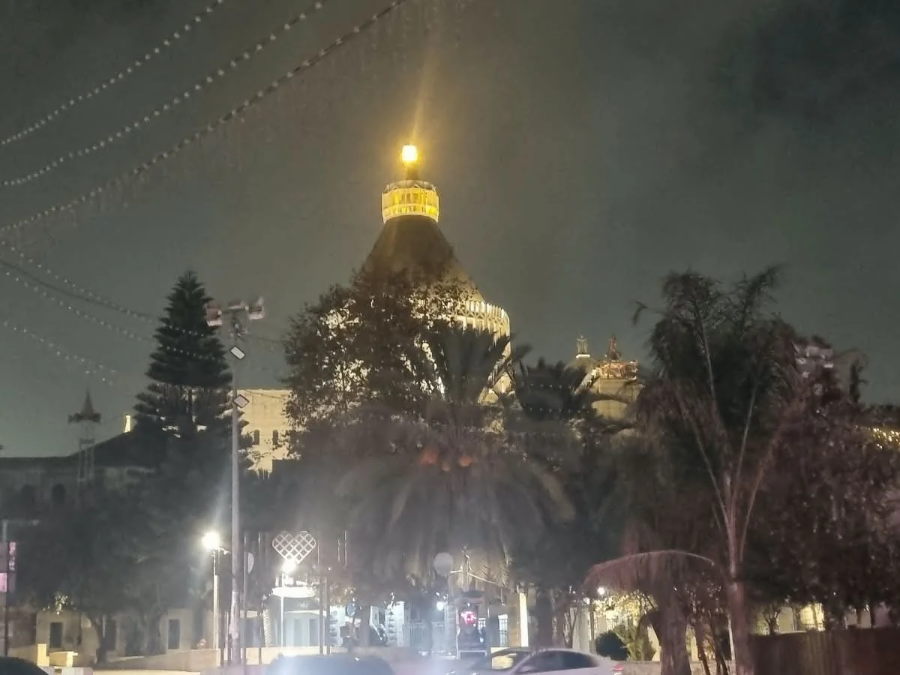
In Nazareth’s Old City, steps from the Basilica of the Annunciation, the question of whether Palestinian Christians should take part in Israeli elections returns with every vote. It is as old as the state itself.
Raef Zreik, a lecturer in philosophy and law from the Galilee, is clear-eyed. “Participation in voting is not a magic solution,” he says. “But it remains one of the tools we have to influence the policies that affect Palestinians here. Our civil, political and economic rights are tied to the state we live in, even when we know the limits of the system.”
He frames voting less as a guarantee than as a test. “The question isn’t only whether casting a ballot is worth it,” he says. “It’s whether that ballot can actually affect the decisions that shape our lives.”
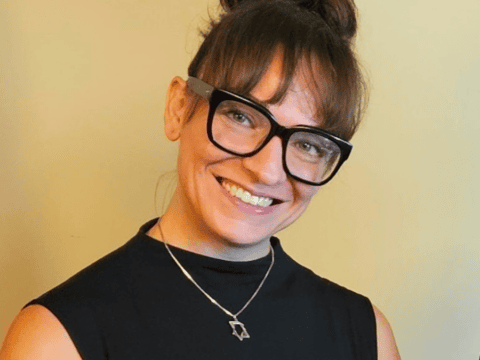
Jiana Mansour, a 30-year-old Christian artist from the Galilee, said she will vote in the elections. “I’ve voted since I first had the right, and I’ll vote this time, because this is the cause of the people,” she says. “We are marginalized, and things are going from bad to worse for every part of our people. I have to seize the chance for change, and I urge everyone to do so.”
More on Broadview:
- Palestinian Christians seek solidarity amid war and displacement
- A Palestinian Canadian author’s journey of resistance through writing
- A Palestinian chef serves up stories of home
For Mansour, being a Christian sharpens her solidarity rather than narrowing it. “As a Palestinian Christian, what is happening makes me look beyond individual or sectarian interests,” she says. “In recent years, we’ve all seen how the far-right Israeli government treats Arab communities of every faith: Christians, Muslims, even Druze. We’ve witnessed systematic attacks on monks, nuns and churches, and on Al-Aqsa Mosque. None of us has been spared.”
She bristles at any suggestion that Christian loyalty lies elsewhere. “Christians are from this land. Christ was born and lived here, in Nazareth, Bethlehem and Jerusalem. This is the land of Christ.”
Faith in wartime
The war on Gaza for three years and violations in the West Bank and Jerusalem have given faith a political urgency. “The Christian message cannot be separated from solidarity with the oppressed,” Haj says. “Neutrality cannot be an excuse for silence in the face of suffering.”
Zreik pushes the question further. “The challenge isn’t only expressing a moral position,” he says. “It’s turning that position into real political and social power to defend our rights.”
Emigration haunts conversations about the Christian future. A 2025 survey of Arab-Palestinians in Israel by the Rossing Center for Education and Dialogue said 36 percent of respondents were considering leaving the country. “Difficult political and economic conditions have pushed some Christian families from the West Bank to emigrate to Spain and other European countries,” Haj says.
Mansour refuses to leave. “Emigration is not the solution. This is our land, and our roots run deep in it,” she says. “I will take part in the voting and work for change, as long as I’m alive.”
***
Monjed Jadou is a Palestinian journalist based in Bethlehem, West Bank.
Thanks for reading
Independent journalism rooted
in faith and justice is under threat
Broadview is the only media organization in Canada offering thoughtful, values-driven journalism from an inclusive, progressive Christian perspective. But our work depends on your support. If you value what you've just read, please act now.
A gift today helps keep this journalism alive tomorrow.
With gratitude,