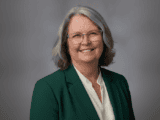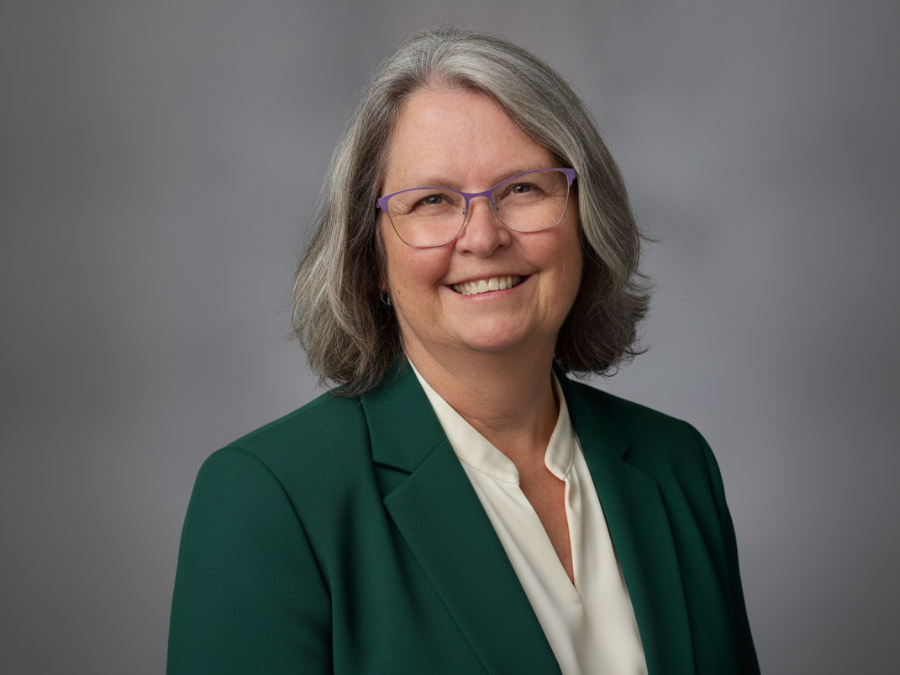
On Sept. 1, Rev. Janet Anstead was appointed general secretary of the Canadian Council of Churches (CCC). The CCC is Canada’s largest ecumenical body, representing a majority of Canadian Christians. Anstead currently serves as minister for the Christian Church (Disciples of Christ). In addition to her pastoral background, she is a lawyer who practiced family law in the 1990s.
Anstead succeeds Peter Noteboom, a Christian Reformed Church in North America pastor who led the CCC for nine years. James Adair caught up with Anstead recently to ask about her new role.
You may unsubscribe from any of our newsletters at any time.
James Adair: What have your first couple of weeks been like so far?
Rev. Janet Anstead: Crazy. I was in Vancouver last weekend, and then I went to Project Ploughshares. They had their 50th anniversary gala on Monday night (Sept. 21 in Waterloo, Ont.), and yesterday we had an executive meeting. It has been nonstop. I was meeting with representatives from many of the commissions of the World Council of Churches, focusing on reconciliation, justice and unity. It’s been wonderful, but it’s been hectic. It’s been a very steep learning curve, and people have been very gracious with me.
JA: What do you think the role of the Canadian Council of Churches is today, as we see a diminished Canadian Christianity?
RJA: With diminishing attendance, the CCC can do many things. It can help some of the smaller denominations by creating this space in which we are interacting and sharing resources, sharing ideas, sharing experiences.
More on Broadview:
- Michael Blair announces fall retirement as United Church general secretary
- Anglican general secretary’s employment ends in wake of lease controversy
- ‘Very offensive’ remark mars Indigenous church discussion at General Council
We can also help to speak not only the leadership in the ecumenical movement, but also to the people in the pews. We can help to create some resources that are very tangible and very accessible. For instance, on the 21st, it was the Prayer Walk for Peace, which was a very accessible set of resources for people, whether it’s a large urban centre or a small rural centre.
JA: Is there anything that you would like to have accomplished by the time that you retire?
RJA: Well, would world peace be too much to ask for?
JA: I think it’s good to know where you’re heading.
RJA: I would like to see some more action on our ongoing reconciliation focus. I would also like to see joint action on climate change. As somebody who has a granddaughter, I would like to think that we can leave this world better than it seems to be heading right now.
I would like to see a new vision for Christianity, a new responsibility for the Christian Church — and I mean that in its largest sense — that is actually providing an alternative narrative to what our society seems to be saying to us today.
It’s the narrative we’ve always carried because it’s the narrative of the gospel. But it would mean being a coherent voice for justice, for peace.
JA: How do you think we get there? What does the CCC have to do to achieve world peace?
RJA: The only way we’re ever going to achieve world peace is by mobilizing everybody, not just the leadership.
We look around, and things seem to be pretty dire right now. But I think what we know from the gospel narrative that we’ve carried with us for centuries is that times of transformation can be painful, and we are in a time of transformation right now.
I would encourage people to look for the signs of hope that they find in their lives. Listen to that narrative of hope, the narrative of transformation, and ultimately the narrative of love. That’s how we’re going to get out.
***
James Adair is a recent Broadview intern.
Thanks for reading
Independent journalism rooted
in faith and justice is under threat
Broadview is the only media organization in Canada offering thoughtful, values-driven journalism from an inclusive, progressive Christian perspective. But our work depends on your support. If you value what you've just read, please act now.
A gift today helps keep this journalism alive tomorrow.
With gratitude,