
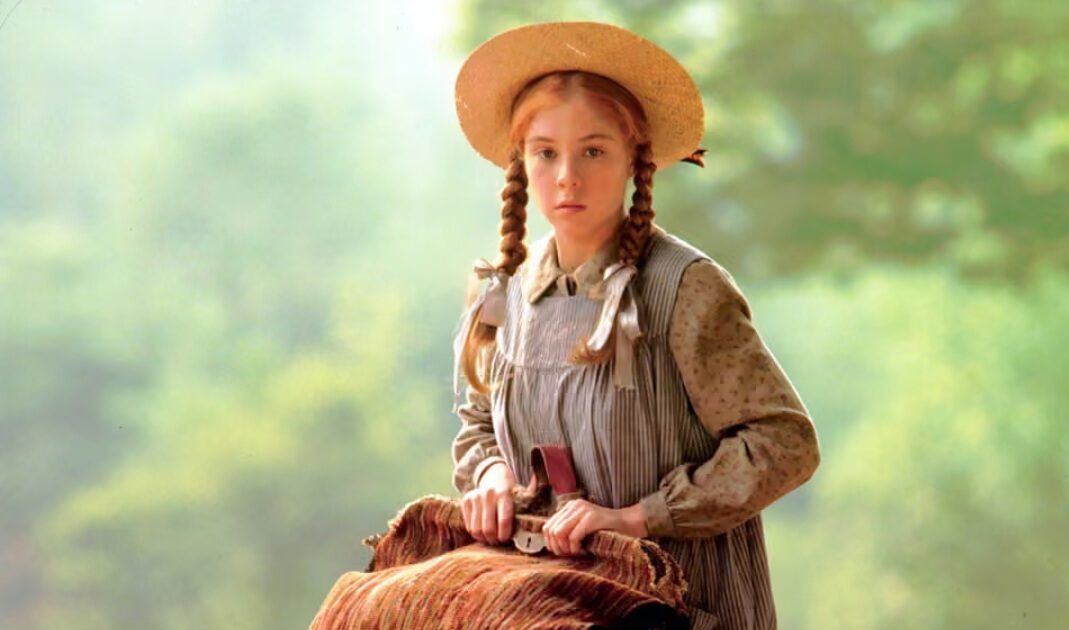
When Lucy Maud Montgomery published her novel Anne of Green Gables in 1908, did she dare imagine her story would capture the hearts of generations of Canadians and propel her fiery-haired heroine to Canadiana status? And what would she think about her Anne being heralded by an entirely foreign country half a world away?
According to Tourism PEI, thousands of Japanese tourists travel to the small island province every year to pay homage to their beloved Anne at the Green Gables Heritage Place in Cavendish. How Anne Shirley became a superstar overseas is an interesting story in itself — and it begins with an unlikely connection to the United Church of Canada.
You may unsubscribe from any of our newsletters at any time.
In 1882, Canadian missionary Martha Julia Cartmell was sent to Japan by the Methodist Church of Canada (later The United Church of Canada). At the time, Japanese women’s rights were considered secondary to men’s, and girls’ education was often neglected or restricted. When missionaries arrived in Japan, they recognized the need for greater access to formal education for girls and began establishing schools for them.
Toyo Eiwa Jogakuin, a private all-girls school in Azabu, Tokyo, run by the Woman’s Missionary Society of the Methodist Church of Canada, was one of them. It was founded in 1884, and in 1903, nine-year-old Hanako Muraoka enrolled as a student there. She was from a poor family, but her father was a devout Christian with a connection to the school’s founder. Muraoka was an imaginative child who thrived on literature and poetry writing during her time at Toyo Eiwa. Years after graduation, she would become one of Toyo Eiwa’s most notable alumni for translating the first — and still most famous — Japanese translation of Anne of Green Gables.
“It’s quite amazing that we played a role in helping [Muraoka] to become her own through the education system that the Canadian missionaries helped to establish,” says Rev. Won Hur, global partnership program coordinator for Asia with The United Church of Canada.
While schools established by Canadian missionaries offered Japanese girls new opportunities for education, they were also part of a missionary project that sought to introduce Western Christian values into Japanese society. Muraoka’s story sits within that complicated legacy: her education opened doors, even as it was shaped by a foreign religious and cultural influence.
More on Broadview:
- A feral faith
- Why diaspora communities in Canada are struggling to keep their first languages alive
- I love my church, but it doesn’t completely love me
After graduating from Toyo Eiwa, Muraoka was working as a teacher and writer when she befriended a Canadian missionary, Loretta Leonard Shaw. In 1939, when Shaw left Japan to return home before the outbreak of the Second World War, she gave Muraoka her copy of Anne of Green Gables to remember her by. What happened after is recounted in Anne’s Cradle: The Life and Works of Hanako Muraoka, written by her granddaughter Eri Muraoka (and translated into English by Cathy Hirano).
Upon reading Anne of Green Gables, Muraoka fell in love with the fiery orphaned girl whose life she felt closely resembled her own, bringing memories from her girlhood at Toyo Eiwa flooding back. Those memories would prove significant, not only because of Muraoka’s personal connection to Anne, but also because of what the school had taught her. As her granddaughter wrote, “From Christianity to cooking, Muraoka’s experience at Toyo Eiwa would prove invaluable for translating the book.”
Muraoka also understood the gift as her friend’s unspoken wish for her to “convey the heart of the Canadian people to her own,” her granddaughter wrote. From that moment on, she carried a promise: one day, she would translate the novel and share its Canadian story with the people of Japan.
However, translating the novel wouldn’t prove to be straightforward. In fact, it was fraught with danger. On the morning of December 8, 1941, the Imperial General Headquarters announced that Japan had declared war against the United States and the British Empire, following their surprise military attack on Pearl Harbor. Despite knowing that possessing and working on literature from an enemy nation was strictly forbidden, Muraoka’s passion for Anne of Green Gables overcame her fears and she decided to translate it anyway.
“She translated it during the war despite the danger to herself and her family, then spent years trying to find a publisher who would agree to publish a work by an ‘unknown author’ that had been written so long ago,” Cathy Hirano, the English translator of Anne’s Cradle, told Broadview.
“She didn’t give up because she recognized that children, and particularly girls in postwar Japan, could relate to Anne and desperately needed the story’s message of hope.”
In April 1952, the Treaty of San Francisco formally ended the war between Japan and the Allied powers. Just days later, Muraoka’s completed translation of Anne of Green Gables, titled Akage no An (“Red-Haired Anne”) was published.
Over 70 years later, Anne of Green Gables remains a beloved staple of Japanese literature. The novel inspired the now defunct Canadian World theme park at Hokkaido, television adaptations including the 1979 anime and a 2025 reboot, and the annual pilgrimage of Japanese tourists to Prince Edward Island to experience the world of Anne firsthand.
“The United Church of Canada made an impact in the world in so many ways, and Anne of Green Gables is just one small expression. But in the case of Japan, it became a humongous cultural phenomenon that is so well loved and appreciated,” says Hur.
Muraoka herself seemed to understand the significance of sharing Anne’s story with future generations. In the afterword to the first edition, she wrote: “Now, when the publishing industry of Japan suffers from a dearth of wholesome family literature, it is with great joy that I dedicate my translation of Anne of Green Gables, the eternal heroine of the younger generations, to the memory of my youthful days at my alma mater on top of the hill in Azabu, and to the younger sisters of my heart who continue to study there.”
***
Charlotte MacDonald is a recent Broadview intern.
Thanks for reading
Will you help support United Church reporting?
Broadview is the only media organization dedicated to telling the stories of The United Church of Canada — its big decisions, perspectives and the faithful people and communities at its core. But this essential work depends on you.Make a tax-deductible gift today — 100% of your donation goes directly to supporting United Church coverage.

With gratitude,










Been to Cavendish with my teenagers when they were manga fans. Once you know the connection between Japan and Anne, it’s in most Manga and anime plots! So grateful to learn this connection. Although Montgomery was a staunch Presbyterian after 1925, her novel Blue Castle had quite a warm spot for Free Methodists and who knows, maybe the United Church had a warm spot in her heart too.