As a retired neuropsychologist and longtime hospice companion, I often wonder what can still be measured at the end of life — and what cannot. In a small hospice in southern Germany, where I worked for many years, I often witnessed thresholds that medicine doesn’t register. Not for pain or oxygen, but for something quieter. Moments when something opens — softly, without announcement.
Magda had lived in the hospice for three months. A former violinist, she rarely spoke about her past. But her hands still moved in gentle arcs, as if drawing invisible phrases from the air. Even when pain stole her voice, she remained attentive — listening to the birds outside the window, following the rhythm of footsteps in the hallway.
You may unsubscribe from any of our newsletters at any time.
In her final week, her body became still. Her eyes flickered — not with fear, but with quiet astonishment. She no longer responded to touch. She didn’t eat. And yet her face softened into something luminous.
More on Broadview:
- My mom donated her body to science
- After learning of the death of his son, a bereaved father made a stunning phone call
- My friend of 40 years was dying. This was our last conversation.
One afternoon, I entered her room and paused. The air felt different — not cold, not scented, but bright. The blinds were closed. No sunlight entered. And still, the space around her shimmered faintly, like a curtain of breath. Her skin looked translucent. Her lips moved, but no sound came.
Later, as I sat quietly at her bedside, a nurse whispered, “She’s speaking with someone.”
There was no theology in her gestures. No visions of angels. But something had changed — as if a second world had unfolded beside the first, not replacing it, but resting gently alongside.
When Magda died two days later, her hands were open, as if still holding something. I washed her body, smoothed her gown and left the window ajar. The room did not feel empty. It felt like a page still glowing with invisible ink.
I don’t write about Magda to prove anything. I write because something opened in that room — and remained. Not as doctrine. Not as certainty. But as light. Light with no source, no direction. Simply there — like a final breath that never quite faded.
I still wonder what exactly opened in that room and whether such moments are rare, or simply rarely noticed. Perhaps what stays with us is not the moment of death itself, but the way something else quietly begins — a threshold not of ending, but of presence.
***
This article first appeared in Broadview’s July/August 2026 issue with the title “The Light in Her Room.”
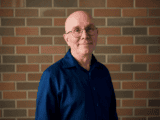
Ralph Klose is a writer and retired neuropsychologist, author and longtime hospice volunteer.
Thanks for reading
Will you help support United Church reporting?
Broadview is the only media organization dedicated to telling the stories of The United Church of Canada — its big decisions, perspectives and the faithful people and communities at its core. But this essential work depends on you.Make a tax-deductible gift today — 100% of your donation goes directly to supporting United Church coverage.

With gratitude,