Every Sunday morning, on the westernmost edge of Toronto’s Cabbagetown, 45 or so worshippers cram into the tiny chapel at Saint Luke’s United. Every seat in the pews is spoken for, with extra chairs squeezed into the aisles. But the tight quarters haven’t cramped the church’s sense of community.
For decades, Saint Luke’s has been known as the “House of Friendship.” Longtime congregants, many of them Filipino, welcome every newcomer who’s Googled “church near me” or walked in off the streets. During the passing of the peace, the room comes alive with a flurry of hugs, handshakes and fist bumps. Church council chair David Hallman still remembers the day he and his late partner first came through the doors in the early 2000s, when over a dozen churchgoers greeted them before service even opened. But sustaining that welcome has taken more than goodwill alone.
You may unsubscribe from any of our newsletters at any time.
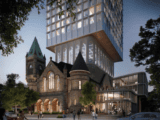
The Saint Luke’s building is as grand as the congregation is small. The church is housed in a landmark Richardsonian Romanesque structure that dates back to 1887. But that’s the trouble: sustaining a heritage building takes hefty coffers. In recent years, the sanctuary — with its organ and beautiful acoustics — has deteriorated. The roof sprung a leak; water damage spread; plaster began coming down from the ceiling. The Toronto United Church Council loaned the church money to repair the structure of the roof, but the space still wasn’t safe for use — hence the shift to worshipping in the much smaller chapel in 2022. Saint Luke’s was renting space out to local organizations but by 2019, maintenance costs had outpaced that income by about $60,000 a year. Five years later, the church had drained its reserves and was teetering on the brink of bankruptcy.
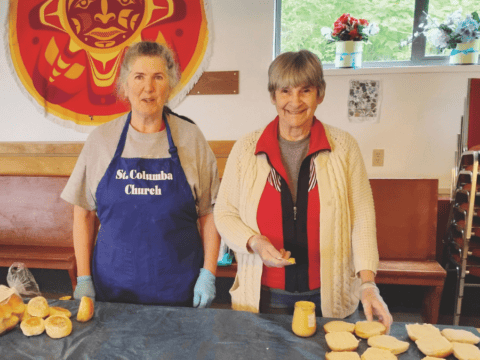
The dissolution of the church wouldn’t just have affected worshippers. Saint Luke’s food bank and Out of the Cold meal program serve a neighbourhood filled with rooming houses, encampments and shelters. “Our impact is much greater than our footprint,” says Rev. Jim Harbell.
Fortunately, in the spirit of the United Church’s Toward 2035 strategic plan — which calls on churches to collaborate — two local congregations are now funnelling multi-year donations into Saint Luke’s ministry and operations. Five other congregations also gather once a month to make 200 sandwiches to supplement the hot meals distributed through Out of the Cold. That support has allowed the church to retreat from the edge of closure — and set the stage for a much bigger change.
More on Broadview:
- A church rethinks what it means to serve
- What if growth isn’t about getting bigger?
- What if small is enough?
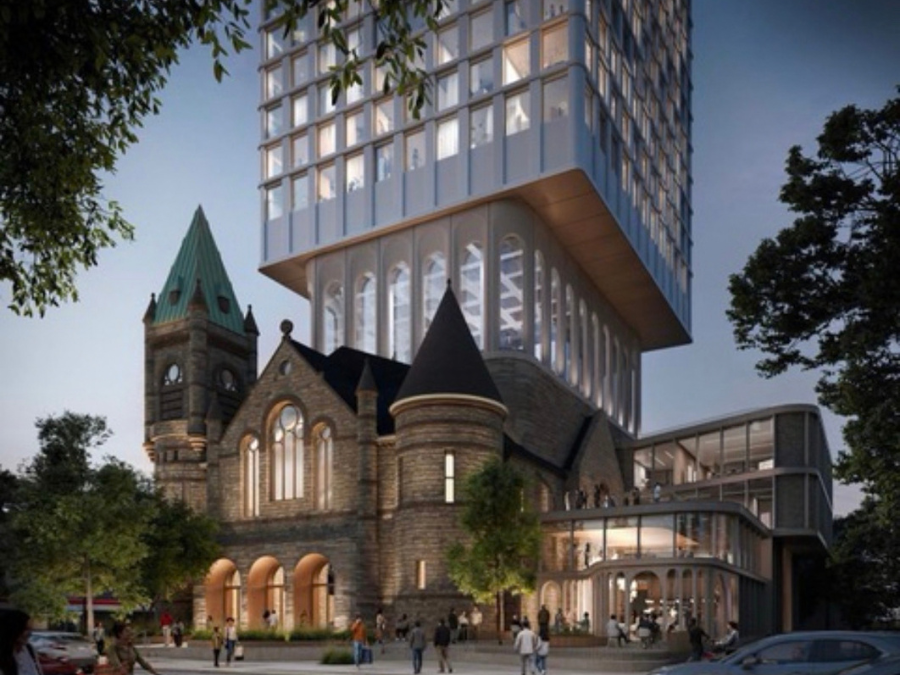
Last year, the church reached an agreement with housing development company Kindred Works to launch a redevelopment project, supported by a loan from the United Church’s Shining Waters Regional Council. The plan is to build a 48-storey apartment building, with a third of the building’s 440 rental units slated for rental below market rates. Only three of the original church walls will remain. With construction set to begin this year, worship will once again be displaced to an as-yet undetermined location.
This isn’t the church’s first attempt at such a project. In 2012, a previous proposal failed to make it past the city due to concerns with the redevelopment’s height. But the city of Toronto has since begun pursuing densification to ease the housing crisis, and in February, it approved Kindred Works’ proposal.
Harbell says that temporarily relocating Sunday morning services will be relatively light work — the church has done it before. However, it will need a space with adequate physical infrastructure to keep its outreach programs going, including fridges, freezers and a kitchen.
Other practical hurdles weigh more heavily: financing needs to be secured from private investors and the Canada Mortgage and Housing Corporation. It helps that Harbell was previously a partner at a Bay Street law firm, where he worked on housing development.[1] The redevelopment process is one he understands and can guide the congregation through.
As the congregation bids farewell to the existing structure, Harbell says there will also be a process of grieving. The building has supported the community for generations and is filled with spiritual touchstones: the baptismal font, the communion table, memorials to community members who died during war. Some of these sacred objects may follow the congregation to its temporary location; others will be tucked away in storage. Meanwhile, Saint Luke’s beautiful stained-glass windows will be removed and repaired before returning to their spots in the original walls.
When the construction dust has settled and the St. Luke’s community can return home, the hope is that the building’s rental income won’t just fund the worshiping congregation, it will support the entirety of the St. Luke’s mission, including a newcomers’ program to help African refugees. Hallman expects that there will be a multi-use space for worship with movable chairs, but beyond that, church leadership doesn’t yet know what new facilities will look like. Still, Hallman says the congregation is excited that there’s a path forward, and some members have begun asking how they can get on the list for an apartment rental.
Despite the many unknowns, Hallman is confident that the community’s long history of hospitality will buoy it through the upcoming transition. “It has nothing to do with fancy structures or bells and whistles,” he says. “It has to do with how people relate to each other and care for each other.”
“We’ve lived with fragility for a long time,” Hallman adds. “We’re not a wealthy congregation. But there’s something about that that allows the spirit to be so palpable and present.”
***
Jadine Ngan is a National Magazine Award-winning journalist in Toronto.
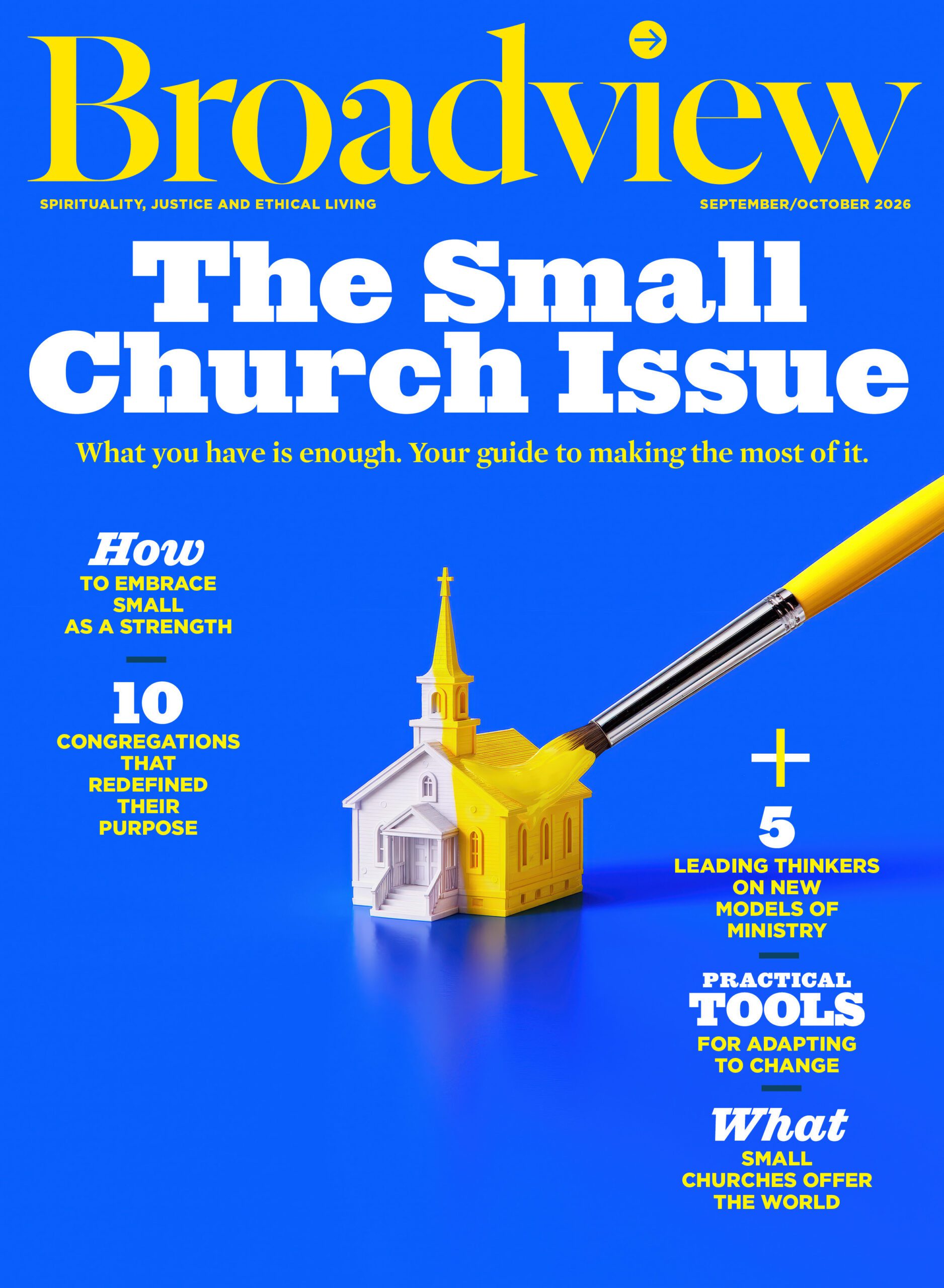
This article first appeared in the September/October issue of Broadview with the title, “Growing Upward.”
Thanks for reading
Independent journalism rooted
in faith and justice is under threat
Broadview is the only media organization in Canada offering thoughtful, values-driven journalism from an inclusive, progressive Christian perspective. But our work depends on your support. If you value what you've just read, please act now.
A gift today helps keep this journalism alive tomorrow.
With gratitude,