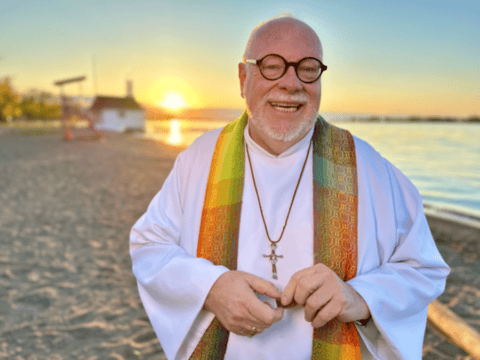
On a recent summer afternoon, hundreds of young people arrived in buses, minivans and cars at Brock University in St. Catharines, Ont., for the second ever Collective. The four-day convention held Aug. 12-15 offered a mix of worship, recreation and keynote addresses aimed at fostering spiritual growth.
Collective was born out of a desire by the United Church of Canada and the Presbyterian Church in Canada to build a post-pandemic community among their youth. In its inaugural year in 2024, the two denominations collaborated but hosted separate events. This August marked the first unified Collective. It drew a record 505 youth, young adults and youth leaders.
You may unsubscribe from any of our newsletters at any time.
Highly anticipated events were the keynote addresses by former Canadian Football League defensive back JR LaRose and his 20-year-old son, actor Alozie LaRose. They spoke to attendees and on Friday they co-hosted a football workshop. The elder LaRose, a motivational speaker, 2011 Grey Cup champion and member of One Arrow First Nation, addressed his challenges growing up with abuse and overcoming addiction. He emphasized the power of faith in breaking cycles of trauma.
In his own speech the following day, Alozie explored the challenges of growing up in the shadow of his father. Alozie talked about the pressure he put on himself to be a successful athlete like his dad, and the depression he felt when he realized he had no prospects as a pro football player. Now he is finding his own success acting in TV and film productions.
Not a professional speaker, he admitted that ahead of his speech he felt the same concerns about living up to his father’s example as he’d had as a child. “It wasn’t that I didn’t believe in myself, but I didn’t think I could live up to what my dad did a day prior,” the younger LaRose said.
“I’m so grateful to Collective for giving the opportunity for my son to speak,” said JR. “They don’t know my son or his journey, and they were still willing to give him a chance to share his story.”
More on Broadview:
- The influencer priest
- Why diaspora communities in Canada are struggling to keep their first languages alive
- Where is God in the midst of a trade war?
Aside from speeches, youth leaders and attendees gathered for workshops, of which there were more than 60 over the four days, ranging in theme from theological studies to ukulele lessons. Rev. Heather Paton of St. Andrew’s Presbyterian in Ottawa ran a seminar on spiritual journalling called Calm in the Chaos.
Allison Andrew, a youth leader from Ontario, attended Paton’s workshop and found that it connected her spiritual practices with her journalling habit. “I usually just scrawl what I’m thinking. I even do some comic journalling where I doodle my thoughts,” she said. Learning how to blend her daily reflections with her spiritual growth helped her see God’s teachings in her daily life, she added.
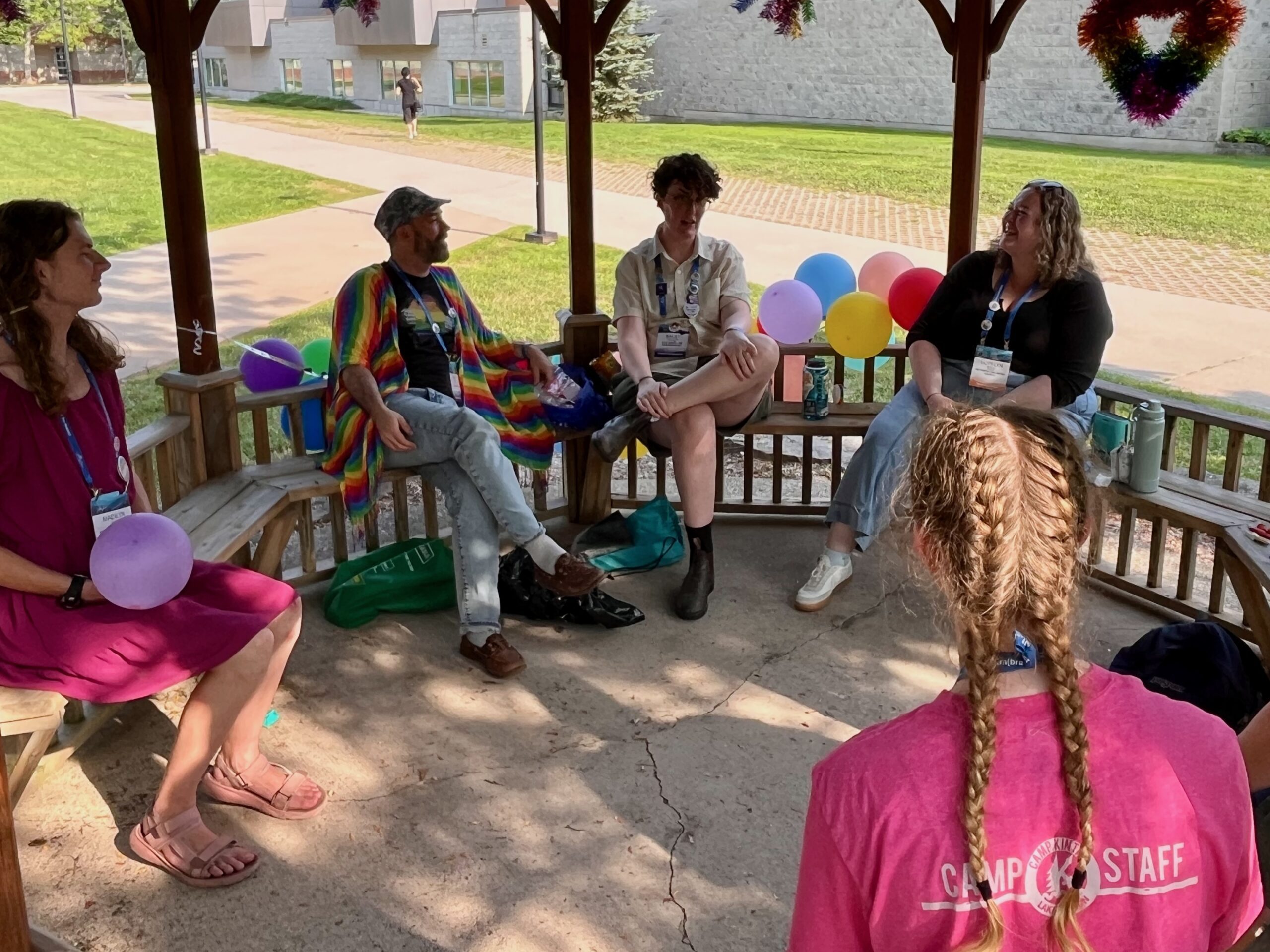
In their free time, youth sometimes huddled in specially curated hangout spaces, where they bonded over shared identities as neurodivergent, francophone or 2SLGBTQ+ kids. At the Gay-zebo, everyone took turns popping colourful balloons with prompts inside, then shared their responses to questions like “Who is one person who brings you joy?” or “What are you looking forward to?”
At the final worship service, Collective videographers presented a film showcasing the friendships formed over these few days spent together — a display of the community that can be built when people from different backgrounds and denominations come together in faith and with an eagerness to listen, to share and to learn.
***
Joshua Bezanson is a journalist in Ottawa who grew up in St. Catharines, Ont.
Thanks for reading
Will you help support United Church reporting?
Broadview is the only media organization dedicated to telling the stories of The United Church of Canada — its big decisions, perspectives and the faithful people and communities at its core. But this essential work depends on you.Make a tax-deductible gift today — 100% of your donation goes directly to supporting United Church coverage.

With gratitude,