Earlier this month, former Anthropic employee Jacob Coxon shocked the world with a dire warning: “The people building artificial intelligence earnestly believe that it could kill us all by the end of the decade.”
But what does our rush to develop increasingly powerful technology say about how we understand ourselves, our responsibilities to one another and the kind of society we want to build?
You may unsubscribe from any of our newsletters at any time.
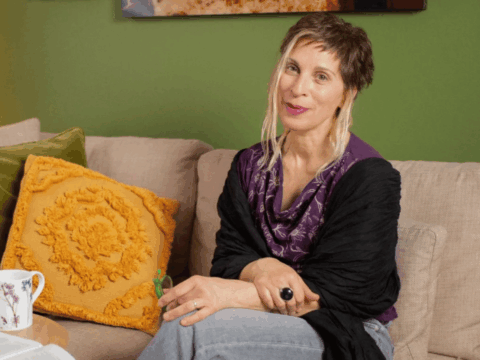
To explore that question, Broadview spoke with Hyejung Yum, a professor at Concordia University in Montreal whose research focuses on theology, postcolonial and decolonizing theology, religious ethics and technology.
Ramona Leitao: What was your reaction when you saw that Anthropic researchers and its CEO warn that AI could potentially destroy humanity within the next decade?
Hyejung Yum: I had a career as a software engineer before I pursued studies in theology and religion, so my perspective comes partly from my background in technology.
Technology, including AI, is already part of our lives. For example, we’re able to have this conversation by video rather than meeting in person.
But at the same time, contemporary AI raises a lot of questions. It’s very different from previous inventions. As Anthropic co-founder and research lead Christopher Olah mentioned when commenting on Pope Leo XIV’s encyclical letter on AI, he sometimes couldn’t understand the internal process, even as a researcher, and found it unsettling.
AI is designed differently from airplanes, for instance. Before, we would create each part, but now humans create an environment where AI learns on its own. AI can have recursive learning, making it unpredictable. That unpredictability can pose a threat to humanity if we don’t have regulations to ensure technology serves the common good.
RL: You mentioned how technology expresses human creativity. If we create machines that can outperform us intellectually, what happens to our understanding of what makes a human being valuable?
HY: This has already been discussed by many religious leaders, including Pope Francis in his encyclical letter Laudato Si’, which addresses the “technocratic paradigm”— a way of thinking that prioritizes technological power, efficiency and control as the solution to human and social problems.
Pope Leo XIV warns us that when this paradigm shapes our values, “the fullness of life is equated with having more, reducing weakness, eliminating uncertainty, and exerting total control.” Humans come to be seen “as a project to be optimized rather than as persons called to relationship and communion.”
Maybe AI was initially developed to help humans flourish, but the underlying assumption can become that human vulnerability is something to overcome. Disability theologian Thomas Reynolds, by contrast, sees vulnerability not as a limitation but as an opportunity to connect with others and build community.
More on Broadview:
- Technology makes human interactions more common but more shallow
- Will ChatGPT put preachers out of a job?
- We used an AI chatbot to speak to ‘Jesus’ about the climate crisis, miracles and Christmas
But under the technocratic paradigm, human limitation or cognitive difference can be treated as inferior or something to overcome.
I think that’s an issue if we continue to develop AI without thoughtful policies or an accountable system.. Its development is also driven by geopolitical competition and profit, with few significant ethical guidelines. Through AI, what kind of humanity are we cultivating?
RL: Beyond questions of AI safety, what does the development of AI raise about how we understand what it means to be human?
HY: Our understanding of human worth is tied to rationality and intelligence. I think it’s also connected to the technocratic paradigm that I mentioned.
The Jewish philosopher Martin Buber offers the idea of “I-it and ” I-thou” relationships. An “I-it” relationship means viewing others as an object to be categorized, controlled, or used. An ”I-thou” relationship means encountering others as whole persons, rather than reducing them to objects or functions.
Our relationship with AI is more of an “I-it” relationship than an “I-thou” relationship. But as AI development becomes tied to global competition for technological dominance, the I-it relationship takes priority over the I-thou relationship. If we begin to replace one with the other, human value can be measured by that same standard.
The problem is not just the technology itself, but how this dominant ideology shapes the way we see ourselves and others. As Pope Leo XIV has warned, the technocratic paradigm can easily lead us toward the anti-human vision.
***
This Q&A has been edited for length and clarity.
Ramona Leitao is a freelance multimedia journalist based in Toronto, the territory of the Mississaugas of the Credit, the Anishnabeg, the Chippewa, the Haudenosaunee and the Wendat peoples.
Thanks for reading
Independent journalism rooted
in faith and justice is under threat
Broadview is the only media organization in Canada offering thoughtful, values-driven journalism from an inclusive, progressive Christian perspective. But our work depends on your support. If you value what you've just read, please act now.
A gift today helps keep this journalism alive tomorrow.
With gratitude,