
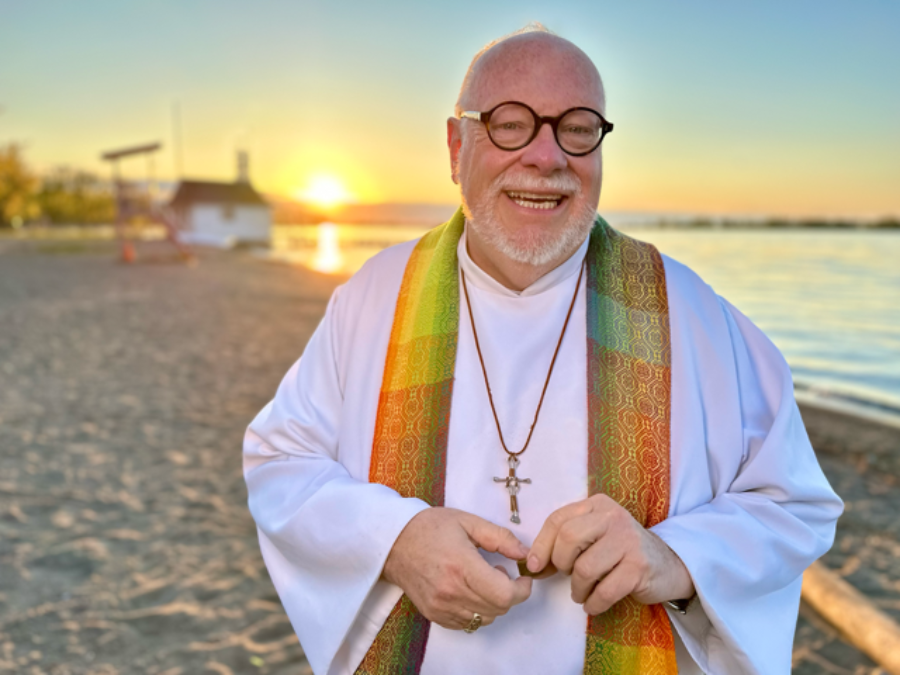
This month, as we arrive at the first anniversary of the United Church’s apology to its 2SLGBTQ+ members, I found myself still wondering: Who was it meant for?
Was it for the queer folks at the time of the vote, or their predecessors? Or was it for the parents and grandparents who had to listen as their children’s personal lives were laid bare during all the debates and meetings?
You may unsubscribe from any of our newsletters at any time.
Was it for me — a teenage youth group representative on the official board who sat silently in on the meetings trying not to blush from embarrassment, hearing how horrible we gays supposedly were and the “things” they/we/me were up to? I actually learned some new “things” I could get up to that had never crossed my mind!
In my view, The United Church of Canada needs to apologize for the fact that it is still not an affirming national church: some churches are, some aren’t.
Yes, we agreed as a national church in 1988 to ordain queer clergy and that we believe all are loved regardless of our sexual orientation, who we love and how we identify ourselves. But individual churches still need to go through the affirming process. I still need to tell a queer youth that if they are in a strange city and find themselves in trouble, to look for an affirming United Church and go there. I can’t tell them to go to ANY United Church and be assured that they will be well received.
It makes me sad to be part of a national church that I love, but one that can’t get off the fence and become a church that loves me completely for who God intended me to be. I wish I could have heard in the apology a sense of regret that in 2025 — 40 years later — we still can’t say that everyone is welcome everywhere in our church communities.
More on Broadview:
- How churches are supporting LGBTQ asylum seekers
- United Church apologizes to 2SLGBTQIA+ people in moving service
- Watch the moment a bishop begs Trump to ‘have mercy’ on 2SLGBTQ+ people, migrants
The apology felt painful and disingenuous to me. I was happy for those who celebrated that day and felt heard and seen, and that responsibility was taken for how poorly the 2SLGBTQIA+ community — especially queer clergy — had been treated. But I was embarrassed by the fuss that was made to claim the apology as a victory: all the glad-handing and back-patting. The background setting of the old traditional church and two members who identify as part of the 2SLGBTQIA+ community making the apology made it very hard to stomach.
I guess if I wanted to put my money where my mouth is, I would join the wholly welcoming Metropolitan Community Church. Bite the bullet and jump in with both feet. But it was the United Church that raised me and where I was ordained into essential agreement with the Basis of Union. My prayer is that someday we are fully able to claim and live into our call to love one another without any exceptions. It would be a very different church. It would also, of course, mean alienating those who can’t agree to being affirming, but the apology would feel much more authentic.
Until then, I cringe at the thought of an annual “salting of the wound” as we remember the apology — but that’s what we seem to do in the United Church. And I continue to love it as an imperfect home that makes room for the not-so-perfect of us who find God in the most unusual and unexpected places.
***
Rev. Brad Inglis, minister at Lansing United in Toronto, is an almost lifelong member of the United Church of Canada, who came kicking and screaming to ministry after trying to outrun it most of his life and was finally ordained at the age of 50, in 2015.
Thanks for reading
Will you help support United Church reporting?
Broadview is the only media organization dedicated to telling the stories of The United Church of Canada — its big decisions, perspectives and the faithful people and communities at its core. But this essential work depends on you.Make a tax-deductible gift today — 100% of your donation goes directly to supporting United Church coverage.

With gratitude,







The whole point of an apology for past wrongs is to heal, however, as Brad conceys in his journey, healing without action and learning leaves the wound to fester.
Totally get what you’re saying Brad. As the parent of 2 children who are gay, loud, and proud,(with full love and support from family and friends), Jesus has blessed us with the opportunity to walk with Him in total love and acceptance. Affirming congregations model the true meaning of what it means to be Christ-like. Don’t want to be affirming, have a chat with Jesus, get to know Him better, and find yourself with a whole different perspective.
As a queer man who is married to his same sex partner, I do not feel welcomed in my local United Church. The Minister apologizes for the hurt the Church caused us but they continue to discriminate even today. I belonged to St. Stephen’s United Church in Red Bank, New Brunswick. I have not gone back and I don’t plan too. They wonder why the Church is dying and the reason in my opinion is you can’t make out you follow Christ and than act hate filled towards a miniority group.