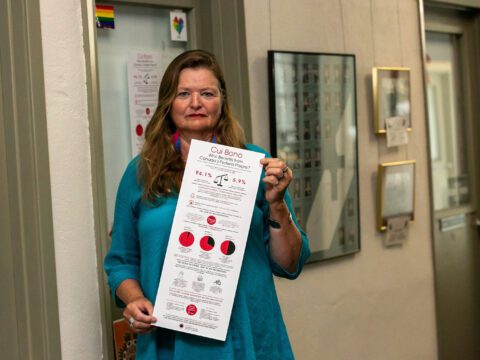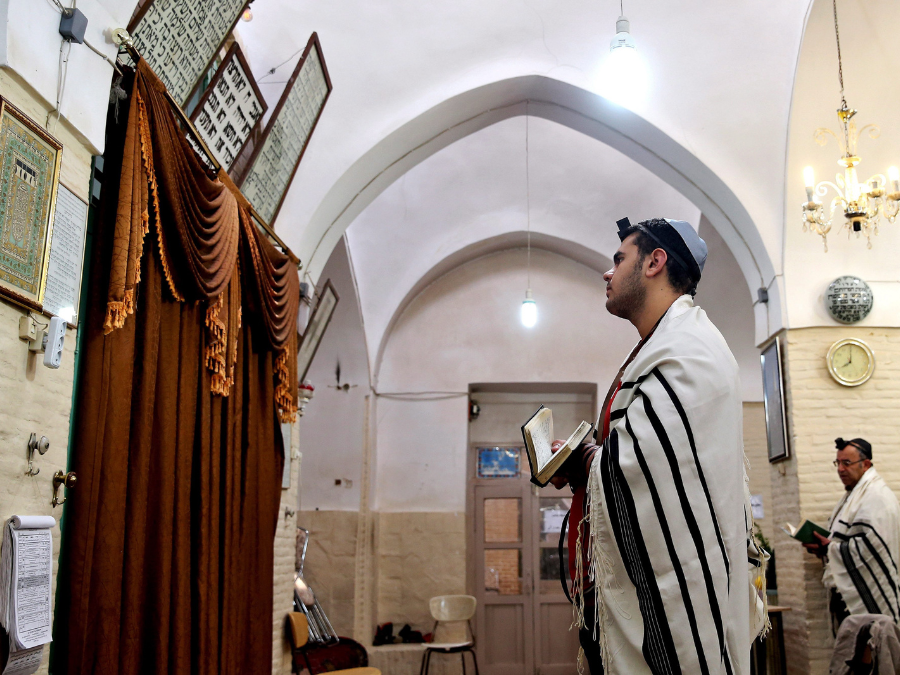
After a synagogue in Tehran was bombed in U.S.-Israeli air strikes last week, killing more than a dozen people, many people outside Iran were surprised to learn that synagogues and a Jewish community exist in the Islamic Republic. But Université de Montréal historian Yakov Rabkin says the reaction to the attack demonstrates how Jewish life in Iran is misunderstood.
Rabkin, a professor emeritus of history and author of two recent books: Israel in Palestine and Zionism Decoded in 101 Quotes, says Jewish life in Iran is frequently misinterpreted through a European lens.
You may unsubscribe from any of our newsletters at any time.
Iran is home to one of the world’s oldest Jewish communities, dating back 2,700 years. Before the 1979 Islamic Revolution in Iran, the Jewish population there was estimated between 80,000 and 100,000; today it is closer to 9,000. There are about 100 synagogues across the country, some dating back to the late 19th and early 20th centuries.
“Jews in Iran have been there for 3,000 years, and their history is very different from the history of European Jewry,” he says. “We often project European Jewish experience on other countries where it doesn’t fit.”
He describes Iranian Jews as integrated into society alongside other religious communities: “Iranian Jews are just like Christian Iranians or Muslim Iranians. Jews are allowed to drink alcohol and even produce and sell it; even though the Islamic Republic forbids it for Muslims, it doesn’t for minorities.”
He also points to changes in Jewish religious life post-1979. He says some Iranian Jews he’s spoken with describe increased Jewish observance in the decades since the Revolution, partly due to state requirements around religious education for minorities. “So the government imposes religious education — but for Jews, they are sent to the rabbis to study. This results in a higher level of Jewish literacy.”
Beyond Iran
More broadly, Rabkin argues that the creation of Israel reshaped Jewish communities across the Middle East in ways that are often overlooked. “There’s ample literature on Jews from Muslim countries who were uprooted by Zionist activists and by the state of Israel when it was created in 1948 for the very simple reason that Zionist was a European nationalist movement,” he says.
Many Jews in Muslim majority countries did not initially see themselves as separate from their non-Jewish neighbours, he adds, noting that “there was very little participation of Jews from elsewhere… because they didn’t feel that they were different from other Moroccans, Iraqis or Iranians. Zionism is a European nationalist movement.”
More on Broadview:
- ‘We are deeply alarmed by the escalating military violence’
- Paralysis, fear and faith under Cuba’s blockade
- Trump’s Jesus-style AI image fuels global backlash and Vatican tensions
According to Rabkin, those who did migrate to Israel often faced difficult conditions. He describes Jews from Muslim-majority countries as being settled in peripheral and sometimes dangerous areas, including in places where Palestinians had been displaced in 1948. “More importantly, they were culturally oppressed,” he adds, recalling an Iraqi Jewish colleague writing about being embarrassed to speak Arabic with his father in public because it was “the language of the enemy.”
These histories, Rabkin suggests, continue to shape how Jewish identity and belonging are understood across the region today, particularly in moments of renewed violence.
The April 7 attack on Rafi-Nia Synagogue was part of a broader wave of strikes across Tehran that hit schools, power plants and bridges. The Israeli Defence Forces told the Times of Israel that it “regrets the collateral damage” and the strike was directed at a senior Iranian military target.
***
Arfa Rana is a Pakistani-Canadian journalist based in Kitchener-Waterloo, Ont.
Thanks for reading
Independent journalism rooted
in faith and justice is under threat
Broadview is the only media organization in Canada offering thoughtful, values-driven journalism from an inclusive, progressive Christian perspective. But our work depends on your support. If you value what you've just read, please act now.
A gift today helps keep this journalism alive tomorrow.
With gratitude,