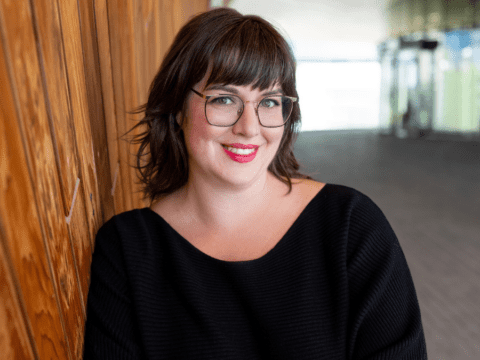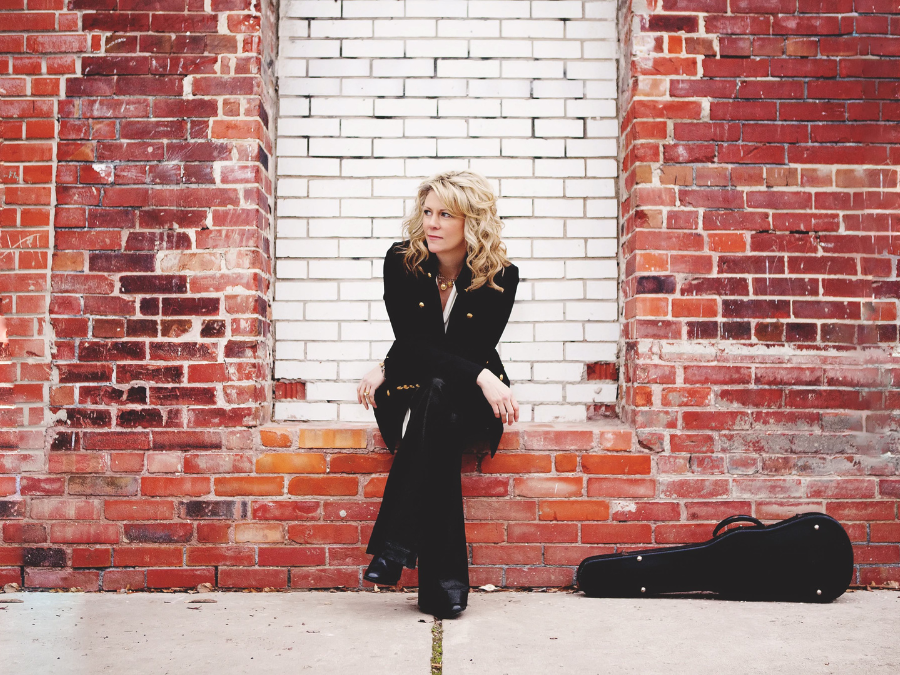
Natalie MacMaster played her first fiddle at nine and by 16 had already released her first recording. Since then, she has won two Junos, earned a Grammy nomination and become one of Canada’s most beloved musicians. Originally from Cape Breton, N.S., she now lives in Lakefield, Ont., with her husband, fellow fiddler Donnell Leahy, and their seven children, where she continues to share a life richly immersed in music. In her new memoir, I Have a Love Story — now being developed as a touring symphony — MacMaster writes with disarming candour about the ways her music, Catholic faith, and family life intertwine. She spoke with Julie McGonegal about the spiritual currents and enduring love that pulse through her remarkable story.
Julie McGonegal: As someone from a large Catholic family with a deep love of fiddle music, I really resonated with your memoir. The parts about your musical career are fascinating, but I’d love to know how faith and family shaped the story you wanted to tell?
You may unsubscribe from any of our newsletters at any time.
Natalie MacMaster: The publisher categorized it as a memoir, but that’s not what it is. The book is really a love story.
I wrote it in response to all the terrible events going on in the world that leave us feeling hopeless. I realized, “We’ve got to talk about love. We’ve got to go back to love.”
I wanted to share my faith, parts of my upbringing and different circumstances in my life that show there are still people in the world who believe in love — that it has great value and that we can apply it in everyday life.
JM: It seems like your parents were amazing influences. How did their love help shape you?
NM: My parents weren’t always perfect, but they cared more for our wellbeing than anything. They embodied love, but in simple ways. It was about taking care of our community. They were always doing something for someone else: making biscuits for neighbours, giving rides, buying winter coats for those in need.
JM: You write that they had a devout faith. What did that look like?
NM:It was about how they carried themselves. They didn’t let their emotions get the best of them. To me, that’s a kind of holiness: not becoming enraged or sinking into despair when faced with hard things. They had great self-control while always keeping other people in mind.
Nowadays, it seems like people who struggle financially or face mental health and addiction issues are ‘over there’ while the rest of us are over here. But in those days, it was community taking care of community.
JM: How did music fit into that community?
NM: When I started playing the fiddle, we went to even more community functions. I played at concerts, square dances, fundraisers and bazaars. Music was always at the heart of it.
Within my family, there were endless reasons to gather: weddings, funerals, anniversaries, birthdays, Christmas, Easter. Someone always hosted a party, and there was never an occasion without live music. I played at many of those gatherings and watched my relatives perform, too. They were incredible. Those moments are my favourite childhood memories.
JM: In the book, you write that your spirituality isn’t just a habit or a church duty — it’s about cultivating a deeper relationship with God. How did your faith journey begin?
NM: “Church duty” is actually how it started for me as a kid. We went to church because that’s just what we did. In my early teens, I’d sometimes sit there tired, not listening or connecting. I knew it was the right thing to do, but I was disinterested. Still, I never considered not going. It was part of life. I said my prayers at night, and we always said grace — though, everyone did their own grace quietly, never together.
More on Broadview:
- I received the kingdom of God through a child, and it broke my heart
- United Church leader who delivered landmark 1986 apology dies
- Why Quebec’s prayer ban under Bill 9 worries me
I don’t remember much formal faith formation. They even got rid of the religion program while I was still in school, so beyond First Communion and Confirmation, I didn’t get a lot of structured teaching.
JM: How did your faith evolve or change with age?
NM: When I went to college, things shifted. Nobody was watching or making me go to church anymore. And yet, I still went. I’d find myself in a church alone, without my family, and realized that I was choosing this. That’s when it came to life for me. I wanted to understand more deeply: Why do I pray this prayer? Why do I do this ritual?
Around that time, I read Queen of the Cosmos, which recounts the apparitions of the Virgin Mary to children at Medjugorje [a town in Bosnia and Herzegovina] beginning in 1981. For an 18-year-old girl, that book was powerful. I drank it in and believed every word. It led me into a deeper spirituality — a joy. I loved fasting, praying the rosary, preparing myself spiritually. I even went to Medjugorje, inspired by that book, and played there.
Over time, I’ve grown more cautious. I’m 53 now and after years of observing how the world works — whether it’s news, history or even religion — I’ve realized there are always perspectives, agendas and questions about what’s true. Sometimes I feel jaded, like it’s hard to fully believe anything anymore. But then I remind myself how I felt at 18, when I believed wholeheartedly and that wholehearted belief gave me joy.
I think that joy still comes through.
JM: You visited Medjugorje twice: once in 1997 and again in 2003. What was that like?
NM: Medjugorje was incredible. It felt exactly the way I wanted and hoped it would. It was light and uplifting, like I was exactly where something miraculous had happened. Walking the grounds the visionaries walked and praying with people who felt the same way has stayed with me all these years.
JM: Where is your faith journey at today?
NM: It goes up and down. For me, it’s a time thing. I keep saying to God, “I’m coming back, I’m coming back.” It’s not that I physically left; I get mentally distracted. I want to do my duties, but I don’t always have the time to slow down and enter into that place.
But you keep trying, right? Sometimes I say to myself, “just do it.” This morning, for example, I planned to go to mass — I even wrote it down — but I forgot. So, I’ll try again.
JM: You’ve talked about trust and the role of faith in holding things together. In your book, you write, “Love always gives back more love.” At your wedding, the bishop said, “Two things in this world are eternal: music and love.” How have those ideas shaped the way you understand both your music and your family life?
NM: That’s the point of it. I had a burning in me for four years with this book. I had to get it out. I don’t know if I’ve ever felt anything push me so strongly before.
Without hope, we’re left thinking, “Why bother trying? What difference does it make?” But that’s the end of the world if we all think that way. Instead of saying, “This is who I am, this is how we live, this is just the way it is,” say no. Push yourself toward love, because that’s where beauty happens.
When I look at my own upbringing, at my ancestors, I see that my love story started before I was even born. It’s there in my parents, in their parents, in the lives they lived and the choices they made. They struggled. Mom and Dad would tell stories about what it was like for them and for their parents. My grandfather left for four years to work on the railways. Grandma was at home with three or four young kids, big animals to care for and no husband — just his money coming home.
You realize they were loving the next generations without even knowing it, just by putting one foot in front of the other and trying to make the best decisions they could.
***
This interview has been edited for length and clarity. It first appeared in Broadview’s January/February 2026 issue.
Julie McGonegal is a journalist in Elora, Ont.
Thanks for reading
Independent journalism rooted
in faith and justice is under threat
Broadview is the only media organization in Canada offering thoughtful, values-driven journalism from an inclusive, progressive Christian perspective. But our work depends on your support. If you value what you've just read, please act now.
A gift today helps keep this journalism alive tomorrow.
With gratitude,