Growing up in a conservative Christian family and attending evangelical churches in Calgary, I had a fantasy life as rich as anyone’s. Through junior high and into high school, I imagined I would grow up to disprove evolutionary science, and that, in the meantime, I could argue my schoolmates into accepting Jesus as their “personal lord and saviour.” I joined the debate team. I read Lee Strobel, author of numerous “case for Christianity” books. I attended evangelism conferences and Christian rock concerts put on by the Billy Graham Evangelistic Association.
And I prayed. For others, of course: that their souls might be saved. But most of all, I prayed for myself: that God would do away with my desire for other boys; more secretly, that God would do away with my desire to no longer be a boy.
You may unsubscribe from any of our newsletters at any time.
What I know today is that conservative Christianity thrives on fantasy. The United States is currently tearing itself apart because of the white Christian nationalist fantasy that that country was founded by and for white Protestants, and that it can fuse church and state together along racial lines once again. Alberta’s particular brand of populist conservatism has long been shaped by the conservative Christian belief that, provided they have the right moral compass, citizens can thrive on their own without the support of their government.
My deepest-felt fantasy? It was that those prayers to no longer be a boy would actually be answered.
***
My family and I eventually landed at a conservative Anglican church in Northwest Calgary. It was a peculiar place to be within the landscape of Canadian Anglicanism.
The Anglican Diocese of Calgary is a holdout in the Canadian denomination’s broader shift toward 2SLGBTQ+ inclusivity: it’s the only diocese associated with a major Canadian city that does not permit same-sex marriage.
A diocese is a regional grouping of churches (in this case, encompassing southern Alberta) that is led by a bishop or archbishop. In Calgary’s case, Archbishop Greg Kerr-Wilson has stood firmly in the way of anything resembling formal queer inclusion in the full liturgical life of the church.
In 2016, a group of Calgary-based Anglican clergy jointly blessed the civil marriage of a woman and her trans partner. Despite not actually performing the marriage itself, the clergy received reprimands from Kerr-Wilson warning them that if they offered such a blessing again, they would be subject to disciplinary measures.
A year later, the body that assists the archbishop in governing the diocese (known as the diocesan “synod”) voted to formally request that the archbishop “grant permission to any clergy who wish to bless the unions of faithful, committed, Christian same-sex couples.” Kerr-Wilson declined to do so.
Nearly a decade after that vote, little has changed. Places like Christ Church Calgary, a parish located in the city’s upscale Elbow Park neighbourhood, states on its website: “We lament that at this time, due to diocesan policy, we are not able to offer same sex weddings. We pray for the day when we can celebrate equal marriage in our church.” Clearly, Calgary’s progressive churches want to offer gender-inclusive weddings. It is unclear if or when that opportunity will come.
***
I ended up coming out as trans, initially rather furtively, in 2019: the summer after my second year of seminary at Yale Divinity School. The Episcopal Church — as the Anglican Church is known in the United States — operates a seminary called Berkeley Divinity School at Yale, where I pursued a possible future as an Anglican priest. When I announced my gender transition to my Berkeley colleagues following morning prayer one day, they clapped; when I announced my gender transition to my mother, she told me I was no longer welcome in my childhood home.
That August, I marched in my first-ever Pride parade: walking the streets of New Haven, Connecticut, with a contingent of Episcopal students from Yale while counter-protesters drove by, throwing coins at us with the Ten Commandments printed on both sides.
Religion is, after all, a deeply ambiguous force in today’s world: capable of leading people to beautiful acts of inclusion and welcome — and terrible acts of discrimination and violence. And nowhere is that ambiguity more clearly on display than in the way 2SLGBTQ+ people experience religious institutions.
The authors of a recent study on the impact of religion and spirituality on 2SLGBTQ+ health, published in the Journal of Homosexuality, put it this way: “As theological, clinical, and scholarly attention to LGBTQIA+ people-of-faith continues to expand, it is imperative that this work be grounded in the lived paradoxes of religious experience, where injury and healing, exile and belonging, grief and grace often coexist.”
More on Broadview:
- Why bisexual Christians still feel unseen in affirming congregations
- High cost of compassion threatens to shutter Christian home for people with HIV in Winnipeg
- Classroom antisemitism in full swing, U.S. academic tells Winnipeg synagogue
For many 2SLGBTQ+ people, myself included, that paradox has driven us away from religious experiences altogether.
“The Episcopal Church Welcomes You” is American Anglicanism’s catchphrase. The reality on the ground is much more nuanced.
The Episcopal Church’s own reporting documents the significant overrepresentation of LGBTQ+ persons in the data concerning inappropriate jokes and comments, inappropriate touching, attempted kissing or fondling and attempted sexual assault in denominational spaces.
The tension between the U.S. denomination’s external-facing efforts to project an image of radical inclusivity and internal failures to protect 2SLGBTQ+ people, especially from abuse, proved too much for me in the end. I left Yale University with my newly minted master of arts in religion and shortly thereafter left the Anglican Church.
***
In the Anglican Church’s long march toward a more inclusive version of itself, fantasies abound.
There is, of course, the fantasy that by throwing open the doors of Anglicanism’s churches to an ever wider set of people, the denomination can halt or even reverse its well-documented numerical decline. But there is also the conservative fantasy that the trend toward inclusion can be stopped.
It was ultimately the fantasy that Christianity could still be something greater than the sum of its most exclusionary parts that led me back to the Anglican Church last year.
Maybe because so much of the moralism inherent to anti-trans and anti-queer politics comes cloaked in the language and symbols of Christianity, I have to believe that Christianity has a necessary place in combating the worst uses of itself.
That’s easier said than done, of course.
Christianity, even in its more progressive varieties, brings immense institutional and cultural baggage to every table where its adherents show up. And yet there is something counterproductive about insisting that people bracket their Christian faith and experience when they enter queer spaces. There are queer Christians out there, myself included, whose faith, gender and sexuality are not at odds; as well as Christians outside the 2SLGBTQ+ community whose faith motivates them to advocate for queer inclusion.
Shortly after Alberta’s United Conservative government announced its intention to legislate against trans people in the province, in the winter of 2024, a grassroots group of trans and trans-allied Anglican clergy and laypeople formed Proud Anglican Voices of Alberta. The group meets monthly to provide mutual support and encouragement, and maintains an active social media presence. It doesn’t speak for any diocese or individual church, but its members nonetheless contribute to the provincial discourse around trans rights from a place of ongoing faith.
In a sense, they have an obligation to.
When 2SLGBTQ+ people are driven out of our religious spaces by exclusion and abuse, we lose more than just access to institutional resources. We lose our religious homes and, with those, our claim to the religious experiences that those homes make possible. For some that won’t matter. For others, myself included, that loss is devastating.
Precisely because Christians have done and continue to do much harm to 2SLGBTQ+ people and communities, Christians themselves owe it to queer persons, religious and otherwise, to undo the discriminatory world their faith has created. That looks like creating grassroots organizations where queer Christianity can flourish, yes. But it certainly also looks like overcoming institutional barriers to queer belonging, like non-affirming archbishops, and building structures of institutional accountability to protect queer Christians from violence.
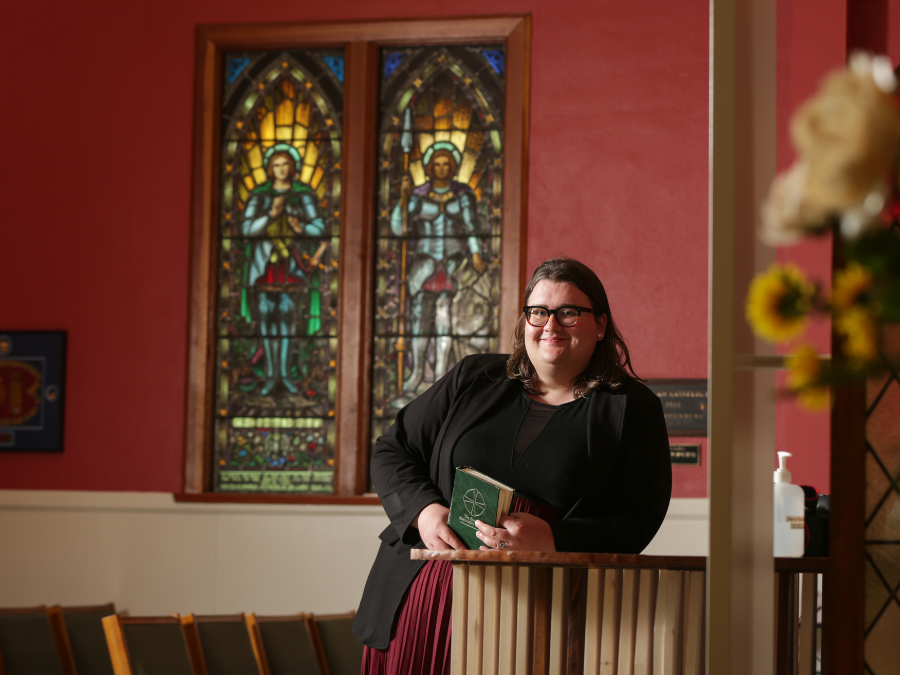
These days, I find myself walking the Anglican way with a vibrant and inclusive church in Calgary’s inner city: St. Stephen’s Anglican. It’s an imperfect place to be, in beautiful ways. Because, in the end, what church spaces like mine offer is an opportunity, for those of us walking together on the road toward inclusion, to begin enacting not another fantasy but rather the almost-utopian hope of inhabiting a community that, though still messy and deeply human, is working together to tear down the sorts of barriers that drive difference away.
***
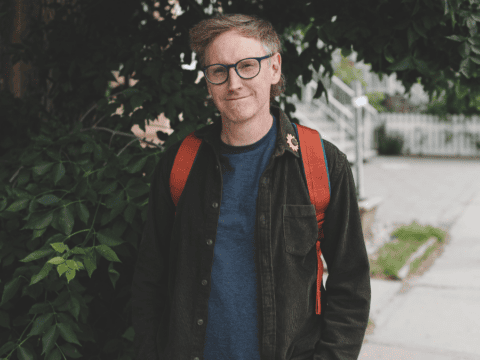
Charlotte Sheasby is a PhD student in Law at Toronto’s Osgoode Hall Law School and an Associate Lawyer at Marrow Law in Calgary. She writes a monthly column on 2SLGBTQ+ and legal issues. More at www.charlottesheasby.ca
This story was produced in collaboration with Xtra.
Thanks for reading
Independent journalism rooted
in faith and justice is under threat
Broadview is the only media organization in Canada offering thoughtful, values-driven journalism from an inclusive, progressive Christian perspective. But our work depends on your support. If you value what you've just read, please act now.
A gift today helps keep this journalism alive tomorrow.
With gratitude,