“I’m sorry we’re running late, but one of our offices was just shelled.”
That was how an online meeting started last week when I met with the local Sudanese partners of Canadian Foodgrains Bank member ERDO (Emergency Relief and Development Overseas). This is the world in which they work – a world where humanitarian needs keep multiplying as the civil war continues.
You may unsubscribe from any of our newsletters at any time.
This time, the office was empty when the explosives hit. Last month, it wasn’t. One of their colleagues, Al-Hbaib Abbas, was killed.
Al-Hbaib’s death should not be in vain. It should be a rallying cry for those of us who don’t have to worry if our homes or offices will be bombed today. April 15 marked three years of civil war in Sudan. More than 33 million people in the country need emergency assistance – millions more have already fled into neighbouring countries. Three years in, the humanitarian needs continue to grow, but not the financial support needed to address it. Aid organizations are stretching dollars to try and meet the needs, while volunteers feel compelled to take on extra risks.
Right now I sit in Sudan, meeting with colleagues who live this day in and day out. I’m incredibly moved by their passion for helping people, which often means putting their own lives on the line. They yearn for peace with a longing that comes from witnessing the consequences of war.
My colleague, Sally, who leads relief efforts in Sudan, told me her family fled the country for their safety and found refuge in Egypt – but felt compelled to come back to serve the people of Sudan, despite the situation worsening.
“It was not easy [to leave Sudan], but we had no option. People are left with nothing [in Sudan]. Basic services are not there, and people who stayed alive are mainly displaced. People are really in need right now,” Sally says.
More on Broadview:
- Paralysis, fear and faith under Cuba’s blockade
- There’s a Jewish community in Iran?
- ‘We are deeply alarmed by the escalating military violence’
Sudan, like the rest of the world, is also dealing with soaring prices on essentials that lead to difficult decisions. For aid agencies, high gas prices mean that trucking food into areas where people are starving becomes an even bigger financial burden. Higher food prices mean some people will get turned away because there simply isn’t enough to go around.
And why isn’t there enough to serve people who are at risk of starving? Governments of wealthy nations are choosing to slash foreign aid budgets, instead of leaning in to save lives when it is most needed.
In the face of these devastating cuts, the financial support of everyday Canadians has continued to make lifesaving work possible. Through Foodgrains Bank member Development and Peace–Caritas Canada, Trocaire Sudan is providing vital malnutrition treatment to more than 13,000 young children and pregnant and breastfeeding mothers. This could include fortified therapeutic food, vitamins or supplements, medical care, nutrition counselling services and follow-up support from partner staff.
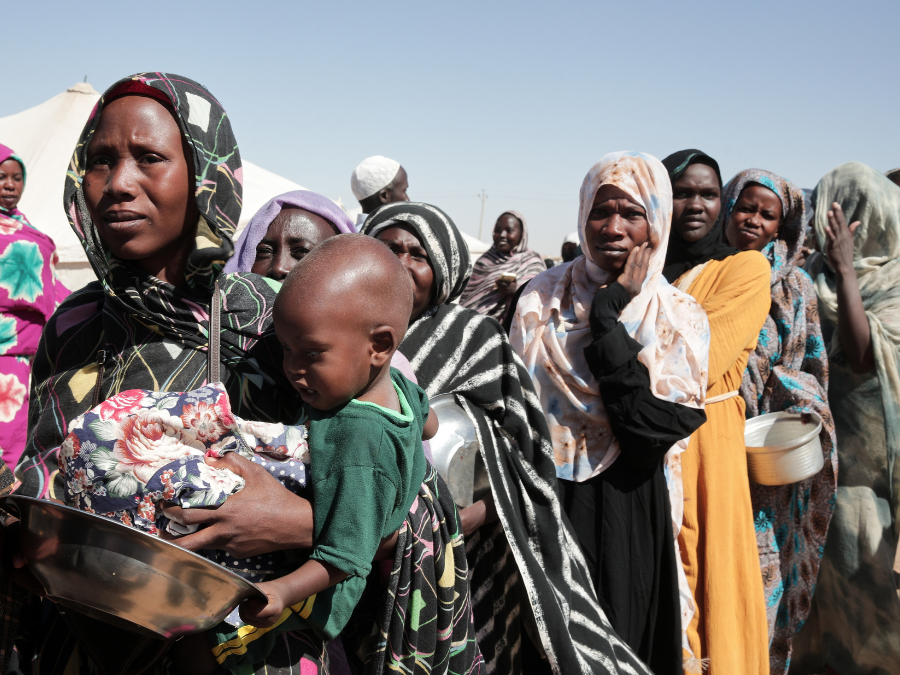
For these 13,000 women and children, this support is the difference between despair and hope. But it’s estimated that in Sudan, there are over 800,000 children and pregnant mothers in need of this care. What does it look like? Mothers carrying their toddlers for hours, walking from community to community, trying to find help because food is unavailable. Every single one of them deserves the right to a healthy life, yet if help never arrives, the cost will be both unimaginable and unacceptable.
When the rest of the world turns a blind eye, we must not allow the values Canadians hold dear to be questioned because we follow suit. This is a time for Canada to step up and provide the compassionate leadership the world is aching for — leadership that says human lives are worth the effort to find peace and provide food. Will we find it?
***
Canadian Foodgrains Bank is a partnership of 15 churches and church agencies working together to end hunger. Christina Philips is their director of resources and public engagement.
Thanks for reading
Independent journalism rooted
in faith and justice is under threat
Broadview is the only media organization in Canada offering thoughtful, values-driven journalism from an inclusive, progressive Christian perspective. But our work depends on your support. If you value what you've just read, please act now.
A gift today helps keep this journalism alive tomorrow.
With gratitude,