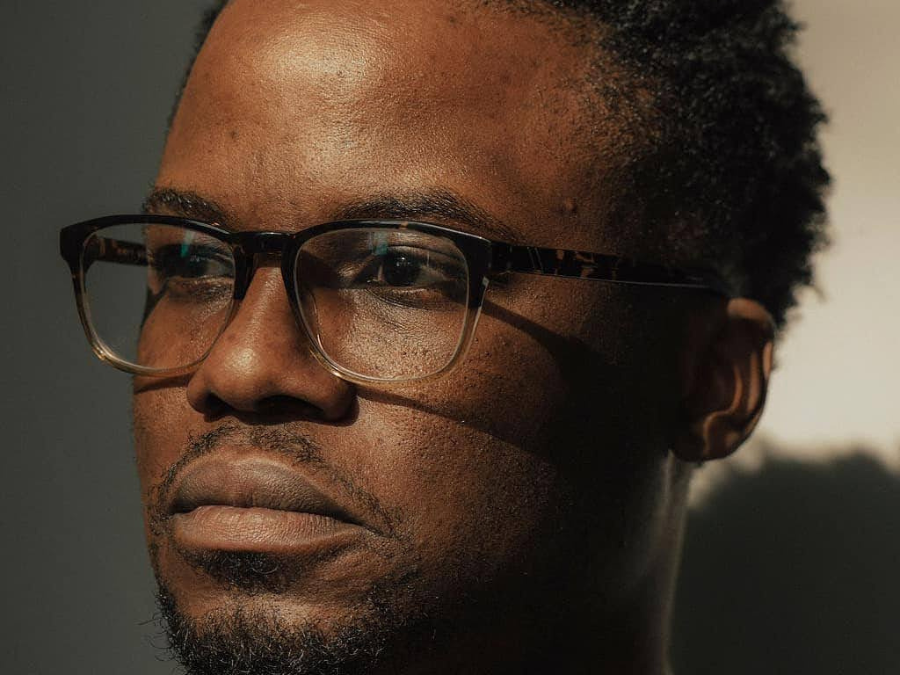
“Relax, man, you’re fine,” the agent said, pressing my fingers down onto the scanner.
I was not fine.
You may unsubscribe from any of our newsletters at any time.
Years after I was diagnosed with essential tremor at 13, I was arrested by ICE and taken to a U.S. Department of Homeland Security (DHS) office in downtown Philadelphia. I had already served a sentence for selling marijuana and was trying to rebuild my life. I believed, wrongly, that my plea would not trigger immigration consequences.
Now I was standing under fluorescent lights, trying and failing to keep my hands still long enough to be fingerprinted. The harder I tried to steady them, the worse the shaking became. Shock had poured gasoline on the tremor. The agent told me to relax, then held my fingers down himself to get the prints.
I think about that moment often, because it clarified something I had been learning for most of my life: people see a body doing something they do not understand, and rush to interpret it as character.
On paper, essential tremor is a neurological movement disorder. In life, it means people notice your hands before they know anything about you. They see the shaking and begin filling in the blanks: anxiety, weakness, instability, intoxication. What they rarely assume is something simpler: that your body moves differently, and that this difference has nothing to do with your competence or your worth.
By the time I was a teenager, I had already learned the choreography of compensation. Hold the cup a certain way. Brace your arm. Sign quickly. Decide, in a split second, whether to explain yourself or let the moment slide past. Learn that flicker in someone’s face when they notice. There is the condition itself and then the social life of the condition: projection, interpretation, the quiet shift in the room once your body has been read.
Sometimes the tremor announces itself before I do. At a checkout counter, over a form, reaching for a glass, I have seen the look arrive: concern curdling into suspicion, curiosity hardening into judgment. These moments are small. But they accumulate.
For a long time, I thought dignity meant staying one step ahead of that shift. Be sharper. Be calmer. Be more composed. If my body gave one impression, maybe my words could outrun it. In some ways, that instinct served me. It taught me discipline. It also taught me something lonelier: how easily adaptation hardens into apology. You begin to feel responsible for managing other people’s discomfort, as though your body owes the world an explanation.
We teach boys early that steadiness is strength, control is credibility, composure is authority. To shake is to risk being read as weak. No one needs to say this outright. Your body learns it long before your mind can name it.
As a Black man, I learned something else: the body is never allowed to be merely itself. It enters the room already burdened with meaning, already stalked by suspicion. A tremor is not interpreted the same way on everybody. Some bodies are granted the presumption of innocence; others are treated as if they are always on the verge of confession. In that context, visible difference can become proof of what the world was already prepared to believe.
In custody, that truth was stripped to the bone.
More on Broadview:
- ‘Show me where the Bible mentions sweetgrass,’ a critic demands
- A new mental health movement is rediscovering ancient wisdom
- One family, many faiths
A tremor that might be awkward in ordinary life could become dangerous inside a system built on surveillance and control. A shaking hand is never just a shaking hand when the people around you are trained to assess risk. In that DHS office, my body did not feel merely misunderstood. It felt exposed — and exposure in such a place is its own kind of peril.
But custody did not invent that logic. It only made it impossible to ignore.
The wider world does this all the time, more politely and with better lighting. We read bodies and turn them into verdicts. The shaky hand becomes weakness. The body that does not project ease or command gets treated as if it is confessing some deeper flaw. This happens everywhere: classrooms, offices, interviews, dates, places of worship — anywhere we mistake surface for truth.
There is, I think, a deeper problem inside that habit. We do not know how to encounter one another without rushing to interpretation. We want the body to explain the person. We want what is visible to save us the labour of humility.
What I have had to learn, slowly and imperfectly, is that dignity does not mean erasing the tremor or outrunning other people’s projections. That is too fragile a way to live. It leaves your humanity hostage to someone else’s interpretation.
Dignity has meant refusing the lie that my body owes anyone comfort and the quiet shame that settles in when you spend years being interpreted before you are encountered.
I have spent much of my life in the space between being seen and being known. Essential tremor taught me early that those are not the same thing. That is what I return to when I think about the agent telling me, “Relax, man, you’re fine,” while pinning my fingers to the scanner.
A tremor is not a confession.
***
Ish Aderonmu is a journalist in Toronto.
Thanks for reading
Independent journalism rooted
in faith and justice is under threat
Broadview is the only media organization in Canada offering thoughtful, values-driven journalism from an inclusive, progressive Christian perspective. But our work depends on your support. If you value what you've just read, please act now.
A gift today helps keep this journalism alive tomorrow.
With gratitude,