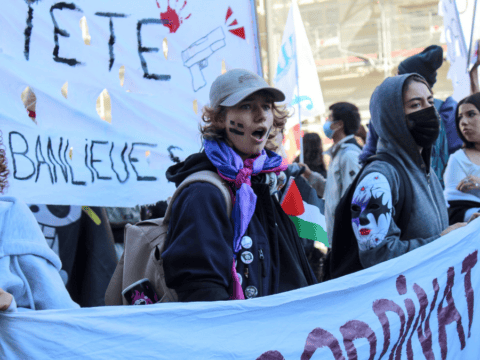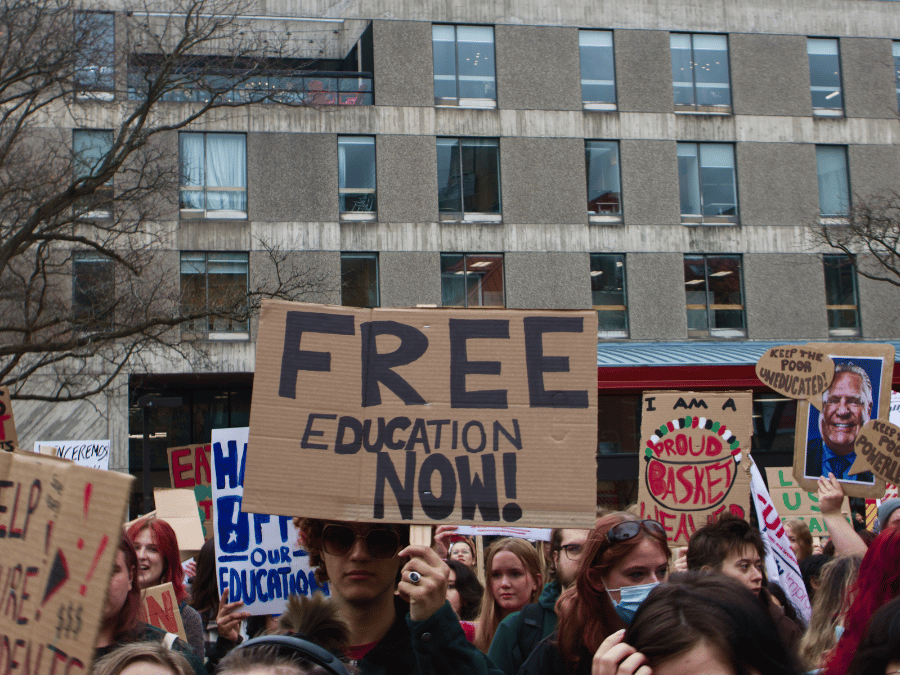
Every November, Trans Day of Remembrance (TDOR) calls communities to mourn transgender and gender-diverse people lost to anti-trans violence. In Canada, that annual vigil feels increasingly urgent. Trans rights have become a political flashpoint, from Alberta’s restrictions on gender-affirming health care and school pronoun policies to Saskatchewan’s use of the notwithstanding clause to override student protections, and legislative attempts in British Columbia to roll back human rights protections and medical access to gender-affirming care.
In Victoria, newly elected city councillor Wendy Bowkett faced protests and a resignation petition after social media posts disparaging trans women resurfaced.
You may unsubscribe from any of our newsletters at any time.
Against that backdrop, progressive Christian leaders say lighting a candle once a year is no longer enough. With anti-trans rhetoric often wrapped in religious language, clergy and faith communities are challenging the idea that Christianity and trans allyship cannot coexist — and are working to make their pews safe havens for trans people.
“I think maybe one of the misconceptions is that if you’re a minister, you are defensive of the church as an institution, and are quite rigid,” says Rev. Michiko Bown-Kai, an Ottawa-based United Church of Canada minister who is non-binary. Bown-Kai encourages churches to ground their allyship in the United Church’s PIE framework: being public, intentional and explicit about inclusion.
“It only takes a certain type of church or some type of leadership to be vocal for that to speak loudly for so many Christians. And so I think reclaiming a narrative, being able to offer an alternative, is important.”
Bown-Kai is among the faith leaders featured in videos for the “We Are Allies” campaign, a Canadian public education effort directed at adults who care for trans, non-binary and Two-Spirit youth.
“We Are Allies” recently expanded its resources to include a Christian perspective. In the summer of 2025, the campaign consulted 32 Christian leaders, congregants and faith practitioners to understand how churches navigate gender diversity. Following those consultations, seven Christian storytellers gathered in Vancouver this past February to film videos exploring gender diversity through faith.
“During the ‘We Are Allies’ consultations with Christians in 2025, we heard from trans people about experiences within faith communities that had left them feeling hurt, isolated, or uncertain about whether they belonged,” says Kai Scott, one of the campaign’s leaders.
Sometimes the harm was overt, such as being told that a person’s gender identity was incompatible with their faith. Other times, it came through silences from clergy or sitting in a pew while congregants debated whether trans people should be accepted. “A welcoming statement is a good beginning,” Scott says, “but trust grows when people see that commitment reflected in everyday interactions and decisions.”
More on Broadview:
- Should I attend an event featuring a speaker accused of transphobia?
- Brazil’s trans community’s fight for survival
- Dr. James Makokis brings traditional Cree approaches to transgender medicine
Across Canada, congregations are shifting Sunday services to join Pride marches and hosting TDOR vigils.
For Rev. Theo Robinson, an Anglican priest in Manitoba who realized he was trans during his theological training, allyship means showing up at community vigils and protests without centering the church. “Most of us aren’t expecting that community to walk back into the church doors, but we hope that they can see that we’re there if they need us,” he says.
Robinson left the Roman Catholic Church in his youth, fearing he wouldn’t be accepted as queer, but eventually found a spiritual home in the Anglican Church of Canada. He is candid about the damage caused by hostile religious rhetoric.
“The list of names of people who have died simply for being trans just keeps growing exponentially,” Robinson says. “People are told you can’t be both Christian and queer, and you can’t be both Christian and trans, and that being trans is against the Bible.”
In Victoria, Rev. Mark Green has spent years trying to turn his church into a genuine sanctuary. As a co-lead minister at Broad View United and the parent of a trans child, Green believes cisgender clergy have a responsibility to use their privilege to confront bias and move congregations beyond tokenism.
Broad View partners with Saanich Neighbourhood Place and Gender Spectacular to host a monthly trans family dinner, drawing attendees largely from outside the church.
He recalls encountering some surprise from trans people who were attending their first trans family dinner at a church and were impressed by Broad View’s openness and welcome.
“We’ll hear comments as people are leaving and going by our bulletin boards,” he says. “‘Like, wow, I’m not really a churchgoer, but if I was going to go anywhere, like, I’d go here,’” he says.
For Géorgie Gagné, a Two-Spirit trans woman and campaign storyteller, real safety requires Christian leaders to pair that welcome with accountability for the historical and ongoing harm religious institutions have inflicted on Indigenous and 2SLGBTQIA+ people.
“Listening is the first part of allyship and nurturing belonging,” Gagné says. “The world is harsh for trans people at the moment—slowing down and making things feel cushy and soft is a radical act. At all times, we need allies that are ready to invest energy and time into efforts that centre the voices of trans communities.”
Bown-Kai agrees that humility and deep listening are essential to genuine Christian allyship.
“Trans people offer this beautiful gift that they can be so intensely discerning about what it means to become, what it means to transform, what it means to claim radical authenticity in a world that demands obedience and self-denial,” they say.
“I would just want to affirm that who they are and who they’re becoming is a blessing, just in of itself, because they’re a beloved child of God.”
***
Victoria Hincapie Gomez is a freelance journalist based in Toronto whose work has been published in CBC Arts, The Local, Maclean’s, Xtra Magazine, Toronto Life, and Script.
Thanks for reading
Independent journalism rooted
in faith and justice is under threat
Broadview is the only media organization in Canada offering thoughtful, values-driven journalism from an inclusive, progressive Christian perspective. But our work depends on your support. If you value what you've just read, please act now.
A gift today helps keep this journalism alive tomorrow.
With gratitude,