With more than 90 percent of Gaza’s population displaced amid Israel’s bombing campaign and ground invasion — resulting in more than 81,000 reported Palestinian deaths since Hamas’ attack on October 7, 2023 — Palestinian refugees with financial means to leave have few options.
While a small number of people manage to obtain medical clearance or relocate to a country where they hold dual citizenship, most attempt to cross into Egypt — only to remain in limbo, where they often lack formal refugee or legal status and face severe medical and administrative hardship.
You may unsubscribe from any of our newsletters at any time.
More recently, some of those who have crossed into Egypt have encountered so many barriers that they had to make the painful decision to return to Gaza. Among them is Omar, who fled Gaza last year after paying thousands to an Egyptian broker — only to be forced to return late last summer. (Omar is not his real name. He would only speak to Broadview under a pseudonym out of fear of reprisal by Israel.)
As a 36-year-old audio engineer who once coordinated sound production for live concerts in Gaza, Omar spoke exclusively to Broadview about his journey back to Gaza.
Like thousands of Gazans, Omar evacuated the strip through the border city of Rafah in spring of 2024, just before the Israeli military seized control of the Palestinian side of the crossing and shut it down. The move effectively blocked humanitarian aid from entering Gaza and prevented Gazans from leaving, according to the United Nations Office for the Coordination of Humanitarian Affairs.
“I didn’t want to return to Gaza,” he said, adding that his ticket out of Gaza involved a payment of $5,000 USD to an Egyptian broker called Hala Consulting and Tourism. “I made the decision when I lost hope of travelling abroad.”
When Omar arrived in a district in eastern Cairo, he found work in a garment factory that manufactured sportswear and rented a room for $150 USD, about the same cost as the average monthly salary of a city garment factory worker.
More on Broadview:
- ‘This is where I need to be’: A Canadian doctor reports from a Gaza hospital
- Palestinian Christians seek solidarity amid war and displacement
- Israel strikes health clinic in Gaza as offensive against Hamas
For the next two years, Omar tried to send money back to his family in Gaza each month, while at the same time trying to sustain himself. It was impossible to do this without making great sacrifices, he said.
Earning enough money proved exceedingly difficult. He discovered he didn’t have the means to apply to a visa program to Canada or any other European country, and that many of those who had were still waiting for approval.
They included thousands of Gazans wanting to reunite with relatives in Canada, but facing unusually delayed processing times for their temporary visas. Others, he said, waited for over two years only to be rejected for poorly substantiated claims linking them to terrorist activity.
“Due to my family’s difficult circumstances, I was forced to go back,” he said. “I felt hopeless and saddened because I was unable to travel to a European country or Canada to help my family. I decided to return to Gaza to assist them there.”
In February, Israel reopened the Rafah border crossing, allowing more than 5,700 people to return to the strip as of September 2026. Only Palestinian residents of Gaza who are already in Egypt are permitted to return through Rafah. In August of this year, Omar became one of them.
“It was an extremely difficult and arduous journey,” he recalls. “You are subjected to thorough [security] searches and long waits.”
At the Regavim checkpoint, where Palestinians returning to the Gaza Strip from Egypt are processed, Omar says the few snacks he brought with him, including pastries, cheese and juices, were confiscated. He was allowed to keep his phone, but not his charger or wristwatch. “You cannot speak to them,” he said. “There is nothing that can be done.”
“Only a 20-kilogram bag was permitted. Any other devices, food items or therapeutic medications were prohibited,” he said. “I felt a loss of hope.”
‘Devoid of any hope’
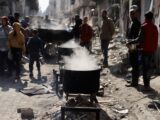
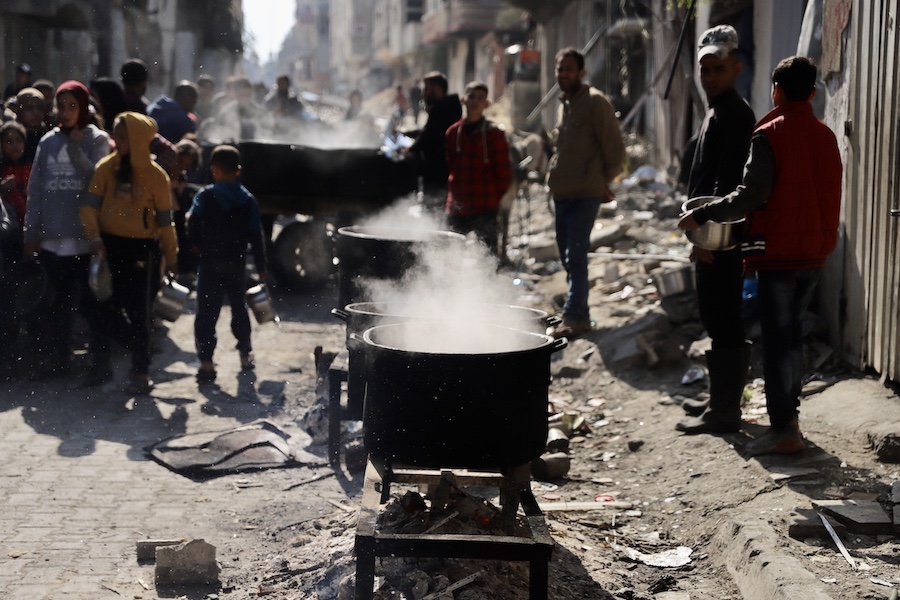
Back in Gaza, Omar says not much had changed since he had left. There are still continuous periods where people rush to search for food, queuing up in long lines for bread and water.
Those who have something to cook prepare fires, with the smell of smoke often finding its way into the tent he shares with his parents and siblings. Both his parents are in frail health.
Every day, he says, he steps out to the sight of dilapidated tents. “I see the look of desperation in people’s eyes, their gazes devoid of any hope or purpose. And the ceaseless sounds of bombs and artillery.”
He says he had thought that his return might enable him to help his family. “Unfortunately, I am unable to do anything. I, too, have started to reach a state of despair. There is no life, no work, no electricity, no potable water and no goal whatsoever.”
***
Madalene Arias is a freelance journalist based in Toronto and a member of the Toronto United Mennonite Church.
Thanks for reading
Independent journalism rooted
in faith and justice is under threat
Broadview is the only media organization in Canada offering thoughtful, values-driven journalism from an inclusive, progressive Christian perspective. But our work depends on your support. If you value what you've just read, please act now.
A gift today helps keep this journalism alive tomorrow.
With gratitude,