
Last Friday, an hour before midnight, Prime Minister Mark Carney suspended trade
negotiations with the United States and ordered Canada’s trade delegation home,
rejecting last-minute terms Washington had put on the table.
The proposed agreement would have preserved tariff-free access for most Canadian goods
You may unsubscribe from any of our newsletters at any time.
while reducing U.S. tariffs on key Canadian industries, including auto, steel and aluminum.
But the final U.S. demands, Carney said, were unfair, uneconomic and threatened
Canada’s ability to make its own decisions on trade, culture and other matters of
national sovereignty.
There are countless analysts writing about the political and economic factors that led to
this decision. That is not my role. My role, as a United Church minister, is to first
acknowledge that this decision (which I personally support) has taken us into uncharted
territory; and second, to help guide my congregants and others through this tumultuous
time.
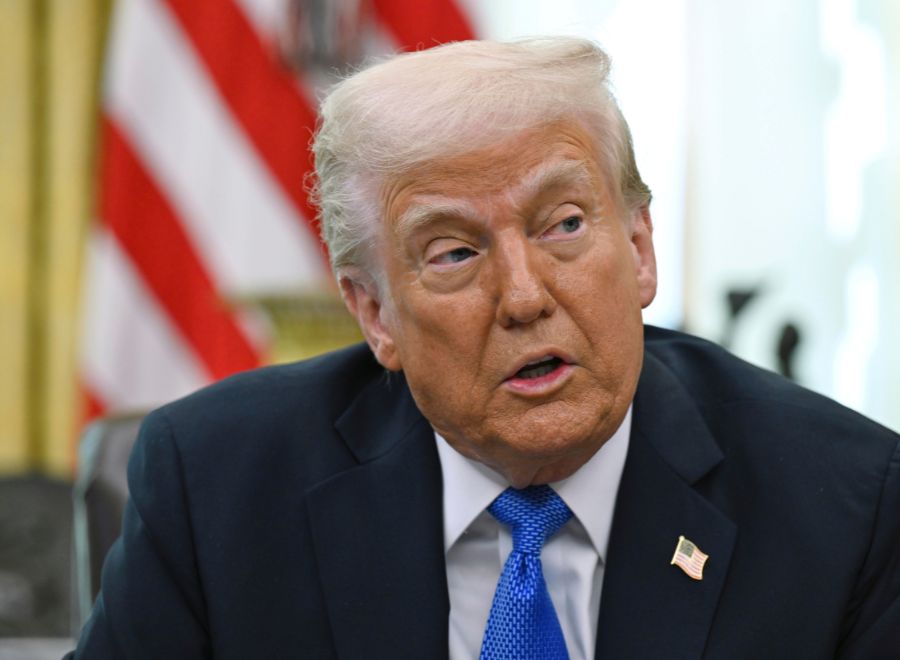
Trump has made no secret that he covets our country as his 51st state. Most of us
dismissed this as mere Trumpian bluster. But there is no doubt now that our sovereignty
is on the line. And the economic impact of the new tariffs that Trump announced on
Monday — promising 50 per cent U.S. taxes on Canadian automobiles and car parts,
beginning Jan. 1 — is going to be brutal for our country.
So what is the role of the church at this time? Here are some suggestions:
● Be theological
Our role is not political or economic analysis, but rather a God analysis. How do
we find and experience God in a time of chaos? Where is God if I lose my job or
my business because of these tariffs? No one else will walk with people through
these questions.
● Be biblical
Jesus ministered in a time of occupation, conflict and economic turmoil. Roman
fishing fleets were scouring the Sea of Galilee for fish to manufacture garum, the
fish sauce used in cooking across the whole empire. This made life very difficult for small fishers like Peter. Romans were also stealing land for large-scale
agricultural enterprises. Displaced farmers were forced to work these now vast
estates on what was their land. The gospels have a lot to say about living in
chaos and difficulty. It’s the perfect time to have a Bible study.
● Be faithful
This is a year to focus on what’s central to our Christian faith within the context of
The United Church of Canada. It is the 20 th anniversary of our Song of Faith, a
beautiful document that encapsulates and celebrates what it is to be a Christian.
Why not use this over a series of weeks in worship? Focus is incredibly important
when we are feeling unmoored and anxious.
● Be generous
Whose jobs and businesses are under threat in your community? Call them and
offer support. Reach out to your political leaders — not with demands, but to ask
how the church can help. These folks will be under tremendous pressure. Offer
everyone meals and your church as a gathering place.
● Be empathetic
Many business owners will be in survival mode, frightened that something they
have spent years building could vanish in weeks. Call your local chamber of
commerce or business association and go to a meeting to find out what is
happening. Do the same with unions in vulnerable industries.
● Be a good community partner
We can’t do this alone. This is a time to form alliances — interchurch, interfaith
and interagency. Coalitions of the helpers can play a powerful role in assisting all
of us.
● Be prayerful
This is a time to pray… a lot. We are in a place that is unique in our history. We
need prayer to connect us to the holy and the sacred. We need prayers to calm
our nervous system so we can function at our best. Prayer connects us to each
other and to God. We need also to take Jesus seriously when he says to pray for
our enemies. So yes — we need to pray for the broken and vicious president of
the United States… Donald J. Trump.
***
Rev. Christopher White is a United Church minister in Hamilton.
Thanks for reading
Independent journalism rooted
in faith and justice is under threat
Broadview is the only media organization in Canada offering thoughtful, values-driven journalism from an inclusive, progressive Christian perspective. But our work depends on your support. If you value what you've just read, please act now.
A gift today helps keep this journalism alive tomorrow.
With gratitude,





Thanks Christopher, Well reasoned, timely and presented.
Thanks Chris – a great reminder that being a kind spiritual human and connecting to others will help us get through this together.
Thanks Christopher. Great suggestions for us all in these days!