I told a friend I liked religion because I loved treating things — Earth, especially — as sacred.
So when Bloor Street United Church in Toronto offered me the position of climate motivator this year, I was filled with a careful excitement; I grew up within a conservative denomination, so I’ve always walked warily within Christian walls.
You may unsubscribe from any of our newsletters at any time.
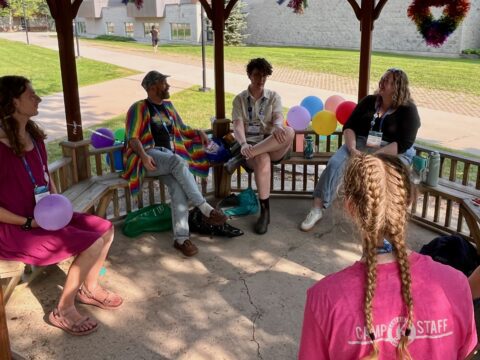
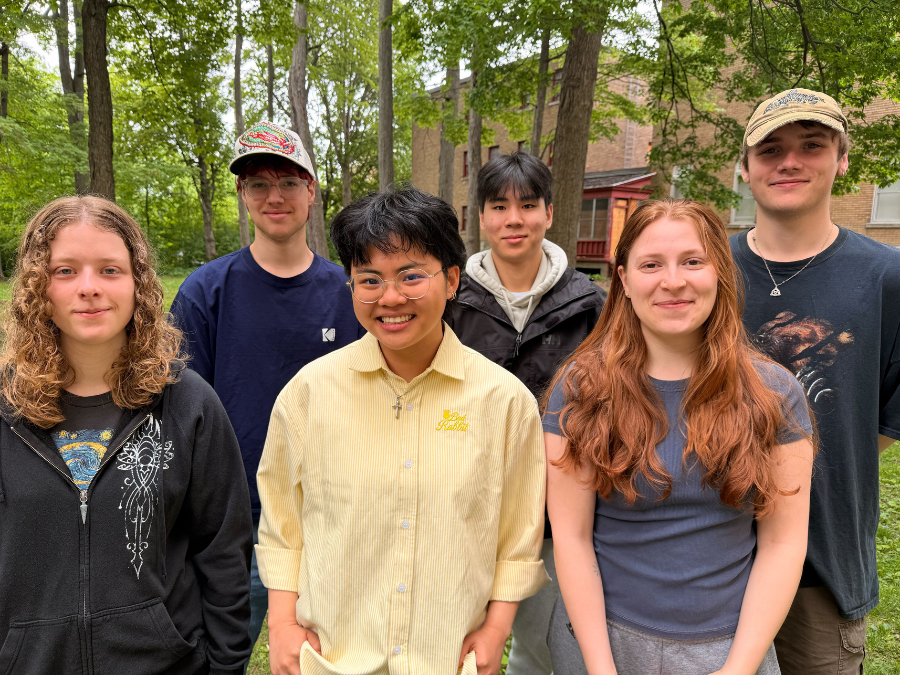
I was one of 18 climate motivators chosen from various provinces, all young adults. Beginning in mid-May and over an eight-week paid internship, we worked at mobilizing our communities of faith to address the climate-environment crisis.
In my group, Hope Pridmore planted a pollinator garden of native plants in Guelph, Ont.; Lucas Shin and Owen Hyde created thorough energy audits for their churches in Cambridge and Guelph, Ont., respectively; Matteo Imbeault advocated against the Tantramar gas plant in Sackville, N.B.; and Nora Snider educated her Whitehorse, Yukon, community about wildfire risk. I planned a series of five skill-building workshops that addressed other injustices at the intersection of climate change. One such workshop was a “community kitchen” with The Stop Community Food Centre in Toronto; a dozen people gathered in the commercial kitchen of St. Matthew’s United to cook and eat a locally sourced meal together.
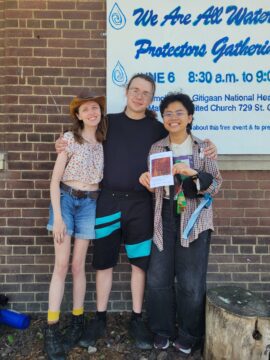
There are many commercial kitchens nested in church basements, and through that mundane epiphany I realized the potential of the church as a space for rest and sustenance: a safe space, a third space, a radical space. You can walk in for free.
More on Broadview:
- Tzeporah Berman on how the fossil fuel industry hijacks climate discussions
- Why this tree planter is organizing from the ground up
- David Suzuki still believes change is possible
Not everyone I met during the program was religious, but everyone I met, if they cared about climate justice at all, was full of faith. Climate activism is an act of faith. To protest and build and lobby, to do that again and again, exhausted, in the face of oligarchs, uncaring governments, a housing crisis and an utterly opaque future — that takes radical hope.
The church’s role is to protect that hope.
I had returned to Christianity because I needed to moor myself to a body of knowledge, an ancient one, that knew a thing or two about acting in accordance with a moral code and protecting holy ground. I rested myself in God because so many material structures in my life had forsaken me — the university, the provincial and federal states, our market economy — as they sought to undermine the power of the young and lower class.
I have been involved in social and climate justice since 2018. I and so many of my peers, especially those involved in direct action activism, are in need of community. We need physical spaces and land on which to gather and plant. We need financial and spiritual support to sustain ourselves, lest we burn out and our movements suffer.
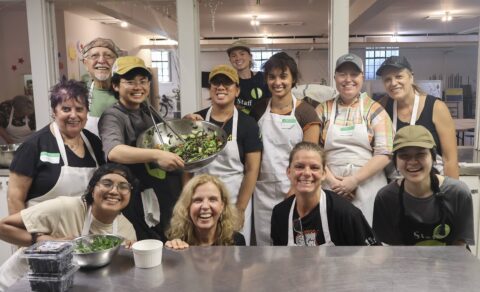
As part of my employment requirements as a climate motivator, I attended worship and met with congregants. Less expectedly, I made friends with peers and elders and seminarians, and attended events hosted by the St. Matthew’s Indigenous Peoples Solidarity Group. I built up my trust with the United Church. And trust is a holy thing when ancient systems and authorities have failed you.
The United Church of Canada was so inclusive, justice-oriented and colourful, it seemed almost unchristian. But I felt Christ’s love more strongly here than ever. In our multiplicity, we were unified through our care for Creation.
I once thought the church had no place for me, that faith structures had no place in liberation. I thank the climate motivator program for giving me a glimpse of a different reality.
***
Nghi Nguyen is an artist advocating for environmental justice and trans liberation. He is very grateful for Turtle Island.
Thanks for reading
Will you help support United Church reporting?
Broadview is the only media organization dedicated to telling the stories of The United Church of Canada — its big decisions, perspectives and the faithful people and communities at its core. But this essential work depends on you.Make a tax-deductible gift today — 100% of your donation goes directly to supporting United Church coverage.

With gratitude,