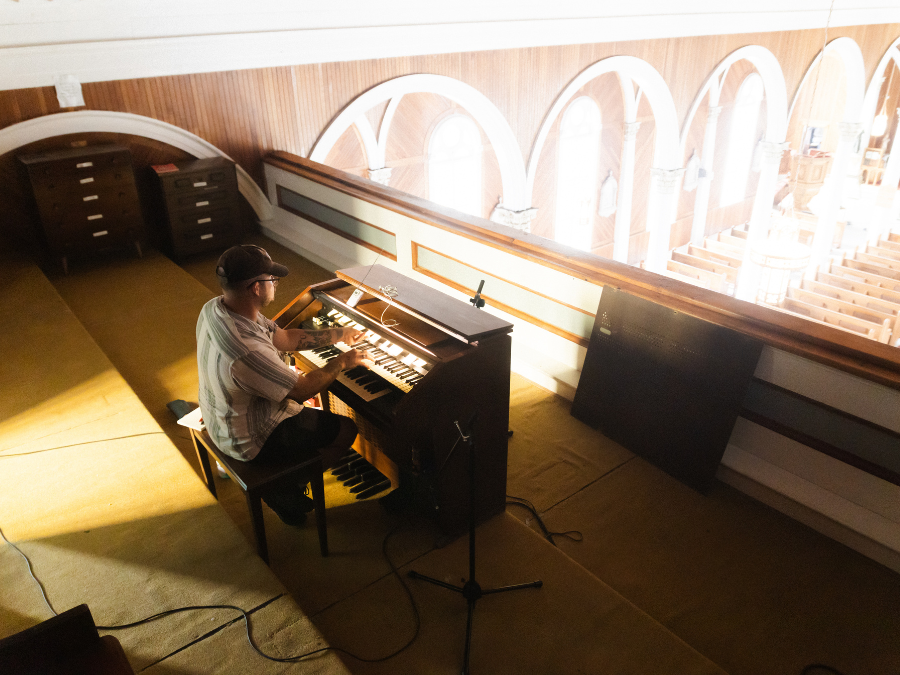
Wind whistling through doorways, thumps and shudders, cracks and creaks, a person telling the story of a place. These sounds mix with the droning chords of the church organ throughout the newly released Kingdom Come, Kingdom Go — an experimental album that blends organ music with field recording, woodwind and brass, and oral history.
It’s the result of a musical partnership and an epic road trip across Newfoundland in the summer of 2024. Composer Michael Cloud Duguay and his collaborators, towing a 1970s camper, drove more than 1,500 kilometres — to Fogo Island, Brigus, Bonavista, Cupids, Port au Port, Greenspond and St. Anthony —sampling the sounds of organs in United, Anglican and Catholic churches.
You may unsubscribe from any of our newsletters at any time.
The project started with Duguay’s fascination with organ music and the instruments themselves, which he describes as monogamous. “They have this one space that they were either constructed for or were constructed and moved into immediately. But as much as they have fit into the space, the space has fit around them as well,” he says.
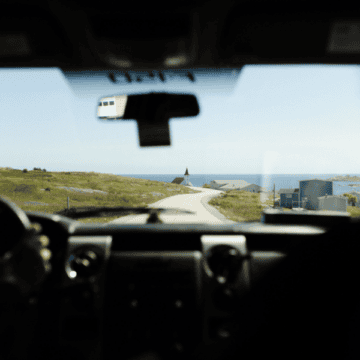
Duguay aspired to record not only the sounds of the organs, but also of their communities. Using audio clips of birds, wind, vehicles and conversations, the album became a meditation on the journey with the sounds of places and people met along the way.
To achieve his recording vision, Duguay reached out to peers engaged in improvisational practices, like Andrew MacKelvie, a saxophonist from Nova Scotia. “The main idea is that you’re serving the music,” MacKelvie says. “If you approach with this intention to remove ego and be in the moment, be present with the piece and listen to what it wants, based on your intuition and experience you can create something spontaneously.”
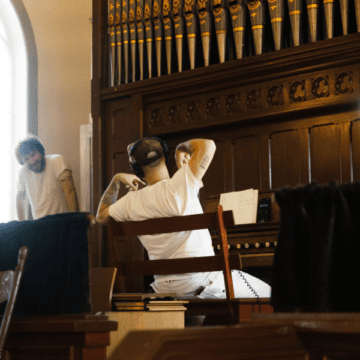
One song from the album, Tilting, blends the howl of the wind with the organ recorded on Fogo Island. “Because the wind was just so present, there was nothing we could do about it,” Duguay says. Rather than fight it, he leaned into it. “And it became this beautiful sort of duet between organ and wind.”
Other times on the trip, there were baby birds chirping in a nest above the door, a family gathering just outside the church, or deliberate encounters with community members through interviews. These moments were folded into the compositions.
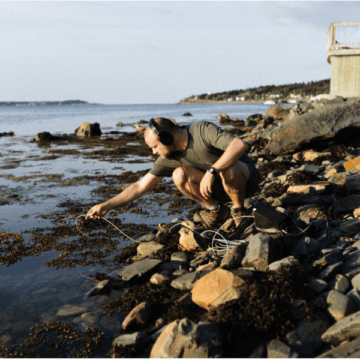
The journey and project were made possible by Jake Nicoll, a St. John’s, N.L. musician/producer who retrofitted an old camper trailer into a solar-powered mobile recording studio — a pandemic project. “The Scamper,” as he calls it, has facilitated recording in forests and barns, and now churches: acoustically unique places that shape the sounds in and around them.
More on Broadview:
- Natalie MacMaster on the music that shaped her faith and family
- Key of Sight strikes the right chord by providing accessible and inclusive music education
- The objects and rituals that shape faith at home
“The interesting thing about this project is these organs are built into the buildings themselves and the whole space is like the resonator for that instrument,” Nicoll says. “It’s like you’re sitting inside the body of the guitar.”
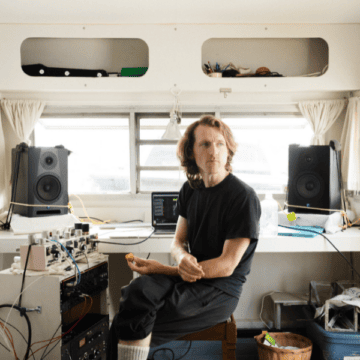
The size and outfitting of each church greatly affect its sound. The bigger the space, the more powerful the reverberations, which could then be compounded or dampened by the materials within. “[The church] in Greenspond was a relatively small church completely made out of wood — not a lot of carpet or fabric absorbing sound — and it had a very bright sound,” Nicoll explains.
In a way, the whole building is part of the instrument, Nicoll says, and that played into decisions around where and how to place the microphones. Dave Grenon, recording technician on the project, found creative places for them between floorboards, in the organ’s foot pedals and high up in the rafters.
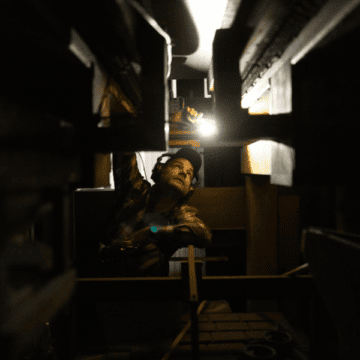
“Some of the recordings of the insides of the church — the floorboards, the motors, the pumping of the organ and so on — if the resonant space is the body, then I guess we were miking the bones,” Grenon says.
For Mary Tucker, caretaker and organist at St. Anthony United, the project illuminated the space and the instrument she knows so well. Tucker is a self-taught organist who learns to play new hymns by ear. Hearing Duguay’s playing of the church organ was a new experience for her. “It really showed the sound she [the organ] can kick out,” Tucker says.
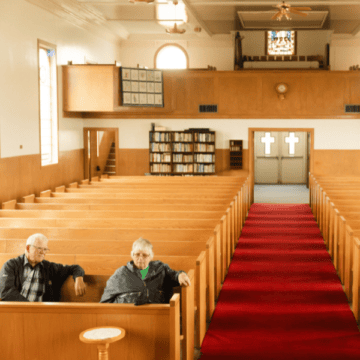
Tucker and her husband’s stories are sampled on the track Settlement, and the album closes with … Pond 3, which features a hymn that she played for Duguay called “Jesus Keep Me Near the Cross.”
An organ tuner used to visit St. Anthony regularly to service the instrument, Tucker says, but he retired and no one took over the business. Now she relies on other community members to fix the organ when it breaks, and slowly it is growing more out of tune.
“But she still sounds good,” Tucker says in its defence. “If I hit a bad key that’s my fault, not the organ’s.”
***
Ayesha Lye is a journalist, sound technician and producer working across media from film/TV to web, radio and podcasts.
Thanks for reading
Will you help support United Church reporting?
Broadview is the only media organization dedicated to telling the stories of The United Church of Canada — its big decisions, perspectives and the faithful people and communities at its core. But this essential work depends on you.Make a tax-deductible gift today — 100% of your donation goes directly to supporting United Church coverage.

With gratitude,