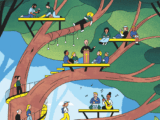
Canada’s drop to 25th place in the 2026 World Happiness Report released in March was largely due to declining well-being among young people.
Social media, economic uncertainty, adverse childhood experiences and social isolation are often cited as key drivers of this decline. With the exception of social media, these are all challenges Indigenous peoples in Canada have faced for generations — while also developing ways to navigate them through traditional knowledge and land-based practices.
You may unsubscribe from any of our newsletters at any time.
In current mental health discourse, psychologists and psychiatrists increasingly emphasize the importance of “somatic healing” in addressing youth distress. Somatic healing focuses on how the body registers stress — whether it is in a state of alarm or relaxation — and uses that awareness as a starting point for healing. When a person is in a heightened state of stress, it is treated in somatic therapy as a trauma response. This might manifest as shallow breathing, chest pains, difficulty focusing or trembling.
Rather than relying on “top down” approaches that are common to therapeutic techniques such as cognitive behavioural therapy or talk therapy — where the mind is given instructions to regulate the body — somatic therapists take a “bottom up” approach. They work through the body itself to help regulate the central nervous system. These might look like breathing techniques, body scans or temperature-based tools like ice cubes.
More on Broadview:
- Paralysis, fear and faith under Cuba’s blockade
- Albert’s Christian Leadership Summit puts church-state separation at risk, critics say
- Grizzly bears are back in B.C. Is coexistence possible?
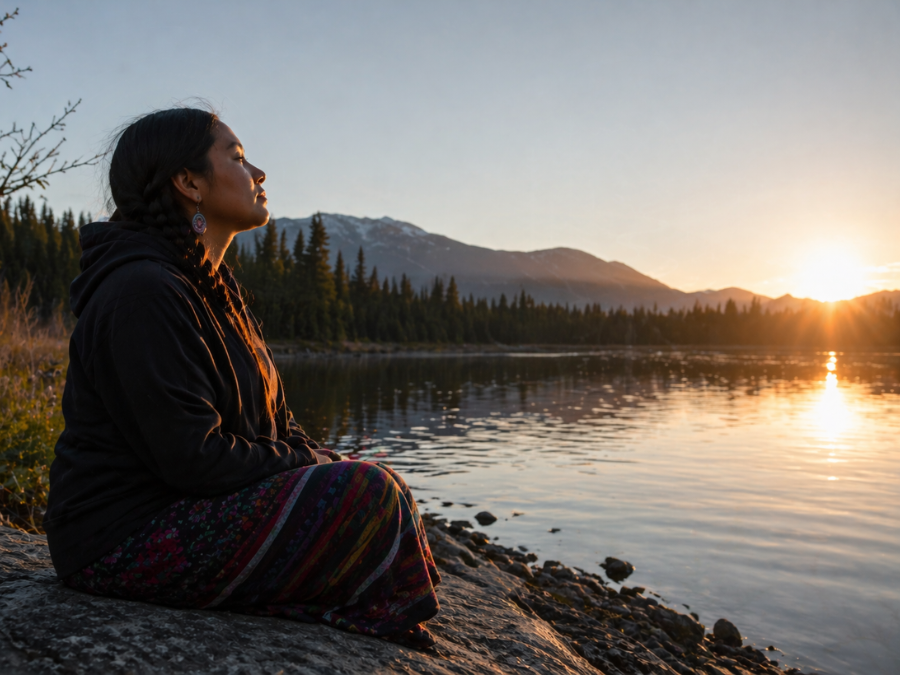
These practices also overlap with land-based approaches to healing: stepping away from your smartphone so you can connect to the natural outdoors, noticing the smell of grass and trees, or immersing yourself in water. These are ways of grounding the body and your energy with Mother Earth herself.
In the early 2000s, I (Cynthia Wesley-Esquimaux) joined colleagues at Indigenous Youth Roots (then known as Canadian Roots Exchange) to integrate these ideas into our work with youth and Indigenous communities across Canada. At the time, we didn’t call it “somatic healing” but “land-based” learning, and then later, “re-Indigenization” experiences.
We knew these techniques were successful because of our engagement with Indigenous elders, healers, and their teachings. In my own life, I personally experienced this healing after suffering an immune system crash when I was 36 years old. Land-based medicines saved my life and opened my eyes to the importance of a holistic approach to health care.
These concepts were not taken seriously by the psychiatric profession until the establishment of the Aboriginal Healing Foundation, and the work of the Truth and Reconciliation Commission released in 2015. Together, these events opened a broader discourse on traditional knowledge and healing approaches among global trauma theorists. Over time, this shift has contributed to growing interest in land-based somatic healing practices for everyone.
We know there are growing concerns about youth mental health. If Indigenous trauma can teach us anything, it is how the environments we live in can harm, yet also heal us when we embrace natural systems of knowledge. Our elders remind us that reconnecting with the land, community and embodied knowledge is not only a path forward for Indigenous youth, but one that holds lessons for all young people in Canada.
***
Cynthia Wesley-Esquimaux (Chippewa/Mohawk) is the Chair for Truth and Reconciliation at Lakehead University and Chair of the Governing Circle for the National Centre for Truth and Reconciliation at the University of Manitoba. She has a PhD in Anthropology from the University of Toronto.
Alexandra Shimo is an author, educator and journalist in Toronto.
Thanks for reading
Independent journalism rooted
in faith and justice is under threat
Broadview is the only media organization in Canada offering thoughtful, values-driven journalism from an inclusive, progressive Christian perspective. But our work depends on your support. If you value what you've just read, please act now.
A gift today helps keep this journalism alive tomorrow.
With gratitude,