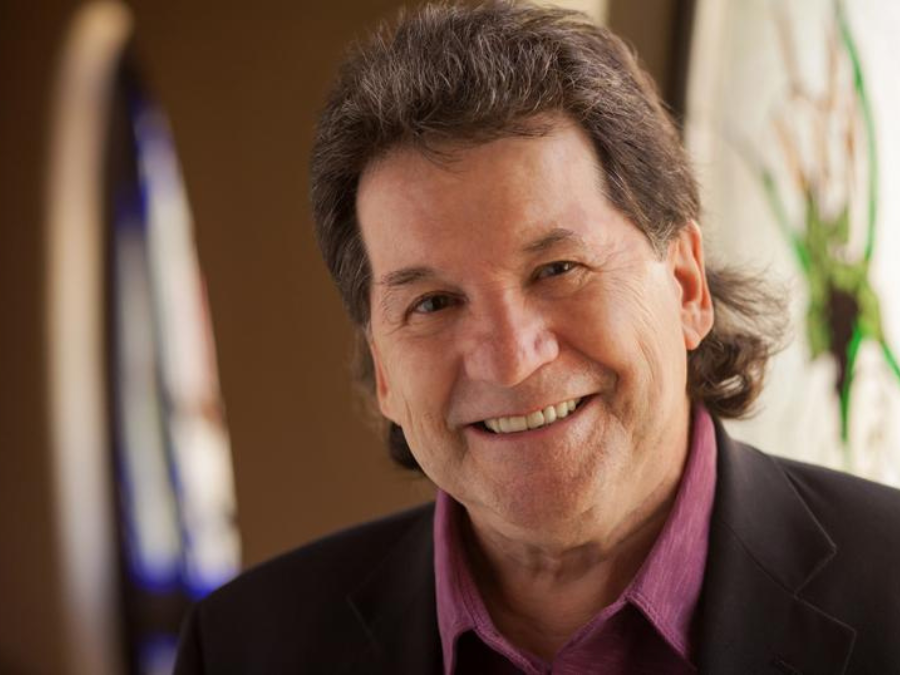
Reginald W. Bibby began tracking Canadian social trends in 1975, paying special attention to faith. The Alberta sociologist and prolific author has charted religious decline and resilience in books such as Fragmented Gods, Unknown Gods and Restless Gods. His latest work, The Canadian Transformation: Social Trends 1975-2025, brings together 50 years of data from his national surveys. He spoke to Christopher White from his home in Edmonton.
Christopher White: Canada has experienced huge changes since you began monitoring social trends five decades ago. What value is central to the Canadian identity today?
You may unsubscribe from any of our newsletters at any time.
Reginald Bibby: If there’s just one that would be right at the top, it’s definitely freedom. Canadians want personal freedom with respect to choices in every part of their lives.
CW: That’s not what I would have expected as the central value. What does the term “freedom” actually mean for Canadians?
RB: It’s a good question. We have just about eight in 10 Canadians saying it’s very important to them. People want choice and flexibility. People want freedom when it comes to personal morality. They have changed over the decades in terms of attitudes toward sexual behaviour and orientation. But over and over again, if you’re looking for some kind of central thread, it’s that people want the freedom to think the way they want to think and act the way they want to act. And religious institutions are perceived as being almost antithetical to that high level of freedom they wish for in their lives.
CW: I’m a minister in The United Church of Canada, which has seen a dramatic drop in membership over the past half-century. Why is it that a progressive denomination that would seem to resonate with the freedom of the age has also been the fastest to decline?
RB: In the United Church, it was hardly that everyone got disenchanted because of sexual orientation debates and so on. It’s that the generations who were actively involved got older and died off, and they weren’t replaced. And so much of that was tied to immigration.
Look at the sources of people coming to Canada and how they have changed over time. The Presbyterians, Anglicans, United Church, Baptists and so on relied very heavily on western European immigration. The Presbyterians had a goal of doubling in the 1980s, but the immigration pipeline from Scotland had dried up and so they just continued to decline. Immigration patterns account for almost all of it.
More on Broadview:
- Should kids under 16 be banned from social media and AI? We asked teens
- Mark Carney’s antisemitism announcement sparks mixed reactions from Jewish Canadians
- How Albertans of faith are countering separatist, anti-immigrant sentiment
CW: You write that if a child is raised in the church, then the faith is passed on intergenerationally and they are likely to stay. But very few children go to church now. In your view, where did the United Church or other denominations fail to make that connection with those generations who attended church in the 1960s through to the 1990s and 2000s?
RB: I don’t want to be overly simplistic, but I think it comes down to this basic thing: is something going on there that has significance for them? The United Church has responded extremely well to the emphasis on freedom. But if people find that the message they’re getting from the pulpit is essentially the same one they’re also getting in the news or at schools and universities and so on, then what is the point of being involved? What is the church doing that provides uniqueness?
CW: I’m hearing from colleagues across the country that for the first time in years they are seeing new people in their congregations. Is there anything in your research that shows if this is a measurable trend?
RB: I’ve noticed one trend worth noting. While only 10 percent of mainline Christians attend weekly, of those who attend monthly or more, 31 percent are between 18 and 34. For the United Church specifically, 55 percent of those attending monthly or more are in the 18- to 34-year-old bracket. But I’m very cautious on that stat, given the small sample size of the United Church in the study. Still, it’s something that should be looked at very seriously, a sliver of hope for the church.
CW: In your book, you state that Canadians are feeling economic anxiety today. How widespread is that?
RB: No question, there’s a high level of economic anxiety. There’s been a lot of anxiety for a long time, but it seems to have really accelerated within about the last 10 to 20 years, and so it’s widespread. When I come to the end of the book, I note there are many good signs of progress in Canada, particularly in terms of interpersonal life. But there’s this big economic cloud over it all. When you try to compare life to what it looked like in the past, it’s really horrifying to see how much costs have risen and economic security has eroded.
CW: I minister to a congregation in Hamilton. Based on your research, what should I and my church be doing to try to survive? And not just survive but thrive in this completely different world than the one of 1975?
RB: That’s a great question and the kind of thing I’d like to sit down and try to really work over. But if we were talking over a cup of coffee, I would go back to saying that the congregation has got to be able to feel there is something unique taking place when they come to that service. I don’t know what the emphasis would be. Maybe it’s such a simple thing as saying, “We talk about God here.” If people still give some credibility to prayer, then they can pray, because they’re not going to be able to do that elsewhere in their lives. If they can find resources in that collective experience that help them respond to economic and other anxieties, that could be very significant for people.
A large percentage of Canadians are also really interested in exploring what, if anything, happens after death. That’s a subject the church can address in lots of ways, and it actually has credibility on the issue. If the church did these things well, I think that’s a place people would like to be.
***
This interview has been edited for length and clarity.
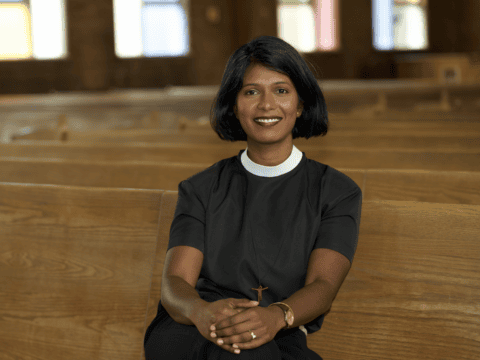
Rev. Christopher White is a United Church minister in Hamilton.
Thanks for reading
Independent journalism rooted
in faith and justice is under threat
Broadview is the only media organization in Canada offering thoughtful, values-driven journalism from an inclusive, progressive Christian perspective. But our work depends on your support. If you value what you've just read, please act now.
A gift today helps keep this journalism alive tomorrow.
With gratitude,