Norma Ibarra can’t talk about her journey into skateboard photography without talking about breaking both of her ankles.
“When I started learning, I broke my first ankle. I’m kind of a FOMO [fear of missing out] person. I was like, ‘I don’t want to miss out’, so I’m gonna come and bring my camera,” says Ibarra on picking up the sport at the age of 31.
You may unsubscribe from any of our newsletters at any time.
The following year, she broke her other ankle. It was during her recovery that Ibarra noticed no one was documenting people like her: women of colour who skateboard. So she took it upon herself to change that.
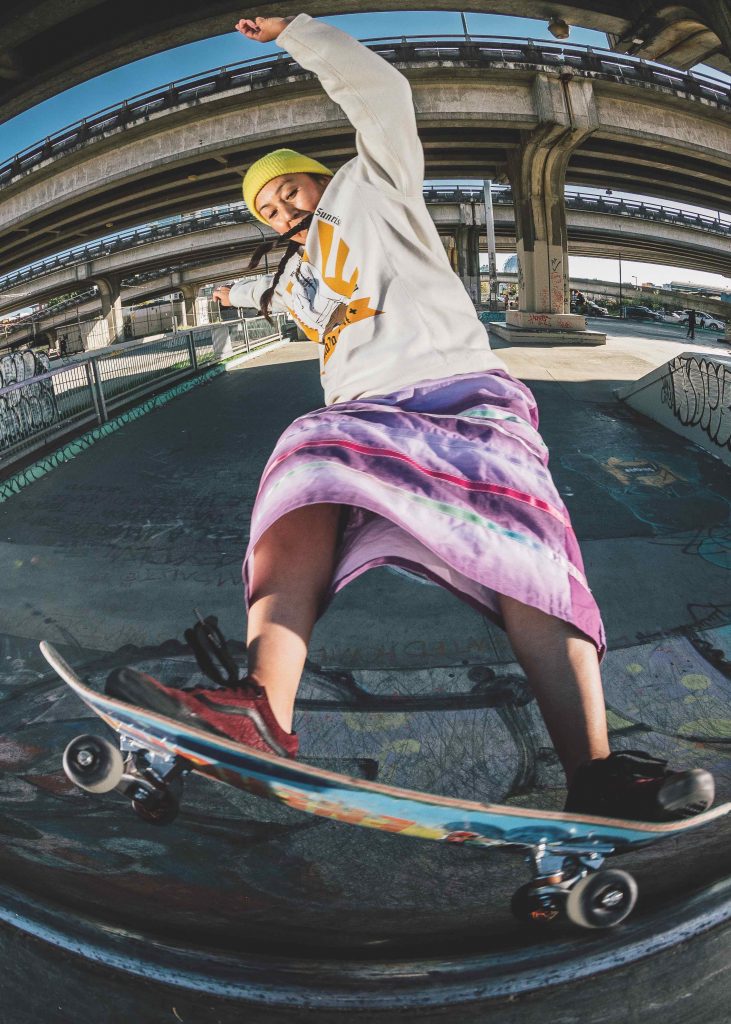
Rosie Archie skateboards in her first ribbon skirt. She is the co-founder of Nations Skate Youth, a non-profit that brings skateboarding to Indigenous communities. (Photo by Norma Ibarra)
Raised by her grandma in Seri — also known as Comca’ac — territory in Hermosillo, Mexico, Ibarra was fascinated with skate culture at a young age, but access to her own board was difficult. It wasn’t until 2009 when the photographer moved to Vancouver that she came across a skate shop owned by a woman who introduced Ibarra to an online group for women skaters.
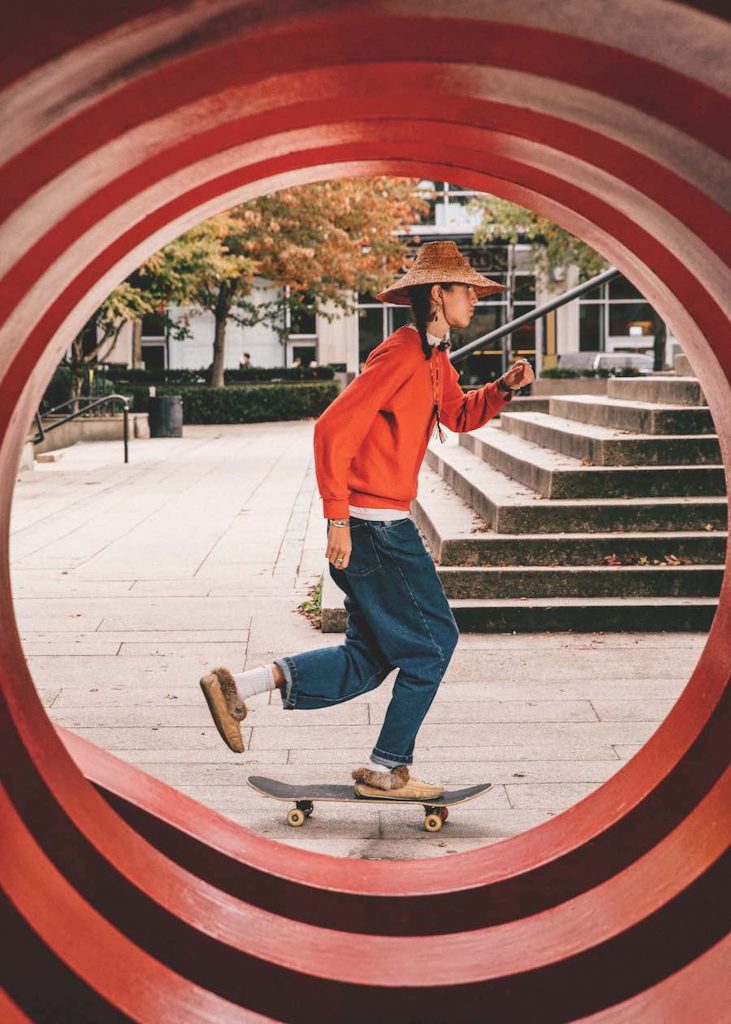
Nora Stakaya Pape wears a cedar bark hat passed down through generations of Coast Salish women, at Vancouver’s Robson Square. (Photo by Norma Ibarra)
More on Broadview:
- Determined knitter turns tangled yarn into communion tablecloth
- Don’t think you can afford art? Montreal collective The MRKT is changing that
- After a pandemic hiatus, the North American Indigenous Games is back
Ibarra then noticed more and more women practising the sport, a departure from the male-dominated scene back in Mexico. She started to photograph these women and was soon published for the first time; her work has since appeared in Thrasher Magazine and Vice. She’s also landed clients like Vans, Adidas and Nike, and has travelled to many countries where she meets skate groups composed of women, people of colour and those in LGBTQ2S+ communities.
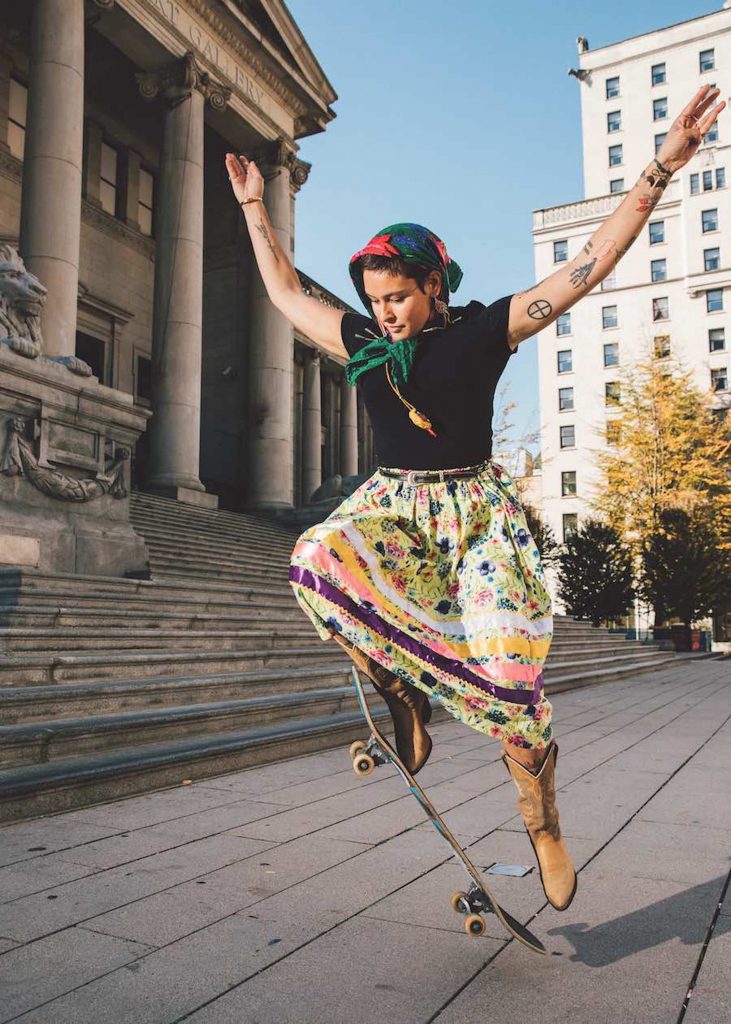
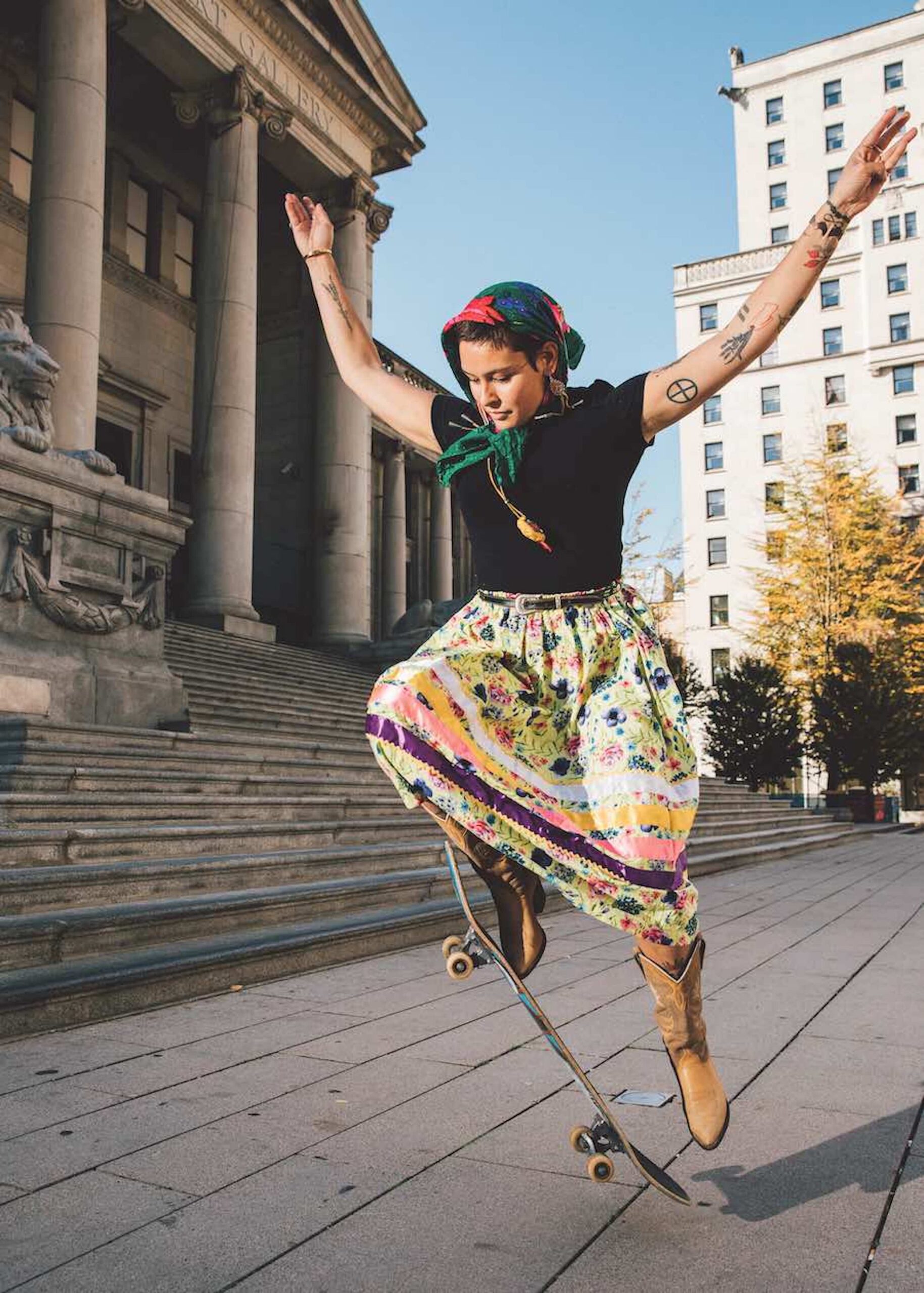
Michif skateboarder Taylor Lee skates in a ribbon skirt, a symbol of womanhood and identity, outside the Vancouver Art Gallery. (Photo by Norma Ibarra)
“My work has been evolving, but… I showcase lesser-known racialized or marginalized communities and challenge the old, patriarchal and gatekeeping narrative,” says Ibarra. “When you look at videos [and] magazines and you don’t see anyone that looks like you, it’s kind of disappointing. I don’t want people to go through that.”
***
Brian Vinh Tien Trinh is a writer in Toronto and a former assistant digital editor at Broadview.
This story first appeared in Broadview’s July/August issue with the title “The Lens.”
Thanks for reading
Independent journalism rooted
in faith and justice is under threat
Broadview is the only media organization in Canada offering thoughtful, values-driven journalism from an inclusive, progressive Christian perspective. But our work depends on your support. If you value what you've just read, please act now.
A gift today helps keep this journalism alive tomorrow.
With gratitude,