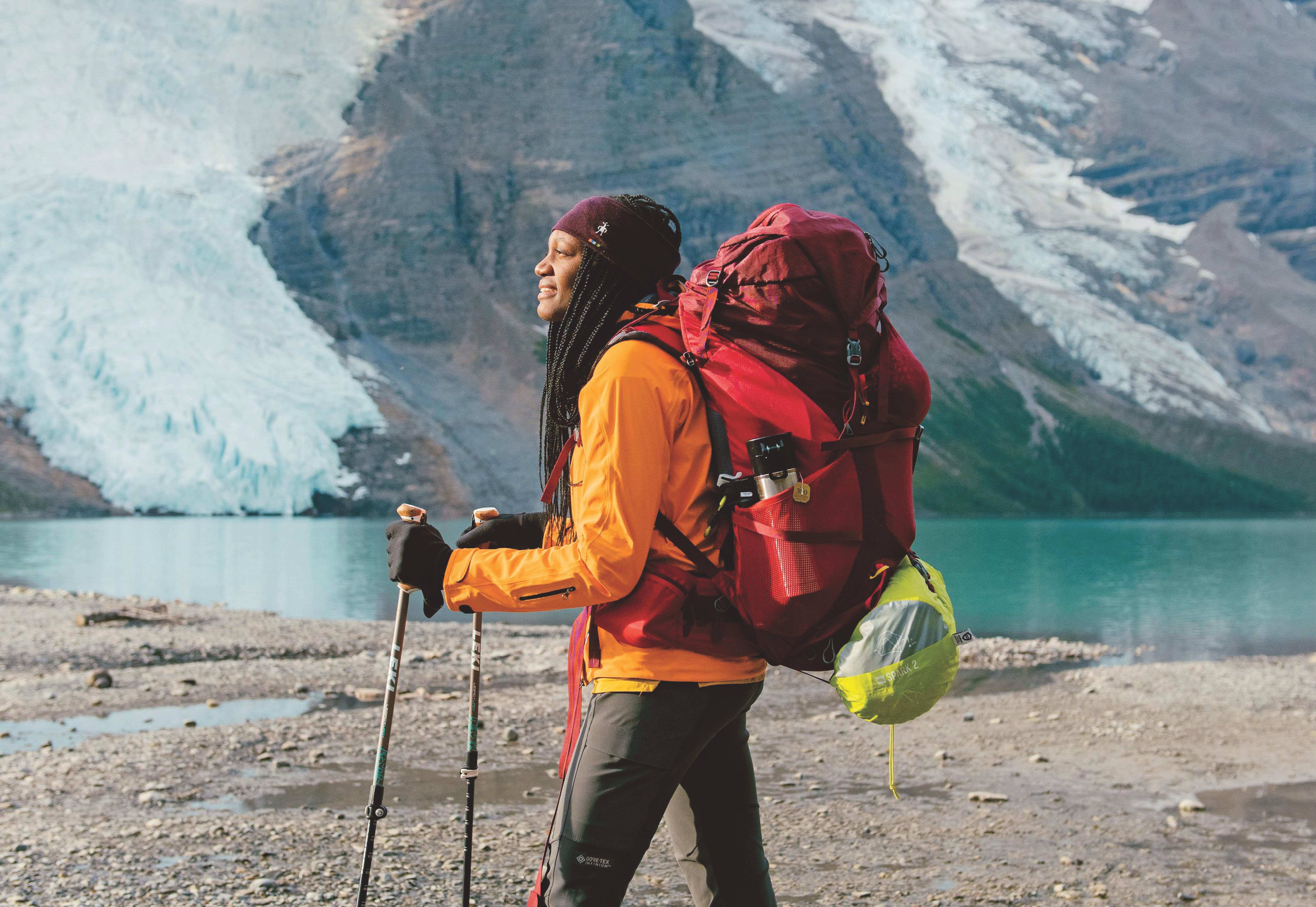
Judith Kasiama founded Colour the Trails in 2017 as a way to make outdoor recreation safer and more accessible for adventurers who are Black, Indigenous or people of colour (BIPOC). The then-Vancouver-based initiative has since grown to welcome chapters in Edmonton, Montreal and Toronto, hosting beginner-friendly and affordable events that range from windsurfing and mountain biking to ice-climbing, snowshoeing and skiing.
Representation My work emerged from holding brands like MEC accountable for the lack of diversity in their marketing. In 2017, there weren’t many racialized people represented in outdoor activities. When they were represented, they were often depicted as the help. For example, photos of Everest climbs feature a person of colour carrying equipment, rather than being the lead adventurer themselves. In 2020, the Black Lives Matter movement brought these concerns to the foreground and expedited our growth. Through our Colour the Screens initiative [a project within Colour the Trails], we invest in content creators of colour and connect BIPOC models, videographers and writers with outdoor organizations to bring more inclusive imagery to the industry via brand deals. There’s been a huge shift since 2017 when we started.
You may unsubscribe from any of our newsletters at any time.
Education We teach people how to enjoy the outdoors, even if they don’t have the generational knowledge a lot of Canadians grow up with. For new immigrants, one of the biggest obstacles to getting outside is the fear of a foreign landscape. There are bears, for example. We have an intro to camping partnership with Parks Canada, where we educate folks about wildlife and how to pitch a tent.
Legacy There are a lot of programs for children, but our events cater to adults. During the pandemic, we noticed that parents didn’t know how to replace their kids’ cancelled outdoor activities. We want to equip newcomer adults with the tools they need to take their families on hikes and adventures safely.
More on Broadview:
- Filmmaker captures untold stories of Black caregivers in Canada
- How our fear of aging is speeding it up
- The last words of an ancient world
Access The cost of entry for a lot of outdoor activities is high. When I moved to Vancouver, I was curious about skiing but didn’t know where to begin. Taking a ski lesson, buying a lift pass and renting equipment can be close to $600. But Whistler has a Never Ever Days program where you can learn to ski or snowboard for $25 per day. These are the kinds of initiatives we organize so people have a chance to try something new at low cost, then make an informed financial decision about which activity they want to invest in.
Community There’s a misconception that all BIPOC people are poor, but many are just looking for a space where they feel safe. Even if they have the capital to try these activities elsewhere, they want a place where they won’t experience micro- and macroaggressions or constantly feel like the “other.”
Respect It’s important to see nature as an opportunity for us to all join forces and be stewards of the land alongside Indigenous leaders. We run #LeaveNoTrace workshops to teach people the best ways to do this. Some might think it’s harmless to toss an apple core on a trail because fruit decomposes, but in reality it attracts wildlife and can lead to wildlife-human conflict, which can harm the animal. We also partner with local Indigenous communities for plant walks and work with conservation groups to give back to the land. All of us come from different parts of the world, but we’re here now and must support Indigenous people as they reclaim and protect their lands.
***
This interview has been edited for length and clarity. It first appeared in Broadview’s January/February 2026 issue.
Ghazal Azizi is a fact-checker and journalist in Montreal.
Thanks for reading
Independent journalism rooted
in faith and justice is under threat
Broadview is the only media organization in Canada offering thoughtful, values-driven journalism from an inclusive, progressive Christian perspective. But our work depends on your support. If you value what you've just read, please act now.
A gift today helps keep this journalism alive tomorrow.
With gratitude,