Zionism was not always a word uttered by so many people with such vitriol, scorn, and disgust. Perhaps because of that, those of us who identified as Zionists rarely had to give much thought to what that identity actually meant to us.
That has changed post-October 7, 2023. Zionism has moved to the forefront of conversations about Israel-Palestine, Palestinian liberation, Jewish nationhood and sovereignty.
You may unsubscribe from any of our newsletters at any time.
Simply put, Zionism is the political belief that Jews, like all nations, are entitled to self-determination and sovereignty. The return to Zion gave that belief a particular geography: that the land toward which Jews have prayed, yearned and oriented ourselves for millennia would also be the land in which Jews could exercise political agency, build a nation-state and shape our own collective destiny.
I am not blind to what many now understand Zionism to mean, or, more precisely, to the policies of an Israeli government whose leaders enact policies that fulfil their notion of Zionism. I understand why those watching from the outside and Palestinians themselves in Gaza and the West Bank see Zionism as a project of Jewish supremacy, ethnic cleansing or even genocide.
In my role as executive director of JSpaceCanada, a pro-peace, pro-Israel, pro-democracy Jewish organization that promotes a two-state solution for Israel-Palestine, I also see more of my fellow Jews shunning the Zionist identifier, or avoiding the term altogether. It is important to note that only one percent of Canadian Jews identify as anti-Zionist, while 94 percent believe Israel has the right to exist as a Jewish state, according to Robert Brym and Rhonda Lenton’s 2026 Jewish Barometer from Canadian Jewish Studies. Still, I understand the desire to distance oneself from an identity that — to many watching — appears antithetical to the Jewish and Zionist values with which we were raised.
I find myself caught between two narratives. Messianic Zionism is defined by supremacy, or “might makes right,” and a worldview of “‘kill or be killed.” Its adherents proclaim that there are no innocent people in Gaza, and that all the land from the river to the sea belongs to the Jewish people. If people like me walk away from Zionism, the Messianic group will own the term itself, and it will come to mean something very different.
On the other hand, anti-Zionism rejects Jewish national sovereignty altogether. I still believe in the promise of a Jewish state, and that our responsibility cannot simply be to defend its existence. We must work to shape what that state becomes.
I find myself occupying a middle ground, liberal Zionist ground.
For me, Liberal Zionism stands for something affirmative: universalism, peoplehood, moral responsibility, covenant, land, power and democracy. It is perhaps the hardest Zionism to uphold because it asks us to live into principles that can appear contradictory: universalism alongside Jewish peoplehood; moral responsibility alongside covenant; power alongside democracy.
But those tensions are not its weakness. They are what make it deeply Jewish.
In Genesis, God promises to make of Abraham a great nation. But that covenant comes with the obligation to do what is righteous and just. Jewish nationhood is not simply a privilege; it creates and demands responsibility.
Jewish particularism, that is to say, a focus on the distinctiveness of our peoplehood, therefore, cannot mean exemption from the standards we apply to others. It should mean expecting more of ourselves. “Other nations have done worse” cannot be our moral defence.
A Jewish state provides the framework through which we preserve Jewish peoplehood and exercise self-determination. But Jewish sovereignty should give us the security to recognize Palestinian sovereignty, not provide a justification for denying it.
Both messianic Zionism and anti-Zionism offer their adherents the ability to dream big: one of territorial maximalism, the other of replacing Israel with a single binational state.
Neither dream is compelling to me.
More on Broadview:
- Why I can’t celebrate the Israel-Hamas peace deal — yet
- Palestinian Christians seek solidarity amid war and displacement
- Broadview’s interns have Iranian roots — and strong opinions on the recent U.S.-Israel attack
My Zionism cannot encroach upon the sovereignty of the peoples around me; Jewish liberation cannot require permanent Palestinian subjugation. But neither will I relinquish Jewish national self-determination, just as I would never expect Palestinians to relinquish their own.
Liberal Zionism must allow us to dream just as boldly: we must envision a Jewish state that is secure enough not to dominate other people to feel safe; democratic enough to understand that power requires restraint; and rooted enough in Jewish peoplehood to understand it as a source of responsibility rather than supremacy.
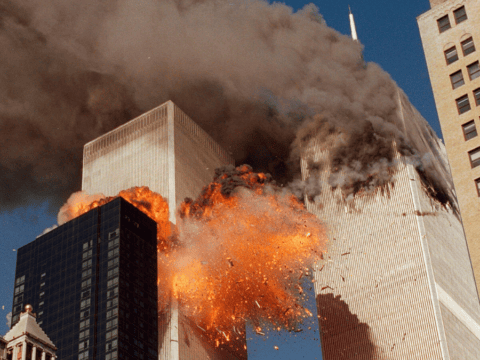
October 7 showed us why this matters. It reminded us what Jewish vulnerability looks like when Jews are not safe and the institutions entrusted with protecting them fail. That horror did not convince me Jewish sovereignty was obsolete. It reminded me why it was necessary.
But everything since has forced us to reckon with the enormous Palestinian suffering and death toll of this war alongside a more longstanding danger: of believing sovereignty alone can protect us, of confusing domination with security and of believing the indefinite denial of another people’s national aspirations can somehow produce lasting safety.
These lessons are not contradictory. Together, they tell us something far more demanding: Jewish sovereignty is necessary, but sovereignty alone is insufficient.
We need a Jewish state, and that Jewish state, for its safety and security, and that of its neighbours, necessitates alongside it a Palestinian state. And that Jewish state must be worthy of the power it possesses.
That requires neither abandoning Zionism nor surrendering it to its most extreme adherents, but building a Jewish state capable of holding security and morality, particularism and universalism, Jewish peoplehood and Palestinian freedom, power and restraint.
Our future is not predetermined. The upcoming Israeli elections — and advocacy in international communities like ours at JSpaceCanada — can bring about this better future. If Zionism allows us to determine our fate, let’s have it be one of liberal Zionism.
***
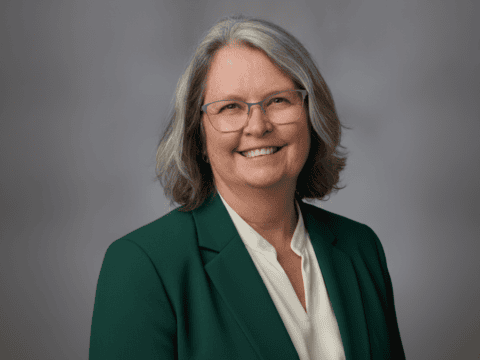
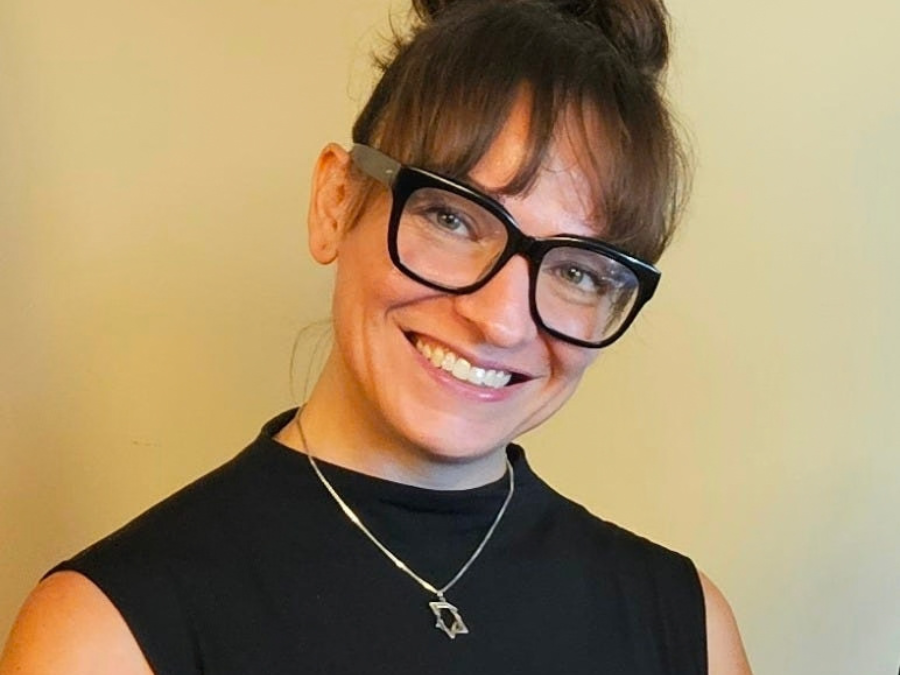
Maytal Kowalski is the Executive Director of JSpaceCanada, a pro-peace, pro-Israel, pro-democracy Jewish Zionist organization that advocates for a two-state solution in Israel-Palestine.
Thanks for reading
Independent journalism rooted
in faith and justice is under threat
Broadview is the only media organization in Canada offering thoughtful, values-driven journalism from an inclusive, progressive Christian perspective. But our work depends on your support. If you value what you've just read, please act now.
A gift today helps keep this journalism alive tomorrow.
With gratitude,