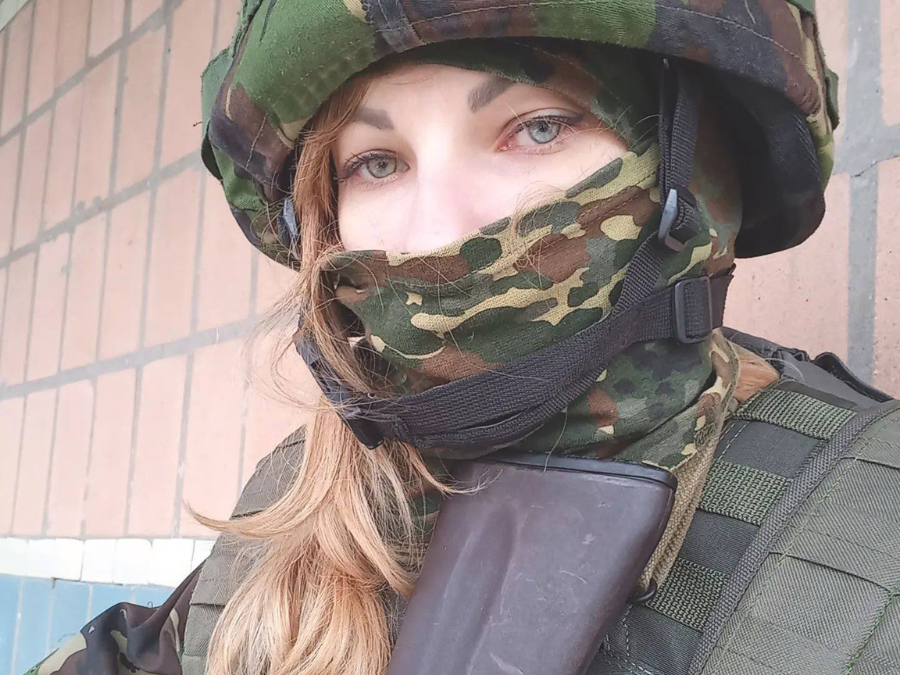
From February to May 2022, Yulia Goroshanska was among the several thousand fighters who defended Mariupol, Ukraine, in one of the war’s deadliest battles. But Russian forces outnumbered the defenders and strangled the seaside city, cutting off food, water and medical aid while arbitrarily executing civilians.
Late one night that April, Goroshanska’s barracks collapsed in an airstrike that killed almost everyone around her. Soon after, the 33-year-old mother was captured and taken to Olenivka, a Russian-run prison in occupied Ukraine that independent observers have described as a site of torture, starvation and abuse.
You may unsubscribe from any of our newsletters at any time.
Goroshanska spent months in captivity before her release in a prisoner exchange. Today, she is rebuilding her life while helping others heal from trauma. She spoke to Katharine Lake Berz in the leadup to the siege’s fourth anniversary.
KATHARINE LAKE BERZ: Very few women were in the Ukrainian army when you joined in 2014. What made you decide to enlist?
YULIA GOROSHANSKA: It’s hard to remember exactly how it all began. I watched the Maidan uprising on television in 2013, when Ukrainians took to the streets to defend their democratic future, and then the occupation of the Donetsk region. When the Russians approached Mariupol and the first explosions began back in 2014, I realized I couldn’t just hide in the basement. Mariupol was my hometown. I wanted to live there. I wanted to live in a democratic Ukraine. So I volunteered with the Mariupol defence unit.
KLB: How would you describe life under siege in Mariupol in 2022?
YG: It was hell. There’s no other word for it. I’ve seen many war movies, but nothing in them comes close to what I saw.
I watched the neighbourhood where I had lived all my life destroyed before my eyes. The school and the kindergarten my daughter and I had attended burned down. Worst of all were the bodies of my neighbours lying in the street — people I had spoken to only days earlier. No one could bury them; the shelling never stopped. Many people were killed by shells, and many more were engulfed in the rubble.
The hunger was also terrible. Many people, particularly the elderly, died of starvation.
KLB: What happened on the day you were wounded?
YG: It was a beautiful day. The birds were singing and then, in a moment, everything went dark. An airstrike hit, and the five-storey building we were in collapsed.
My whole unit — all of my friends — were killed. I will remember that day for the rest of my life because my best friends died. I survived by a miracle and was evacuated to the medical clinic at the Azovstal steel plant.
My only serious injuries were to my arm, which is still disabled, and a traumatic brain injury. For two weeks afterward, I struggled to understand what was happening or even where I was.
KLB: What was the most difficult part of surviving more than four months in Russia’s Olenivka prison?
YG: The hardest part was the uncertainty. When we were first captured, we believed we would be returned quickly to Ukraine. But when a month, two, three, four passed, we didn’t know how long we would be imprisoned. In some ways, not knowing how long we would be held was harder to endure than the torture and the terrible conditions.
KLB: How did you endure the separation from your husband and daughter?
YG: I shut my feelings off completely. I tried not to think at all. They lied and told me my husband had been killed, that his whole unit was gone. I knew that if I allowed myself to feel, I would collapse. I was already hanging on by my last ounce of strength.
But I was given one phone call, and when I called home, I found out my daughter was safe with my mother. She was five and didn’t understand anything. I remember her saying, “Grandma bought me an ice cream,” and I cried from happiness that she had the opportunity to eat ice cream.
That call kept me going. I kept telling myself I had to hold on so I could be with my daughter again.
KLB: How would you say the war has changed you?
YG: It changed my whole understanding of the world. I am not the same person I was before. None of us who return from captivity or combat ever are.
I’ve learned to treasure solitude after living in a small cell with more than 30 women, day and night, with no chance to be alone. And I’ve come to truly appreciate freedom: the freedom to choose where I go, who I’m with and how I live.
KLB: Tell me about the moment you were finally reunited with your family.
YG: It took time for my feelings to return — for the love I had for them to thaw after being frozen for so long. I felt as if I were from another planet. It was a rather unexpected feeling. The first time I spoke with my family after the prisoner exchange, I felt an explosion of emotions. But when they came to see me in the hospital, I felt strangely detached. I understood that this was my daughter, my husband, my mother. I knew them and didn’t know them at the same time.
More on Broadview:
- High cost of compassion threatens to shutter Christian home for people with HIV in Winnipeg
- Should kids under 16 be banned from social media and AI? We asked teens
- How restorative justice can heal communities
KLB: How did you find your wayback to each other?
YG: My relationship with my husband has improved because he realized he could lose me and began to appreciate me more. With my daughter, however, there is still a mark. She spent so much time with her grandmother. A bond formed between them that sometimes stands between us. Even now, she sometimes prefers her grandmother because her grandmother was with her during the hardest times.
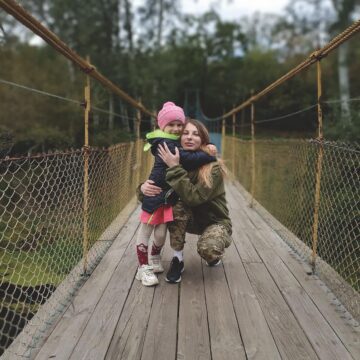
KLB: Both times you joined the military, you faced criticism from family and friends for leaving your child behind. What do you say to your critics?
YG: When I returned from Olenivka, I promised my daughter I would never leave her again. But after some time, I returned to the army. I carried a deep guilt — I had left her again, this time by my own choice. I visited her as often as I could. But still, she sometimes blamed me for going back to war.
My mother and others accused me of abandoning my child. I worked through that guilt with a psychologist. In time, I became proud of myself. I defended not only my daughter — I defended other children, my city and my country.
I would say this to other women: don’t let anyone call you a bad mother. Whatever you did, you did it because, in that moment, you believed it was best for you and your family.
I’ve tried to teach my daughter a sense of patriotism: that yes, we have our family whom we love, but there are also higher responsibilities, things we must do. Now she understands. She no longer blames me or her father, who has been at war for 11 years. She is proud that we have defended and continue to defend our country so other parents and children can live in freedom.
KLB: What gives you strength?
YG: My future goals give me strength. I have now left the army and completed a peer-support training program in the United States to help other war veterans overcome traumatic experiences. I am continuing my studies and hope to work as a therapist helping other veterans reintegrate into society and cope with their challenges. My desire to serve, to make our community better and to support people’s mental health is what gives me the strength to keep going.
KLB: What do you tell people who are dealing with trauma?
YG: I believe in people. I believe trauma can become a springboard for growth, a chance to become stronger, kinder, more purposeful than before. Our challenges teach us to do what we haven’t done before so we can grow into better versions of ourselves.
KLB: What are your hopes for the future?
YG: My wish is simple: that no child ever wakes to explosions again — only to fireworks celebrating victory. I want my daughter to grow up in a free and peaceful country. When I joined the army in 2014, my hope was that my child would never hear explosions. Yet now she wakes almost every night to the sound of them. What all Ukrainians want now — and everyone who stands with us — is peace.
And my purpose is this: our task is not only to win the war, but to help our country rise again, with healthy, resilient people who will rebuild Ukraine.
***
Katharine Lake Berz is a writer and filmmaker who lives on Vancouver Island and in Toronto.
This interview has been edited for length and clarity. It first appeared in Broadview’s May/June 2026 issue with the title “Life After Mariupol.”
Thanks for reading
Independent journalism rooted
in faith and justice is under threat
Broadview is the only media organization in Canada offering thoughtful, values-driven journalism from an inclusive, progressive Christian perspective. But our work depends on your support. If you value what you've just read, please act now.
A gift today helps keep this journalism alive tomorrow.
With gratitude,