
Easter is early this year. Though Easter officially arrives in spring, the beginning of April doesn’t always feel springlike. I don’t love this season because it’s often muddy and messy. In-between times usually are.
We are moving through an in-between season at the General Council office, too. We left our Etobicoke office at the end of last year, but our new location at Toronto’s Bloor Street United is not quite ready, so we are temporarily housed farther east at 50 Wynford Drive, at the offices of the Presbyterian Church in Canada.
You may unsubscribe from any of our newsletters at any time.
We are very happy to have a temporary home, but we are eager to be in the new space. No matter the transition in life, we tend to be eager to get through it.
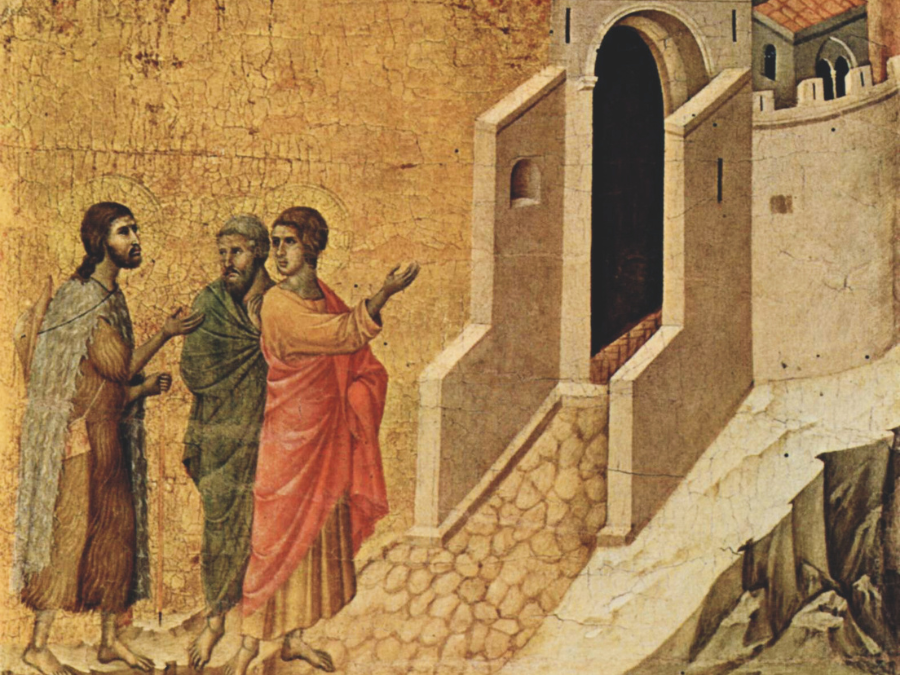
As Christians, we jump very quickly from crucifixion to resurrection, but we need to stay a bit in that in-between time. The story of the Road to Emmaus in Luke’s Gospel embodies that empty space. The tale takes place so soon after Jesus’ resurrection that his rising is not yet a reality for his disciples.
The Emmaus story reflects the messiness of the middle with its fogginess and disorientation. There are two disciples — one is unnamed, and the other is named Cleopas, but that’s about all we know about him. He doesn’t appear anywhere else in scripture. The two are on a road to Emmaus, but no one today knows exactly where Emmaus is, except that it’s outside Jerusalem. When the stranger joins them on the road, they don’t recognize him as their very own risen Lord and teacher.
Notice that Jesus doesn’t start by saying, “Surprise! It’s me!” and neither does he start talking about the resurrection. He meets them in the middle of their suffering. Jesus does not dismiss their pain or deny the reality of it; instead, he helps them see it in a new way. He says to them: “Was it not necessary that the Messiah should suffer these things and then enter into his glory?”
The in-between time is important because it allows space for necessary healing from a traumatic or difficult event or simply getting from here to there. It is messy and chaotic, but it is also the place of recovery and restoration — a place where you learn to move into a future that is shaped by the past but not chained to it.
Jesus didn’t rush his disciples out of this time but met them where they were. “Stay with us,” they said to him at the end of the walk. And he did.
More on Broadview:
Jesus stayed with them until their eyes were opened and they realized they were on the other side, in a whole new place. They did not go back to being the people they were the week before — you never can. Instead, they were forever changed but filled with new life.
Peace and joy came as they realized that no matter where they went, they were not alone on the journey.
We often talk of Easter as being an “already and not yet” time. By going to and through the cross, Jesus defeated death and sin. That’s what we celebrate at Easter and yet, it doesn’t always seem that way. Wars, poverty, racism and transphobia continue — the world is not how we hope, pray and work for it to become.
I’m not fond of early spring; it’s often muddy and messy, but I do love the promise it holds of tulips and irises, and of the return of hummingbirds and orioles.
Sometimes I despair at the way the world is, but then I remember Jesus, who says, “I am the resurrection and the life,” and I remember to keep walking on this Easter-Emmaus road.
As the Apostle Paul wrote, “Being confident of this that he who began a good work in you will carry it on to completion” (Philippians 1:6).
***
Rt. Rev. Kimberly A. Heath is the 45th moderator of the United Church of Canada. She lives in Brockville, Ont.
Thanks for reading
Will you help support United Church reporting?
Broadview is the only media organization dedicated to telling the stories of The United Church of Canada — its big decisions, perspectives and the faithful people and communities at its core. But this essential work depends on you.Make a tax-deductible gift today — 100% of your donation goes directly to supporting United Church coverage.

With gratitude,










Yes, I understand the necessity of not rushing. Grief is a process and a joirney which takes time, and the contemplation of Jesus the Christ’s sacrifice needs to be lived and breathed.