
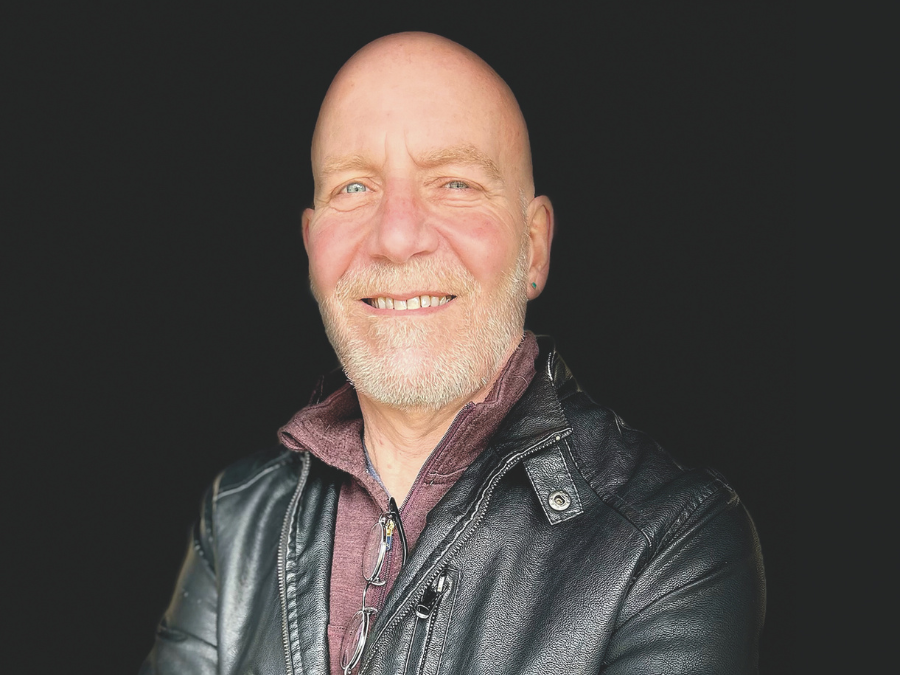
William J. Kole’s career as a foreign correspondent for the Associated Press has taken him around the world, from Europe to Africa to the Middle East. In his latest book, he turns his focus back to the United States and its evangelical Christian community, which was his spiritual home for many decades. In Guns We Trust: The Unholy Trinity of White Evangelicals, Politics, and Firearms invites readers into an uncomfortable but necessary conversation about the relationship between Christianity and gun culture, calling American evangelicals to be shaped by the message of Jesus rather than the politics of fear and distrust. Kole spoke to Brett Potter from his home in Warwick, R.I.
Brett Potter: Even though you no longer identify as an evangelical, you still seem to feel deeply connected to that tradition. You’re careful in the book not to demonize or caricature white American evangelicals. Was that one of your goals?
You may unsubscribe from any of our newsletters at any time.
William J. Kole: I had two goals, and in some ways they work at cross-purposes. My first was to pull the curtain back on unambiguous complicity on the part of white evangelicals when it comes to the issue of guns.
At the same time, a friend who read the book told me it felt like a prophetic lament. I think he was onto something. Not that I’m claiming to be a prophet, but I desperately want evangelicals to read it and reconsider their position on faith in firearms. These things are like oil and water.
I’m not shy about calling out the betrayal of faith that I see as a former evangelical. But I want to hold out an olive branch and say, “Hey, can we talk?”
BP: How significant is the influence of white evangelicals when it comes to gun culture in the United States?
WK: Evangelicals in the United States own far more firearms than any other subset of the population — more than police officers, military veterans and hunters. They also play an outsized role in the gun manufacturing industry. I spoke with some who said they genuinely believe that they are honouring God by making the most well-crafted AR-15 military-style assault rifles that they can.
But the biggest reason why white evangelicals are complicit is that they form a potent political block. With more than 78 million of them in the United States, they can be counted on to vote for politicians who share their conviction that the Second Amendment — which allows people to own and, in some instances, carry a weapon — is holy and must not be tampered with.
BP: Since you’re coming at this as both a journalist and a fellow Christian, you were able to speak with people like pro-gun Pastor Phil Guin in Jemison, Ala. What struck me is that instead of being full of violent rhetoric, their tone is surprisingly measured and respectful.
WK: Yes! I went to a church in Alabama so enamoured with firearms that it built a firing range on its property for congregants to practise shooting their AR-15 military-style assault weapons.
Before I even got out of my rental car, I thought I had Pastor Guin figured out. I expected him to be a caricature, but then he wasn’t. He’s a beautiful man and a deep thinker. As I spoke with him, others in his church and people around the country, I realized that evangelicals are not a monolith — and that we shouldn’t treat them as one. That gives me hope because I think some evangelicals are persuadable on the gun question.
I didn’t end up persuading Pastor Guin of anything, but we had a very good conversation. He explained why he felt like having a church firing range was important for his faith community of elderly people, who felt vulnerable and wanted to be able to protect themselves. I disagreed with 95 percent of what he told me, but the point is that we were able to sit down on the front pew of his church and talk for a couple of hours.
It’s tempting to let our bias push us toward ignoring or ridiculing this community, but the only way out of the gun crisis is deliberate, intentional conversation.
More on Broadview:
- Who should inherit my estate?
- Alex Neve on why Canada still falls short on human rights
- Ontario’s living wage just went up — here’s why that’s important
BP: Your book is about guns, but it’s also about fear. You trace this back to the idea that Americans need to bear arms to resist a tyrannical government.
WK: Two hundred and fifty years ago, we were fighting to free ourselves from British tyranny and the Crown. The Second Amendment was conceived as a practical way of ensuring that citizens of the new country had the means to fend off the Redcoats.
Fast-forward to the present, and we’re a long way from black powder and muskets. Today’s government has nuclear weapons, attack helicopters, drones, submarines, tanks, the list goes on. The idea that personal firearms can offer any meaningful defence against a government that has all these weapons is patently absurd. All we’re doing is filling our homes with guns. Our kids get access to them, often with catastrophic consequences. Suicide rates are off the charts, and gun suicides far outnumber gun deaths from mass shooters.
Fear is a huge part of all of this. It motivates people to dig into issues of personal protection, but it’s a false narrative. Crime in the United States is historically low right now. Still, this fear persists — and in white evangelical circles, Christian identity is bound up with being deeply wary of authority and government.
But what are we really afraid of? That’s the question I ask when I talk with my evangelical brothers and sisters. Fear is the antithesis of faith. To have faith in God and to be fearful are completely at odds with each other.
BP: You link this climate of fear to Christian nationalism, doomsday prepping and conspiracy theories. Why do you think the narrative that the nation has abandoned Christian values and that Christianity itself is under threat has gained so much traction?
WK: There’s fear and paranoia being whipped up around these non-existent threats. Some of the Christians I met for this book had small armouries in their homes.
No one is coming for your Bibles, certainly not in North America. And no one’s coming for your guns.
Gun violence activists will tell you they’re not trying to disarm the country; they just want some common-sense laws to staunch the bloodshed and make these mass casualty events less frequent.
All of this is happening against the backdrop of Christian nationalism, which a decade ago was still a fringe ideology. Now, it’s completely mainstream. Most members of Donald Trump’s cabinet are overt Christian nationalists. This is where fear, Christian nationalism and gun culture collide in a way that should profoundly trouble us as a society.
BP: In the book, you talk about a church celebrating “bring your gun to church” day, as well as other groups who think the “rod of iron” mentioned in Revelation is a gun. Does this point to a kind of sacralization of guns?
WK: White evangelicals will cherry-pick scripture to build an entire firearms theology. When Jesus says, “If you don’t have a sword, go buy one,” some gun companies run by white evangelicals interpret this as justification for owning military-style weapons, arguing that the first-century sword was the AR-15 of its time. At that point, I don’t think you can call it Christianity anymore.
BP: Canadians take pride in the fact that we have fewer mass shootings than in the United States. But we still have acts of terrible violence. How can Christians in Canada understand the unique relationship between guns and Christianity that exists in the U.S. context?
WK: Fifty years ago, after a mass casualty event, Canadians took decisive action to regulate firearms. Canada is one of a handful of countries that have shown us we don’t have to live — or die — this way.
For the book, I travelled to Dunblane, Scotland, where a 1996 school shooting killed 16 young primary school students and their teacher. Many people there owned guns, but everyone coalesced around the idea this must never happen again. Within months, the United Kingdom passed sweeping legislation tightening access to guns. There hasn’t been a school shooting there since.
I was a New England bureau chief for the Associated Press when the Sandy Hook massacre happened in 2012. We all thought that would be our transcendent moment when everything would change. And yet, nothing did.
My book is filled with statistics, but some are truly jaw-dropping. Today, we have more mass shootings in the United States than we have days of the year. We also have more gun dealers than McDonald’s restaurants.
BP: In the last chapter of the book, you meditate on how this research has shaken your faith. Are you still hopeful about the future of this conversation?
WK: I am an optimist by nature. I have to believe that we can change this narrative because I’ve seen how Canadians and others have done it. I’m under no illusions that it will be easy, but we’ve got to start somewhere.
After spending so much time talking to people across the gun issue, I’m convinced the only way forward is one evangelical and one gun at a time.
***
Brett Potter is an assistant professor of theology and religion at Huron University in London, Ont. He is currently teaching a course on Jesus in pop culture.
This interview first appeared in Broadview’s March/April 2026 issue with the title “Pistols and Pews.”
Thanks for reading
Independent journalism rooted
in faith and justice is under threat
Broadview is the only media organization in Canada offering thoughtful, values-driven journalism from an inclusive, progressive Christian perspective. But our work depends on your support. If you value what you've just read, please act now.
A gift today helps keep this journalism alive tomorrow.
With gratitude,






I am going to read this book. I am very troubled by the fact that America has more guns than people. I am troubled by the fact that Canadians visiting the United States are statistically more likely to be shot than to be killed in an auto accident. Thank you for bringing this matter to our attention.
I figure that “Christians with guns” is the ultimate oxymoron.
How about reporting on Canadian / Christian gun owners?
This is Not the same issue here that it is in the USA.
Reporting in Canada about USA gun ownership typically has the spill over effect of the general population Wrongly Believing that the same ownership Laws holds true here.
Lets report responsibly about the matter.
Wording, Laws & Context all have a role to play here
Margaret Mills – I am A gun Owning Christian, here in the Great White North.