
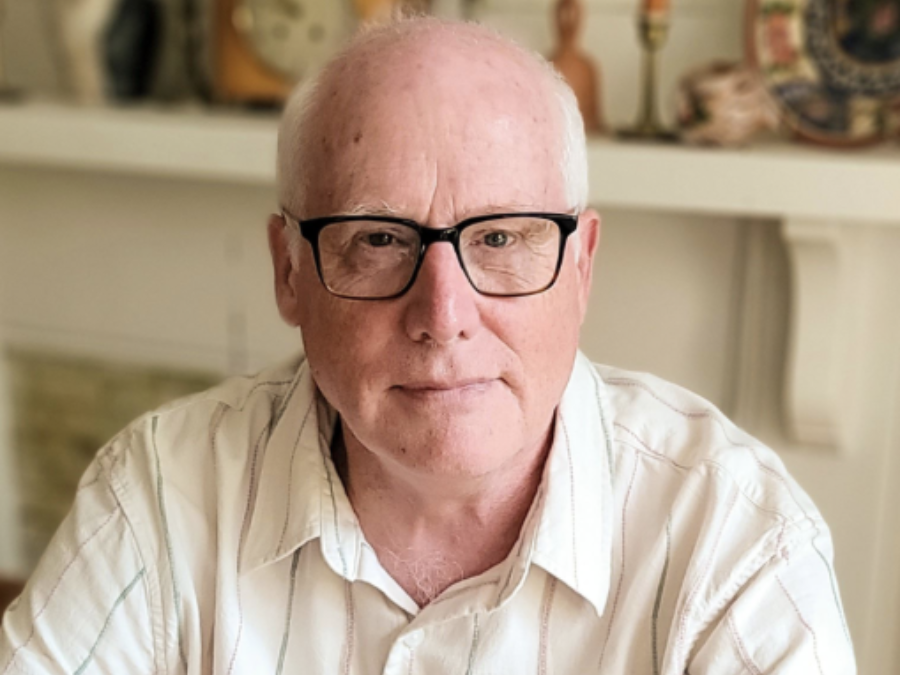
Canadians have long believed we are a nation that upholds and protects human rights. Yet Alex Neve says this country’s human rights scorecard, much like the rest of the world’s, has been spotty since the United Nations adopted the Universal Declaration of Human Rights in 1948.
Neve is a human rights lawyer who led Amnesty International Canada for over two decades and is now an adjunct professor at the University of Ottawa and at Dalhousie University in Halifax.
You may unsubscribe from any of our newsletters at any time.
In his new book Universal: Renewing Human Rights in a Fractured World, written for the 2025 CBC Massey Lectures, Neve explores the original promise of universal human rights, revisits his Amnesty International-led campaigns in 20 countries and gives his prescriptions for Canada. He spoke with Yvonne Lau in mid-November.
Yvonne Lau: The UN adopted the Universal Declaration of Human Rights nearly 80 years ago, which articulated that “all human beings are born free and equal in dignity and rights.” How has the world fared in upholding it?
Alex Neve: In 1948, the world had come out of a time of incredible conflict and division. There were all sorts of reasons for governments to become inward-looking. But instead, they committed to a global community by creating the United Nations and this promise of universal human rights for the first time in human history.
However, we never truly embraced the notion of universality. When the Declaration was adopted, it was clearly flawed: the world was still under the racist yoke of colonialism, and there were only four UN member states from Africa, one of whom was apartheid-era South Africa.
In these last few years, we look to the genocide in Gaza, Russia’s illegal invasion of Ukraine, the horrific civil war in Sudan — which most of the world isn’t even paying attention to — [and] the climate crisis, feeling like the promise is completely coming undone.
This idea of universal human rights… hasn’t delivered the goods. But that’s not because it was the wrong idea. When we take the long view, over the past 80 years, there has been enormous human rights progress. We need to hold on to that [promise] as something that was, and is, very significant.
YL: What role does human rights play in Canada’s national identity?
AN: Respect for human rights polls very high when Canadians are asked about our national identity. Canadians ranked the Charter of Rights and Freedoms as a more significant expression of our national identity than ice hockey.
With such a turbulent world around us in 2025, it’s worth asking if we are doing everything we can to live up to that. Not everyone needs to rally on Parliament Hill, although we do need people who do that. We also need people who are going to have conversations with their neighbours, coworkers, and schoolmates… to say what is happening in Gaza needs to stop, or to speak out when they hear someone say something racist or sexist. That would be the true measure of whether or not human rights is at the core of our national identity.
YL: Today, the world is rearming and prioritizing defence and national security. Canada’s 2025 budget commits nearly $82 billion to the Canadian Armed Forces. You wrote: “National security has long been an impediment to universal human rights.” Can you elaborate?
AN: I’m not suggesting that Canada shouldn’t spend money on our defence capabilities or have an adequately equipped military. But it’s disconcerting that we do not learn the lessons from history. Focusing on an arms race and spending exorbitant amounts of money on weaponry does not build true and sustainable universal security. It keeps us trapped in endless vicious cycles of military might, violence and repression. What is it that suffers along the way? It’s the resources for human rights protection and humanitarian programming.
YL: Canada is set to cut $2.7 billion for foreign aid. What does it mean that Canada is pulling back on international humanitarian assistance?
AN: Our level of spending was already too low. Governments set a target [of] 0.7 percent of their annual national income on international development assistance. Some states in Europe reached those levels. We’ve never come close. Now we’ve slashed that at a time when the world needs it more than anything.
Canadian leadership, not only in terms of financial contribution, has been integral to making the world a safer place. It played a major role in getting an absolute ban on landmines, a treaty often referred to as the Ottawa Treaty. Canada also played a leading role in pushing for the creation of what we now know as the International Criminal Court, an international body that ensures that the world’s worst human rights violators are brought to justice and held accountable for their terrible crimes. More recently, Canada’s leadership has faded.
More on Broadview:
- Bondi Beach Hanukkah attack came after big increase in online antisemitism: research
- Canada is 25 years late on ending child poverty
- Danté Stewart on fighting the rise of Christian nationalism
YL: What have recent global conflicts revealed when it comes to the state of international humanitarian law?
AN: We’re seeing complete disregard and even contempt for international law from a growing number of countries, including the world’s most powerful. These are some of the worst times we’ve seen when it comes to complete disregard for the most fundamental norms of civilian protection.
Where does Canada fit in? We’re sometimes showing up and doing the right thing. We’ve been engaged when it comes to Ukraine on all fronts. We’ve given resources to important initiatives providing rehabilitation, treatment and protection to civilians, and to a generous immigration program that opened our doors to people fleeing from the war. We can’t say that with respect to most other conflict situations — certainly not with respect to Gaza and Sudan. That raises troubling questions about double standards and inconsistencies.
YL: In your book, you cite a 2024 UN Refugee Agency report, which found that the number of forcibly displaced persons has surged to 123 million from 51 million 10 years ago at the same time that “refugee protections are under attack.” How is Canada responding to this crisis?
AN: We wrap ourselves in the brand of being a country that is warmly welcoming of refugees. There certainly have been proud moments. Our sponsorship and resettlement program has been widely praised around the world. We co-ordinated a remarkable national effort to respond to Syrian refugees. We were awarded the Nansen prize for refugee protection… but that was a long time ago.
The bottom line, though, is when it comes to truly being a country that welcomes refugees, we’ve never been tested. Countries around the world are tested regularly because they share a border with a country in the midst of a horrific war or massive environmental catastrophe: there are over three million Syrian refugees in Turkey, one million Rohingya refugees in Bangladesh and over a million South Sudanese refugees in Uganda.
We have to be a little more circumspect about how much praise we heap on ourselves. A real reminder of that is our Safe Third Country Agreement, which closes the Canada-U.S. land border to refugees who might want to seek protection here. We should be suspending that agreement with the U.S. in a managed way.
YL: Ten years have elapsed since the Truth and Reconciliation Commission (TRC) tabled 94 calls to action for Canada. What’s Canada’s scorecard when it comes to Indigenous reconciliation?
AN: The understanding, recognition and acknowledgement of Canada’s history of genocide against Indigenous Peoples is far beyond where we were 25 years ago. That has come through the work of the TRC; of Indigenous educators and activists; and positive reporting in the media. That has led to some huge breakthroughs. We had the National Inquiry on Missing and Murdered Indigenous Women and Girls and its calls to justice. We incorporated the UN Declaration on the Rights of Indigenous Peoples into federal law. We have [Mary Simon], an Indigenous woman, as governor general in Canada.
All of that is consequential. But do we really see change as a result? Not at all. In recent years, there’s the backlash of denialism around the proven reality of residential schools. A few years ago, we saw that disgraceful provincial election in Manitoba, where the governing Conservative Party was willing to make their refusal to fund a search for the bodies and remains of three Indigenous women in Winnipeg landfills as part of their campaign platform. They were proud of it. There’s still far to go.
YL: How should Ottawa be thinking of human rights as it continues its trade and diplomatic missions abroad in 2026?
AN: If we truly want to defend ourselves and create a safe and secure world, we need to bring human rights laws, frameworks and policies to the core of how we’re tackling the climate crisis, how we regulate and what sort of expectations we set for corporations whether they’re operating in Canada or abroad. Human rights aren’t just for some day down the road when it’ll be too late. We need to prove that we’re willing to take on big influential actors like big corporations.
We’ve never truly committed ourselves to the work, change and sacrifice that is needed to truly ensure that human rights in our world will be universal. If there’s ever been a time to do so, this world of ours in 2025 — with all of these enormous, fearful challenges and crises — is the time.
***
This interview has been edited for length and clarity. It was updated Dec. 21 to correct the percentage of annual national income that governments set as a target to go to international development assistance.
Yvonne Lau is a journalist in Vancouver.
Thanks for reading
Independent journalism rooted
in faith and justice is under threat
Broadview is the only media organization in Canada offering thoughtful, values-driven journalism from an inclusive, progressive Christian perspective. But our work depends on your support. If you value what you've just read, please act now.
A gift today helps keep this journalism alive tomorrow.
With gratitude,






Universal human rights is a good idea, in theory; but we live in the real world where everyone is not reasonable, and different people…different religions and nationalities think about things, well…differently. There is no genocide in Gaza. Hamas spent the years following the time that all Jews left Gaza, using the money given to it by the west to develop Gaza, building tunnels, gaining arms, and making billionaires out of its handlers living in Qatar. Hamas steals any aid that gets in and terrorizes the population as well as hiding behind civilians. Israel has a right to exist and to defend itself. As well, If too many refugees enter our country they form their own communities and fail to integrate and pretty soon we no longer have a “Christian” country. It’s happening in the UK. They assert their own religions and customs and soon we don’t recognize the country we had. It’s difficult to see people of other countries suffer but we don’t want them bringing their feuds and grudges to Canada. As for reconciliation…how much of our land and resources are we going to give away to try and assuage our guilt for the sins of our ancestors? We must take care of ourselves and our own population first. I’m all for treating people fairly but sometimes we go too far. And we must understand that seeing the world through rose coloured glasses doesn’t work.
I’ll add on to what has been said. The author writes; “When the Declaration was adopted, it was clearly flawed: the world was still under the racist yoke of colonialism, and there were only four UN member states from Africa, one of whom was apartheid-era South Africa.” Yet who adopted the “declaration” and by what standards were they drawn from? (I’ll give everyone a hint – the racist yoke of colonialism)
All political and spiritual warfare in Africa (including Sudan, Congo, Mozambique, Nigeria…) has roots of Muslim terrorism, not colonialism gone wrong. I recall how Christ in Matthew 24 tells us war will be inevitable, and what we see is the birth pangs. (In other words it will keep getting more frequent and worse [so I’m told])
God rarely speaks about our “entitlements”, if fact the only one we have and deserve is death. Sin does not show how human rights is the core of our national identity, it shows the core of our Spiritual identity.
Canada’s debt is 1.3 trillion dollars. It can only be arrested if each living Canadian citizen pays $30,000 each. We are also part of the world that needs funding and are growing in debt (faster than the poorer nations). Sure others currently need funding more than we do, but how much do we extend ourselves? (Do we all pitch in $45,000 each?)
The author quotes; “More recently, Canada’s leadership has faded.” So who is to blame for this? (I would guess the electorate.) What has become our main concern as a country? Why do you think Canadians care less about human rights? I guess most see it as a lost cause, as giving rights to one denies the rights to another. As Christians we should see what our responsibilities are. Demanding our rights isn’t one of them.
Sheldon you touch on one of my thoughts. Quite often when we bring refugees into our country they bring their baggage and hate with them. Or, they demand greater rights than the citizens that support them, instead of appreciating what they now have compared to what they left behind. Not all, but from those who do, it becomes irritating.
The authors final comments just leads me to believe that they are promoting Marxism. not rights.
There is no genocide in Gaza. Israel was attacked, civilians were brutally murdered, raped, tortured by Hamas. Hamas was preparing for this for years, building tunnels and arming themselves with money given to them by the West. Israel has a right to defend itself and, unfortunately, civilians are a casualty of war. Hamas hides behind civilians. What is Israel to do? Seriously: How would any other country react if it happened to them? Can you answer that? Palestinians were offered a homeland over and over again and it was rejected. I can’t believe the west falls for terrorist propaganda. Our own faith came out of Judaism and we seem to be turning our back on it.
Indigenous people were here first. We took their land and put them on reserves. That’s our history.