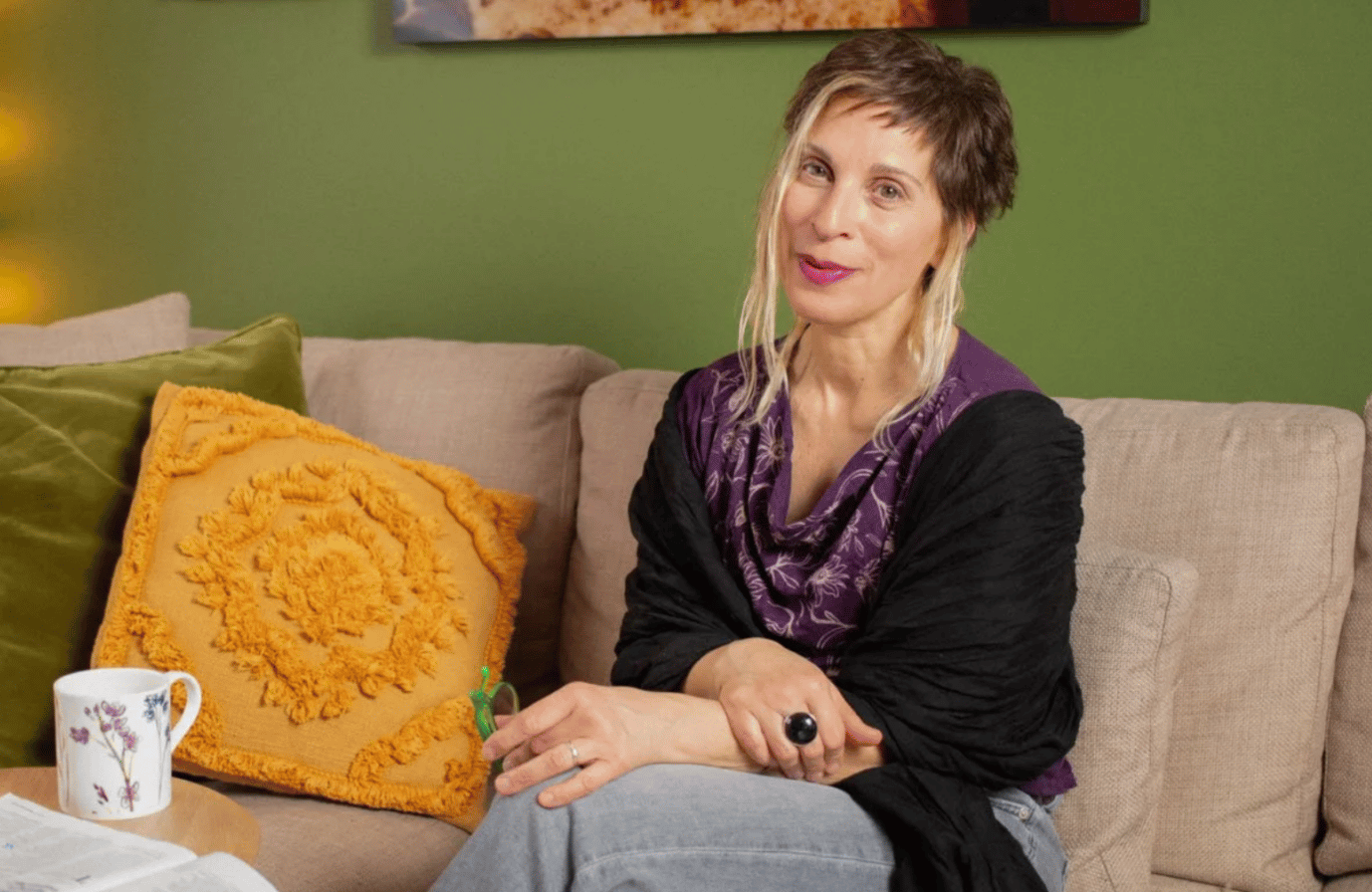
Leilani Farha, the global director of The Shift, an international human rights organization focused on housing, finance and climate, has spent years visiting homes around the world and witnessing the housing crisis up close. Her new book, Housing Inc.: A Global Takeover and Our Fight for Home, published as part of the 2026 CBC Massey Lectures, reckons with what she calls “a crisis four decades in the making.”
Housing is under attack, she argues, by politicians and corporations alike.
You may unsubscribe from any of our newsletters at any time.
But the book is more than a critique. It is partly autobiographical. Told through vignettes of Farha’s own life and experience as the Lebanese-born United Nations special rapporteur on adequate housing from 2014 to 2020, Housing Inc. takes a more personal approach.
In July, James Adair spoke with Farha about the stories behind the book, the financialization of housing and what it means to reclaim the idea of home. Housing Inc. will be released on Sept. 8.
—
James Adair: This book is very accessible. Why did you want to write for an audience that maybe isn’t traditionally thought of when it comes to housing or something like the Massey Lectures?
Leilani Farha: When I agreed to do the Massey Lectures and write the book, what I felt was not, “Oh yay me, this is a huge honour!” That came much later.
What I felt was, “Oh my God, what an incredible opportunity” — the opportunity to tell the story that I have seen unfold in city after city after city.
A lot of people in my travels would tell me that they feel really alone. They didn’t realize that what they were experiencing is part of this huge mega system, and so I wanted to expose that and help tenants, young people and people living in homelessness feel connected to each other. This requires the text to be accessible.
As UN special rapporteur for housing for six years, I had the chance to speak to governments, to academics, to that world. With the Massey series, I really just wanted to speak with people experiencing the housing crisis.
JA: What do you think the public conversation in Canada around housing gets wrong?
LF: Well, first of all, who’s having the conversation — and who’s leading it?
One of the things I hope I was successful in doing with this book was showing what a housing policy book looks like when it’s written by an Arab Canadian woman whose family history is one of colonialism and occupation in southern Lebanon.
We rarely hear from tenants and people living in homelessness and Indigenous people who are experiencing ongoing dispossession, colonization and suffering the housing crisis in the worst way. We rarely hear their voices at the front and centre of these debates. The neoliberal economic system has won and has taken hold everywhere. You turn the TV on, and it’s house flippers and Dubai Bling. You go to the barber, and the person in the chair next to you is talking about real estate investing. It’s just in the ether and everywhere.
So I wanted to focus on what values underpin the system we’ve all bought into. It’s treated as a given that homeownership is a good thing — but is it? Are homeowners, especially young homeowners, faring that well? Are they actually building equity, which is supposedly what’s going to happen if you own a home, or are they unable to renegotiate mortgages and then losing those homes? I wanted to challenge what I consider a deeply problematic value system — a moral bankruptcy informing housing — and imagine what a housing system would look like if it were built around different values.
That’s why I turn to human rights, Indigenous thinking and practices, and even the arts. What role could imagination play?
JA: I’m wondering if you could imagine what the neighbourhood of White Haven, Ottawa, where you grew up, would have looked like if the values you describe in the book had been applied?
LF: Well we might not have been one of the only racialized families living there. Most of the families were middle class in the neighbourhood. There was an apartment building right behind me, and there was a lower income neighbourhood. There might have been more integration [between the two].
I also struggle in the book with this idea of owning land on what is in fact Indigenous land.
Maybe we would all just be stewards of the land. Maybe we would have leases, but we wouldn’t actually own the land. And Indigenous Peoples would retain their lands.
I love that question, but it certainly implodes the mind, right? We would be looking at a whole different kind of ownership system or a no-ownership system.
More on Broadview:
- What would you do to escape?
- Why diaspora communities in Canada are struggling to keep their first languages alive
- What we lose when a language dies
JA: I loved the personality that comes through in this book. You touched on this a little bit, but why did you think it was important to write this story both as an autobiography and as a manifesto?
LF: I was writing this book post Oct. 7, 2023 [when Hamas attacked Israel]. I’d been living through the genocide of Palestinians, which hits very close to home for me. My father is from southern Lebanon, and our family lands were in what is now northern Israel. Watching my now 92-year-old father, who lives in Ottawa, watch the genocide and what was happening in southern Lebanon was very harrowing. It revealed so much to me about the housing world and the world we’re living in and who counts and who doesn’t.
I could see clearly the connection between how Palestinians don’t count in the eyes of the Israeli military and how certain people don’t count in our housing system, and I couldn’t divorce those two.
And that’s me — my career is in housing, and I come from these people who don’t count. There was so much personal revelation.
I was basically an A-student all of my academic life. I went to law school. I went to an all-girls private Anglican school. I articled at a highly regarded law firm.
I became UN special rapporteur. All of that in this country means nothing. I’m one of the people who counts for nothing. The government of Canada supported the genocide. They’re supporting the occupation of southern Lebanon. So that revelation — I mean, it’s a horrific revelation to have at my stage of the game.
I mean, it was really — I don’t know what to say. It was depressing, shocking to me that I live in a country where I feel like I’ve done so much public service and I still count for nothing.
That was so much a part of who I was as I was writing the book. There was no way I could not reflect that in the book. I wanted to understand why I’ve always felt so connected to people experiencing homelessness and housing insecurity. I grew up with security and many advantages, yet I never felt like I fit in. I identified more with those communities than with governments. All of that found its way into the book.
JA: You mentioned you went to an Anglican all-girls school as a child. Broadview is a progressive Christian outlet affiliated with The United Church of Canada. What role do you think faith communities have in housing justice?
LF: There is so much alignment between Christian and Muslim values, and I can’t speak for other religions because those are the ones I’ve been exposed to. But I would imagine most religions have doctrines that are about compassion and humanity and being giving and not having avarice and greed, right?
Those belief systems are absolutely in conflict with our neoliberal housing system, which is extractive, narcissistic, not compassionate, not based in humanity and in fact dehumanizing.
Faith-based groups would have a lot to contribute to solving the housing crisis if those values were put forward as the framework and the foundation for our housing system. It would change everything.
I am not a religious person, but historically I have had a relationship with the United Church. They were very active in anti-poverty work I was doing when I was head of Canada Without Poverty, and I saw that there.
JA: You take a lot of care in the book when you’re describing the homes you have visited; they are very human, intimate descriptions. What tells you that you have walked into someone’s home?
LF: I mean, home really is everything. When I walk into a home, I think what I first notice is the human interactions.
Often, I was visiting homes during the day, and there were more women and children present than men. I would almost immediately see the interaction of mother, grandma, auntie and child. And they weren’t always nice, nice. If you walked in my home, you might see me having a row with one of my kids or a real debate, you know.
The other thing I would notice is the drive to create a cozy, warm environment, no matter the circumstances.
For instance, I can walk into a home, and it’s pitch black. I’m on a mud floor, and yet there’s a carpet laid, a table set out, often so pristine and clean, even though the circumstances aren’t.
Or often there is a framed photo on a makeshift bureau. Just those touches of humanity, of dignity, of longevity: “I’m not going anywhere. I’m creating a home.” That “I exist” feeling.
Then of course there is coping with the deleterious nature of some of these homes, which is also a human thing. Trying to protect the family members from the seeping rain that’s coming through the hole in the roof. I have so many pictures in my photo cache of crazy wires that are electrical dangers. The risks were real; people were just trying to get enough electricity in the unit for a little light so that the kids can do their homework.
Those are the things that make you know you’re in a home, because all of the elements of existence are there that reflect a strong drive for dignity.
***
This interview has been edited for length and clarity.
James Adair is a recent Broadview intern
Thanks for reading
Independent journalism rooted
in faith and justice is under threat
Broadview is the only media organization in Canada offering thoughtful, values-driven journalism from an inclusive, progressive Christian perspective. But our work depends on your support. If you value what you've just read, please act now.
A gift today helps keep this journalism alive tomorrow.
With gratitude,