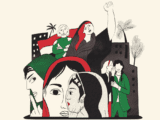
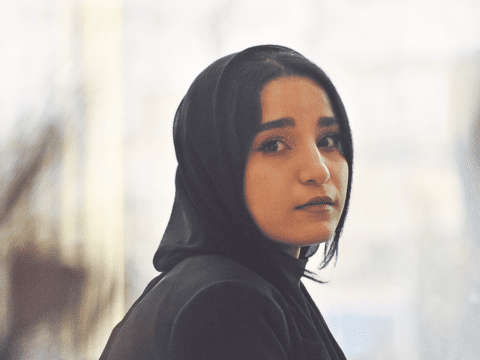
Sarah Hussein remembers the weight of her classmate’s textbooks stacked awkwardly in her arms. She was just 11 years old and had come to collect them after the girl, Esraa, was pulled out of school to be married. As Esraa’s mother handed them over, she muttered something Hussein would never forget: “A girl’s ultimate place is her husband’s house, not school.”
Hussein didn’t understand everything then, but she understood enough. A few months after her classmate had been married off, Hussein heard she had died — killed by complications from a pregnancy her body was too young to carry.
You may unsubscribe from any of our newsletters at any time.
In the wake of Esraa’s death, her teachers said nothing, Hussein recalls. There was no funeral announcement. No story in the news. No inquiry. No outrage. The silence made young Sarah angry. In Iraq, anger can be dangerous. But for Hussein, now a 27-year-old pharmacist, it became a quiet form of courage.
Iraq’s failure to protect women and children is rooted in the tangled influences of religion, politics and law. Although the country remains a signatory to international treaties prohibiting child marriage, its enforcement is weak. Despite regulations that were put in place after the 2003 U.S. invasion to try to address the issue, Sunni and Shia sectarian parties and clerics — representing the two main branches of Islam — have exploited religious rhetoric to justify child marriage and reinforce patriarchal norms.
The 2005 Iraqi constitution enshrined sect-based legal pluralism, granting Shia and Sunni clerics broad authority over personal status matters, including marriage, divorce and custody, through separate religious courts. On the surface, Iraq is a country with a constitution and formal institutions, but underneath, the arms of religious authority impose their patriarchal power through semi-official or informal channels, with girls and women as their primary targets. Legal ambiguity and the dismissal of reform as “western interference” have only deepened religion’s hold on marriage and other practices.
In 2024, Iraq took another troubling step by proposing amendments to its Personal Status Law that would allow girls as young as nine to be married. The change, pushed by conservative religious factions in parliament, also sought to expand the authority of Shia religious courts over family matters.
In the months leading up to the law’s passage, dozens of women protested in Najaf — one of Shia Islam’s most revered spiritual centres, where clerics wield immense influence and tradition runs deep. Hussein was among them.
“We didn’t even get to chant,” she says, describing women holding placards. “Religious men came and started shouting, threatening us. The police just watched. They did nothing to protect us.”
In that moment, it felt like the beginning of something bigger. The minimum marriage age in the new law was revised in January 2025 in response to public pressure, preserving the existing legal age of 18, or as young as 15 with parental and court approval. But many of the women who protested were later harassed, interrogated or silenced by their own families.
It’s not only danger but fear that keeps many Iraqis from protesting, stemming largely from the violence that marked the October 2019 Tishreen uprising against political corruption. Hundreds were killed by sniper fire and tear gas canisters; many more disappeared or were threatened into submission. For Hussein and others like her, those killings weren’t just a moment of national tragedy — they were a warning.
Hussein’s activism now happens behind closed doors, through encrypted apps and whispered meetings. She’s part of a small but determined resistance that refuses to normalize the erasure of women’s voices.
Even without a broad national plan to combat child marriage, these civil society efforts continue their work in defiance of both apathy and threats. For more than four years, Hussein and a small circle of women have collaborated with Iraqi lawyers and human rights groups to challenge the new law.
In February 2025, the revised Personal Status Law came into effect. While fears of a lower legal marriage age were averted, critics warned that the new law still harms women and girls. Couples could now choose to have their marriages governed by Shia religious law rather than civil law, creating different rights for different sects.
The amendment also legalized unregistered marriages, which functioned as loopholes to bypass Iraq’s legal marriage age. According to a 2021 UN report, 22 percent of unregistered marriages in Iraq involved girls under the age of 14.
The advocacy group has since shifted its focus to supporting those affected, especially in divorce cases, but religious courts are rarely sympathetic. “One cleric said, ‘If God allows it, who are you to oppose it?’” Hussein recalls.
In the café where we meet in Najaf south of Baghdad, Hussein wears a black hijab that conceals part of her face. She acknowledges how “western media often depicts Arab women as voiceless, passive victims of their culture.” But Hussein is deliberate, angry and brave.
“Feminism in Iraq isn’t about equality,” she says. “It’s about survival. We want to live. We want to not be beaten. We want to not be married at 10.”
She talks about a dream she has — to build a network of safe houses for girls fleeing forced marriage. It sounds ambitious. But so did protesting in the streets of Najaf.
“One day,” she says. “If I survive long enough.”
In 2025, Iraq ranked 148 globally in the United Nations’ Human Development Report. Regionally, its child marriage rates are among the highest in the Middle East, alongside countries like Iran, where girls as young as nine can marry if their paternal guardian and a judge consent. By contrast, neighbouring Kuwait recently raised the minimum marriage age to 18, regardless of sect.
According to UNICEF’s Child Marriage Data Portal, an estimated 28 percent of Iraqi women born between 2001 and 2005 were married before the age of 18. But those are just the official figures. Iraq lacks a comprehensive national database to track child marriages, many of which happen informally outside the state’s civil registration system. This makes it nearly impossible for girls to seek legal protection or even prove they were married.
When they do come forward, the legal system offers little recourse. Marital rape is not criminalized, and husbands are permitted by law to “discipline” their wives. Police often side with abusers, courts minimize or dismiss cases of violence, and families enforce silence in the name of “honour.”
This systemic failure is reinforced by deeply held social values and generations of tradition. Many women, especially those in conservative regions, continue to support a system that aligns with prevailing religious norms. “Marry her young and raise her” remains a popular cultural saying in several communities, reflecting a deep-seated belief that girls are more easily moulded into obedient wives.
Supporters of lowering the marriage age in the Personal Status Law argue that legalizing these unions will provide girls with some form of official protection — like documentation, inheritance rights or social legitimacy — since such marriages otherwise happen informally. In their view, regulating the practice through law is better than leaving it hidden and unmonitored, despite the risk of normalizing what critics see as institutionalized abuse.
Meanwhile, public forums and media platforms continue to elevate male religious figures who justify child marriage under the guise of tradition. Survivors and advocates are often drowned out. Yet across Iraq, everyone hears tales of women defying the patriarchal system — stories that challenge the clerics’ monopoly on morality and insist that protection, not patriarchy, should define the law.
Feminism in Iraq isn’t about equality. It’s about survival. We want to live. We want to not be married at 10.
At just 14 years old, Safa Zafer Jamel was nearly forced into a marriage with her cousin, a man 14 years her senior who lived in Jordan. The union was arranged without her knowledge, and when she protested, her uncle — who was her legal guardian at the time — locked her inside the house, banned her from school and abused her verbally and physically. “He told me, ‘You’re not a child. Your body is mature. The wedding dress will fit you perfectly,’” she says.
She didn’t fully understand what was happening, only that she was being promised to a man she’d never met because that’s what happened to girls in her family. In a wedding shop in Baghdad, surrounded by satin and sequins, a saleswoman glanced at her frame and said flatly, “There’s nothing in her size.”
The words shattered something in Zafer Jamel. “A wedding dress? For me?” she recalls. She cried right there in the shop while her aunt and cousin’s mother whispered reassurances. “Every girl gets married,” they said. “Don’t worry.”
But Zafer Jamel was just a child, and she knew it.
That comment about the wedding dress felt more confronting than anything else she’d experienced that year: more than her mother’s silence, her uncle’s threats and even her future husband sexually touching her without permission. In that moment, Zafer Jamel realized they were trying to make her into a bride. The family bought a dress that was too large and took it to a tailor, who made it fit her child’s frame.
In the weeks that followed, Zafer Jamel stopped eating, avoided mirrors and rehearsed ways to disappear. The cousin she was to marry — now emboldened — touched her more often. He had the house’s blessing, allowing her no escape.
More on Broadview:
- Should I attend an event featuring a speaker accused of transphobia
- This Ottawa church just gained more than 100 new members
- What if Lent began with a question?
Despite relentless pressure, Zafer Jamel refused to accept the marriage. The stress pushed her to attempt suicide by overdosing on sleeping pills — a turning point for her mother. A er years of silence, she stood by her daughter and helped stop the wedding. It was called off just days before the ceremony.
But Zafer Jamel doesn’t see it as a victory. “They still stole two and a half years of my life,” she says. “My school. My friends. My sense of safety.”
Zafer Jamel eventually returned to secondary school three years behind her classmates. She juggled her studies with exhausting jobs: sewing in wedding dress shops (a bitter irony) and working in a tissue factory, where she faced harassment. But she was determined to finish the education that had been taken from her.
Now 29, Zafer Jamel participates actively in Iraq’s informal feminist networks. She has marched in protests against child marriage, attended anti-harassment workshops and is engaged online through feminist WhatsApp groups and social media platforms, often speaking up in women’s spaces and amplifying survivor voices in digital forums.

“I tell them, ‘You’re not wrong. Your body isn’t the problem. The system is,’” she says.
She tells me that she dreams of leaving Iraq someday. “I want to go somewhere where I don’t have to explain why a wedding dress made me want to die,” she says. “Somewhere I can live without fear.”
Whatever happens, she says she’ll keep fighting.
Fatima* was 16 when her family found her a husband. Before that, her 14-year-old sister was married out of perceived necessity. A male relative had been sexually harassing the sisters, and when their appeals to their uncle and grandfather were met with silence, the family believed marrying the girls to other men was the only way to avoid a scandal.
Fatima’s marriage, however, quickly turned abusive. She recalls undergoing a heart procedure when she was 18. Right there in the hospital, her husband began beating and cursing her. “No one did anything. Not the nurses, not the security. I was hit in front of everyone,” she recalls. “Every day I lived was full of fear and terror.” A er 12 years, Fatima found the strength to seek a divorce — a rare act of resistance. But her defiance came at a cost.
Now 30, Fatima lives with her young son in a small house in Karbala, a Shia Muslim pilgrimage city not far from Najaf and Baghdad. Though technically independent, she is under constant surveillance. Her brother has threatened to kill her, while her mother insists that as a divorced woman, Fatima should be silent, obedient and invisible. Her father, estranged and remarried, offers only occasional financial support and no protection. Even her sisters, though emotionally supportive, are powerless to intervene.
“I don’t go out unless I have to,” Fatima says. “To them, going to work is entertainment. I should stay inside.”
Her days are shaped by fear. The police and the international organizations, she explains, are not an option. “They won’t help me. They don’t take threats against women seriously.”
Fatima used to volunteer in civil society organizations and attend political conferences to advocate for women’s rights. A er the divorce, however, escalating threats from her brother forced her to stop. “He found out I was talking to men, even in professional settings. He said I had no right as a divorced woman,” she says.
Despite the ongoing risk, Fatima still tries to help other women when she can, guiding them to find work and become financially independent. But real help? That’s dangerous, she says.
Her story underscores a wider systemic failure: power lies with families, not courts. “It is not the law that creates this reality for women in our lives,” Fatima says. “It’s the tradition.”
Without a system to protect them, some women flee. While data is limited, accounts from survivors include girls and women escaping abuse without documents or financial support. In the absence of justice and safety at home, many seek asylum abroad.
Nada Saeed, 30, now lives in Finland after fleeing Wasit province in southern Iraq in 2020. At 16, she was forced into an arranged marriage. She begged her father to delay it, but her objections carried no weight and the wedding went ahead. On the first night, she says she was sexually assaulted, and three days later she discovered her husband had another woman. When she asked him about it, he slapped her across the face. It would be the first of many beatings. “Days and days passed as a slow death for me,” she says.
Two months later, a er she became pregnant, her life narrowed to a daily rhythm of violence, insults and isolation. She tried to return to her family. “But every time, my father and brothers told me, ‘We don’t accept a divorced woman in our home. The shame will follow us.’”
When she begged her husband to let her finish her education, he relented. She returned to school, cared for her child, studied late into the night and graduated with high marks. “I was a mother, a student and a prisoner. But I kept going.”
Until she couldn’t. One day, a er yet another beating, she took 12 insulin injections from her diabetic brother-in-law and swallowed them. She was unconscious for a full day. At the hospital, Saeed says the police were no help because of their friendship with her husband. “They covered it up as usual,” she says. It was the first of two suicide attempts that no one took seriously.
By 2018, Saeed tells me, her husband had married a second woman and become the head of media and public relations in the Wasit police force. She had no power left, no voice, no protection. “He was untouchable. And I was invisible,” she says. “I had no choice but to run from him and the system that didn’t see me as human.”
I want to go somewhere where I don’t have to explain why a wedding dress makes me want to die. Somewhere I can live without fear.
In Iraq, a mother cannot legally obtain a passport for herself or her child without the male guardian’s approval. Her son’s father had no intention of letting her leave, so in August 2020, Saeed and her nine-year-old son fled without any documents. She crossed the border into Iran and then to Türkiye carrying nothing but a backpack, begging for food and sleeping in fear.
In Türkiye, she found temporary refuge but no real security. “It was really dangerous for us to stay there,” she says. “The police in Türkiye were [unhelpful] to foreigners and couldn’t give us any protection.” She lived in constant fear that her husband would find her.
By 2024, she felt like she had no choice but to flee again, this time to Finland, where her asylum application was recently granted. “Iraq taught me that being a girl means being trapped,” she says. “Now I’m just asking for a place where I’m allowed to be free.”
Activists warn that without urgent reform, Iraq will continue to fail women and girls. Against the backdrop of worsening economic hardship and eroded social protections, child marriage persists as a structural failure — one that demands legal clarity, institutional accountability and cultural reckoning.
Few women embody the weight of that need to reform more than Shaza Hussein Kamel, who goes by Noor. She has lived through the full arc of Iraq’s modern upheavals: from the tight grip of President Saddam Hussein’s rule, through the chaos of the U.S.-led invasion, to today’s state-sanctioned deprivation of women’s rights.

Under the dictatorship, poverty ruled Hussein Kamel’s life like a quiet tyrant. Growing up in the 1990s — the decade of UN sanctions, mass unemployment and collapsing public services — she had little access to education and even fewer pathways to independence. Early marriage became a survival strategy.
After the 2003 invasion, the fall of the state brought neither protection nor justice. Courts weakened, policing became politicized and tribal, and religious authorities filled the vacuum. For girls like her, what had once been economic hardship became intimate harm. She endured years of beatings, forced domestic labour, economic exploitation and the trauma of her children being taken away.
Hussein Kamel escaped her abusive husband in 2015 but now fears for her daughter. Despite everything she endured, she couldn’t stop the girl from becoming a child bride. Though her daughter’s husband is not as violent, Hussein Kamel says the marriage is still rooted in the same broken system. “My daughter married to escape, just like I did. But she walked straight into the same cage.”
Hussein Kamel now lives alone in the northern city of Dohuk, known for less restrictive attitudes toward women. She works, speaks publicly on culture and women’s rights through social media and occasionally dances in secret venues. “When I talk on social media about women’s dignity, people from across Iraq call me a prostitute,” she says. “When I wear makeup, they call me shameless.” And yet, her voice persists.
“I survived for a reason. My biggest pain is failing my daughter,” she says. “That pain is now my fuel, and I don’t want to fail the silent girls who are watching to see if change is still possible.”
***
Robert Bociaga is an independent journalist covering post-conflict recovery, peace building and environmental pressures across the Middle East, Africa and Asia.
This story first appeared in Broadview’s March/April 2026 issue with the title “Iraq’s Child Brides.”
Thanks for reading
Independent journalism rooted
in faith and justice is under threat
Broadview is the only media organization in Canada offering thoughtful, values-driven journalism from an inclusive, progressive Christian perspective. But our work depends on your support. If you value what you've just read, please act now.
A gift today helps keep this journalism alive tomorrow.
With gratitude,