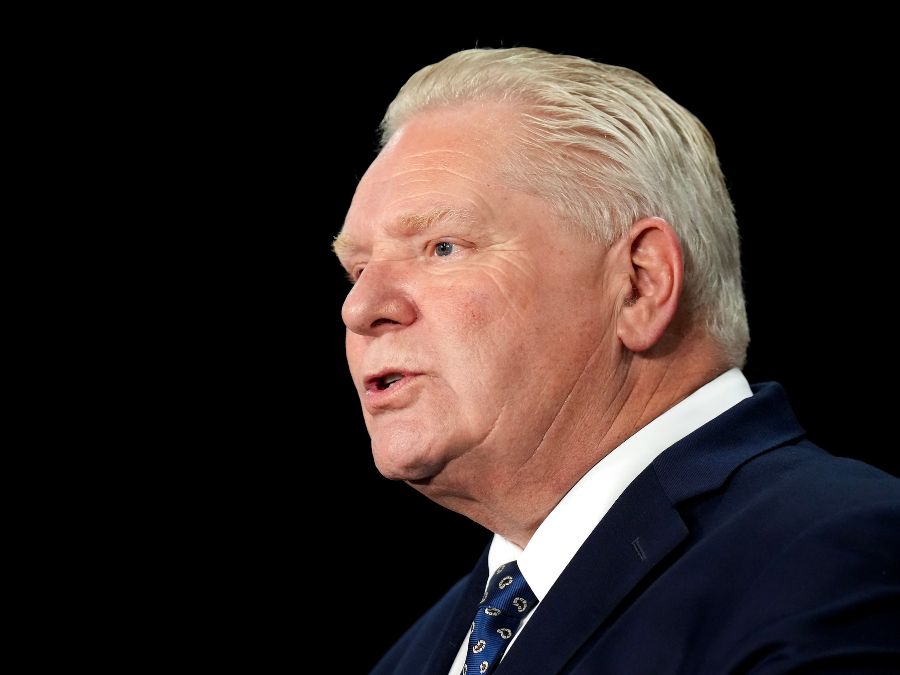
In September 2024, Ontario Premier Doug Ford stood before the cameras at a new housing construction site in Cobourg, Ont., and said that the homeless needed to get off their “A-S-S and start working.” Advocates saw the remark as a clear statement of where Ford — then six years in office — stood on the province’s worsening homelessness and overdose crisis. Then, last spring, Ontario passed a law allowing fines of up to $10,000 or six months in jail for people consuming illegal substances in public places. In November, when protesters in the legislature tried to shout down voting on Bill 60 — which critics say makes it easier to evict tenants — Ford yelled at them to go “find a job.”
These are just two examples of legislation Ford’s government has passed that advocates says further marginalize unhoused people and those with substance abuse issues and make the work of related nonprofits harder. These legal changes come amid a growing emergency: according to Public Health Ontario, between 2018 and 2022 annual numbers of accidental drug and alcohol deaths in Ontario rose 68 percent.
You may unsubscribe from any of our newsletters at any time.
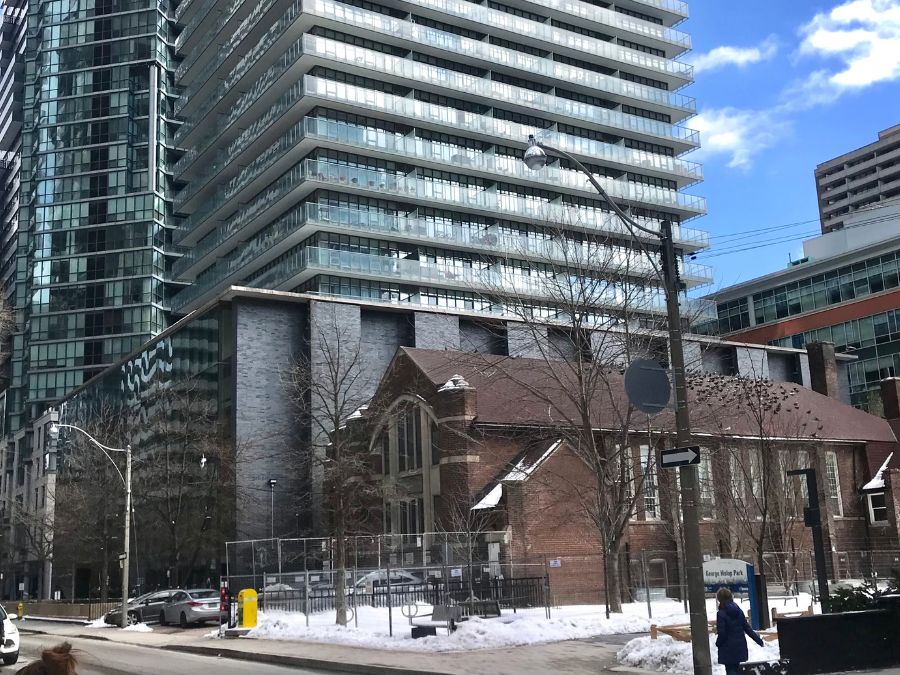
Greg Cook, a longtime outreach worker at Sanctuary Toronto, a homeless drop-in centre, says that the Ford government is trying to reframe addictions and mental health as an individual responsibility, rather than a community one. “It takes the responsibility off the government,” Cook says. “Control the narrative, stay responsible to property owners. Make it about property owners versus non-property owners. The homeless are seen as the ‘bad guys’ rather than as the most harmed people in our community.”
The board of a neighbouring condo building sued Sanctuary last fall for $2.3 million, claiming that the organization is creating an unsafe street and failing to address neighbourhood trespassing. The city has already fenced off the parkette beside Sanctuary, making it inaccessible to Sanctuary clients and the general public.
Organizations like Sanctuary, while not supervised consumption sites, provide another haven for vulnerable people at a time when many of the sites, which provide safe places for people to use drugs, are no longer available. In 2024, the Ontario legislature passed Bill 223, closing many supervised consumption sites in the province. Ford has said he’s dead set against them, even accusing the federal government, which funded them, of being the largest drug dealer in Canada.
As an alternative, the Ford administration announced in 2025 that they would spend $550 million on 28 Homelessness and Addiction Recovery Treatment Hubs (HART Hubs) across the province, which would protect “the safety of children and families” through improving access to addiction recovery and mental health treatment services. However, unlike existing harm reduction programs, the Hubs will be restricted from distributing needles or syringes.
In Toronto’s Kensington Market, The Toronto Neighbourhood Group’s (TNG) overdose prevention site remains open under a court injunction while the province’s Superior Court considers whether it and nine other supervised consumption sites should be closed. But on March 16, Ford’s government announced that it was cancelling funding to seven sites and banning new ones from opening altogether. The Kensington site isn’t among them, since it’s donor-funded, according to The Canadian Press.
“This decision turns whole communities into unsafe consumption sites,” TNG president Bill Sinclair told Broadview of the recent move. “Hospitals, libraries, and public transit are already reporting more overdoses by people with nowhere to go.”
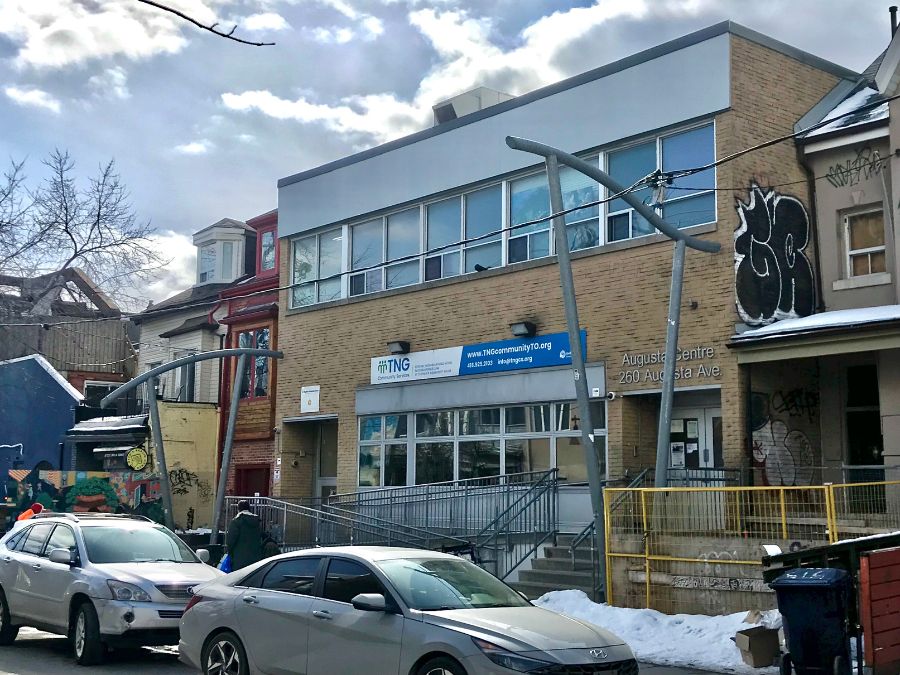
Another piece of legislation passed last June makes the work of nonprofits like TNG more difficult. The Protect Ontario Through Safer Streets and Stronger Communities Act, or Bill 10, makes landlords and nonprofits legally responsible for monitoring any drug trafficking that might occur on their properties. Nonprofits who fail to comply would potentially lose provincial funding.
Soon after the bill was passed, the Ontario Non-Profit Housing Association criticized it as an unreasonable demand on nonprofits, which already operate under tight budgets and often rely on volunteer leadership. TNG hired security to monitor the Kensington Market site out of fear that neighbouring businesses would use Bill 10 to shut it down.
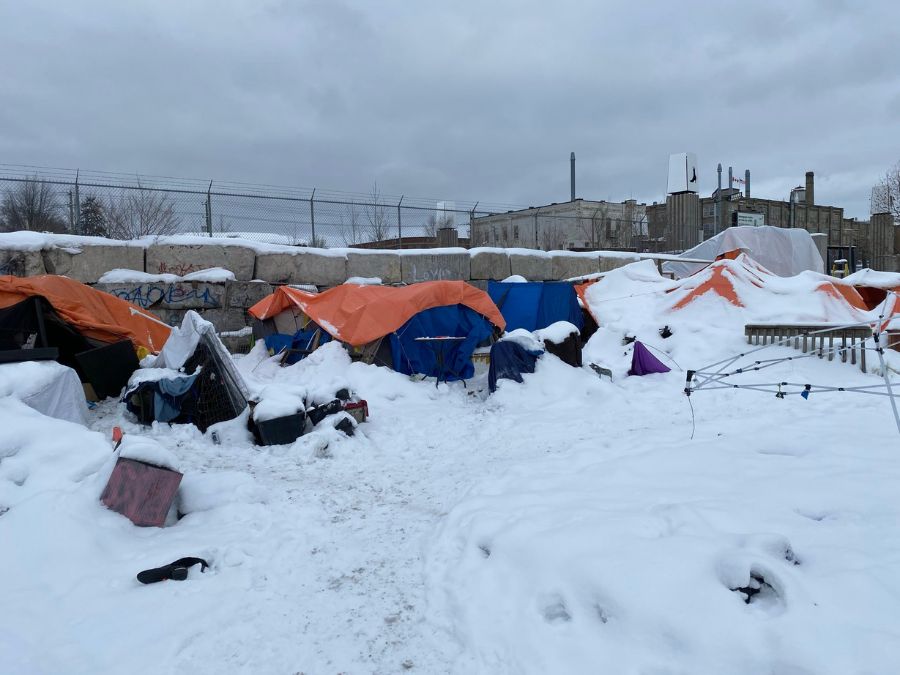
At the same time, the provincial government has intensified its focus on unhoused people by dismantling encampments.
More on Broadview:
- Manitoba program helps incarcerated parents read to their kids
- How Albertans of faith are countering separatist, anti-immigrant sentiment
- Canadian churches have unfinished business with Indian day schools
In October 2024, federal housing minister Sean Fraser said that the government would bypass the Ontario government, with which it failed to strike an agreement to match federal funding for encampments before the winter, and work directly with municipalities to address the homeless crisis. Ontario responded by announcing additional legislative tools to assist municipalities in removing encampments and “restoring safety to parks and public spaces,” along with a $75.5-million fund to “support homelessness prevention and provide people living in encampments with access to reasonable alternative accommodation.” However, it is unclear where that money is going.
When Kitchener, Ont., and Hamilton have attempted to clear encampments over the last several years, housing activists challenged the actions in court with mixed results. In the Hamilton case in 2024, a judge sided with the city, while in Kitchener, Justice Michael Gibson agreed with the Charter challenge that people had the right to sleep in public spaces. In response to last summer’s Kitchener ruling, Ford threatened to use the notwithstanding clause to circumvent the courts.
Social worker Jacara Droog, who has been working with the unhoused in Kitchener for several years, says that “they are cracking down on the homeless everywhere.”
Droog notes that the Ford government is now working closely with Kitchener city council to pass “property-specific” by-laws, which will prohibit where the homeless can live. “The idea of community safety has become the main message,” Droog says. “[The message is that] the homeless are dangerous. They want 24-hour surveillance of the homeless, or managed encampments like the one they allow by the dump.”
She adds over email that the “managed encampment“ is an example of environmental racism.
In September 2025, in an open letter to city councillors, Toronto Mayor Olivia Chow announced that the Ford government was cutting Toronto’s fund for shelter services by 60 percent, from $19.75 million in 2025 to $7.95 million in 2026. The 2025 amount was a nearly 50-per-cent slash to the $38 million allocated in 2024.
With an estimated 2,000 encampments across the province and more than 85,000 homeless people — and with the cities of Belleville and Thunder Bay both declaring homeless emergencies — Ontario’s auditor general reports that the province is failing to meet its responsibilities, noting that it now has the largest social housing waitlists in the country.
Adding to that concern, a KPMG study commissioned by the Ontario government revealed that the province is mismanaging money on its approach to the homelessness crisis. This report, which KPMG submitted to the province in 2022, remained unpublished until The Trillium obtained a redacted copy through a freedom of information request.
The province later told The Trillium, which reported on KPMG’s findings, that it was investing $1.7 billion to improve supportive housing access, with $700 million of that coming through its Homelessness Prevention Program. It also highlighted its HART Hubs plan and the $75.5 million it is spending to prevent homelessness.
But according to a report by the Association of Municipalities of Ontario, government funding falls far short of what is needed. The AMO is calling for $11 billion over the next decade for supportive housing, and $250 million a year to solve the encampment crisis. The AMO notes that not only are there more homeless people, the rates of chronic homelessness (homeless for six months or more) are also growing.
“It’s not about solving the homeless problem. It’s all about punishing the homeless,” says Droog of the province’s approach. “[They have made] it about personal failure. ‘Put the homeless in jail.’”
***
Sherwood Hines is a writer in Toronto.
Thanks for reading
Independent journalism rooted
in faith and justice is under threat
Broadview is the only media organization in Canada offering thoughtful, values-driven journalism from an inclusive, progressive Christian perspective. But our work depends on your support. If you value what you've just read, please act now.
A gift today helps keep this journalism alive tomorrow.
With gratitude,