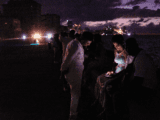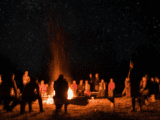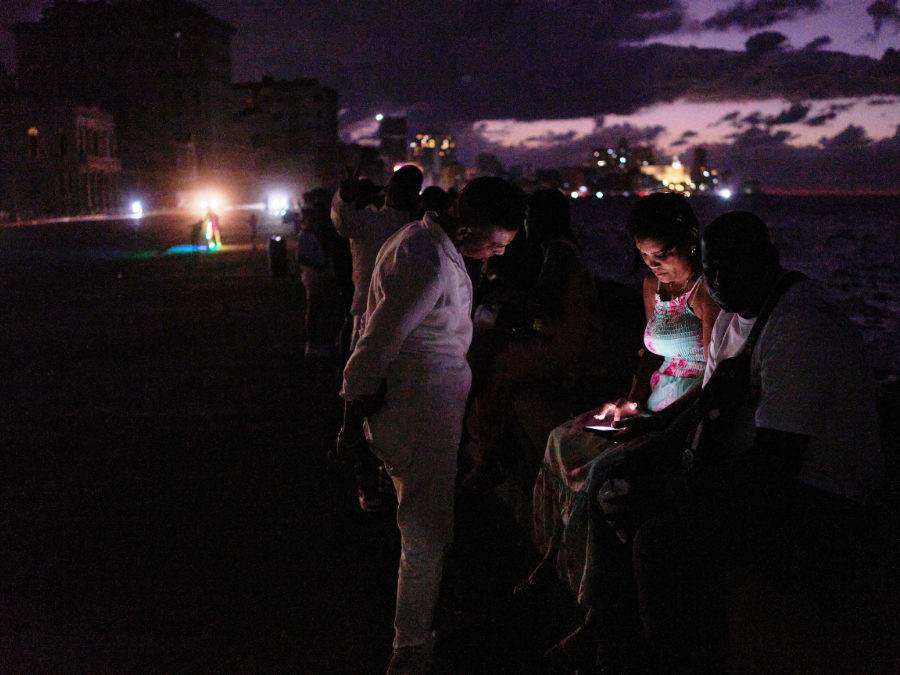
“When a power outage hits, the first thing you feel is a sense of paralysis,” says Jorge González Nuñez, president of the Student Christian Movement of Cuba (MEC-C), during a brief moment with electricity in Cuba’s capital, Havana.
Cuba has been facing severe energy shortages since U.S. President Donald Trump signed an executive order in January threatening tariffs on any country trading oil with the long-isolated island nation. Residents have been suffering day-long blackouts for weeks.
You may unsubscribe from any of our newsletters at any time.
Not only is Trump’s policy “illegal, arbitrary and coercive,” says González Nuñez, but it’s also “a policy of extermination against the civilian population, justified by the discourse of political confrontation.”
Cuba heavily relies on oil imports. As the supply of oil has slowed, the situation in Cuba has become one of absolute deprivation.
“Hospitals have had to reduce surgical services to a minimum and intensive care units are operating under severe restrictions,” says González Nuñez. “Currently, 9.4 percent of the population lives with diabetes. Insulin — the medication used to treat it — requires continuous refrigeration between two and eight degrees Celsius. This means that every day, nearly 850,000 people in Cuba have their health and lives at risk.”
Across the country, he continues, industry is virtually paralyzed. “Public transportation is currently almost at a standstill. Schools and universities have had to adjust schedules and modes of study. Garbage collection is severely affected, causing waste to accumulate in the streets and leading to the spread of disease.”
Christie Neufeldt, The United Church of Canada’s global partnerships co-ordinator for Latin America and the Caribbean, has heard similar stories from the denomination’s partners on the ground. “The conditions in the hospitals are terrible. The doctors are performing caesareans using the light of their mobile phones. During periods of electrical shortages, mothers are hand-pumping manual ventilators for their children,” she says.
The situation is weighing heavily on Helen Gavard, a member of the Cuba team at Trinity United Church in Lively, Ont. “I wake up every day, and right now, I think about Cuba,” she says.
Gavard, alongside other Trinity members, previously visited Cuba in 2024 and has been engaged in faithful Cuba solidarity ever since. Her team plans to host a local fundraiser in nearby Sudbury, Ont., to raise funds for the Christian Centre for Reflection and Dialogue, a United Church partner organization in Cárdenas, Cuba.
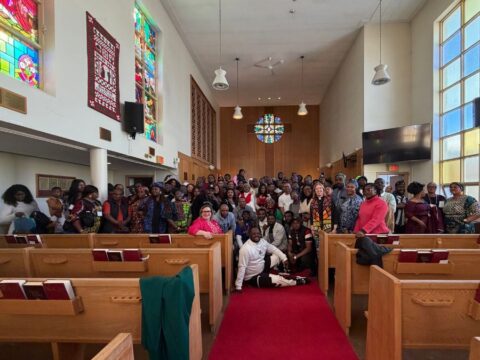
At the end of March, United Church general secretary Rev. Michael Blair travelled to Cuba as part of an international ecumenical delegation. The visiting church leaders met with local officials and clergy to show solidarity and gain a deeper understanding of the humanitarian situation.
More on Broadview:
- How Quebec’s secularism law is forcing young women to rethink their futures
- How Albertans of faith are countering separatist, anti-immigrant sentiment
- Canadian churches have unfinished business with Indian day schools
Back in Canada, Neufeldt and the United Church have been advocating for an end to the blockade and co-ordinating with partner organizations to deliver food and other supplies. She says the denomination supports a petition calling on the Canadian government to scale up aid and work with other countries to get fuel to Cuba.
“It is really important for us as Christians to act out of a call for justice [and] compassion, and respect the right of people to self-determination,” Neufeldt says. “No one should be punished and deprived of the basic necessities of life.”
González Nuñez is grateful for the solidarity Canadians have shown, including a recent event in Ottawa organized by the Student Christian Movement of Canada and partners that raised over $3,000 for MEC-C. The funds allow MEC-C to provide life-saving aid and remind Cubans they haven’t been forgotten.
“The support we have received from our sisters and brothers in Canada is invaluable. The love you send us gives us the certainty we are not alone, and no government can block that love,” he says.
“It has been very moving to follow from afar the gatherings you have organized to discuss Cuba and raise awareness among others about the importance of denouncing what the U.S. government is doing today against our people,” González Nuñez continues.
He describes as courageous the effort of sending letters, signing petitions and speaking out to demand the Canadian government do more. “All of this encourages us to keep moving forward and to resist.”
***
James Adair is a journalist in Ottawa and the campus co-ordinator of the Ottawa Student Christian Movement.
Thanks for reading
Will you help support United Church reporting?
Broadview is the only media organization dedicated to telling the stories of The United Church of Canada — its big decisions, perspectives and the faithful people and communities at its core. But this essential work depends on you.Make a tax-deductible gift today — 100% of your donation goes directly to supporting United Church coverage.

With gratitude,