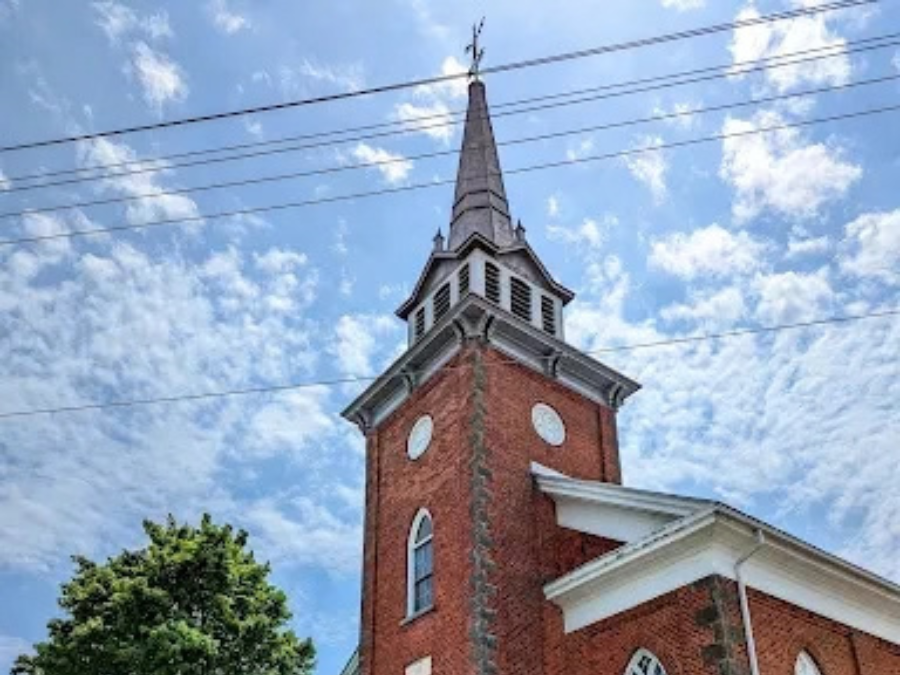
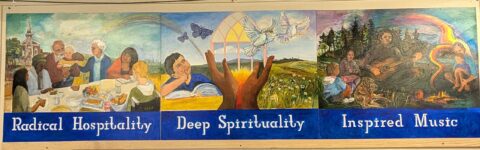
Above the kitchen window of St. John’s United Church in Kemptville, Ont., a small mural depicts a community sharing a meal, a family singing around a campfire and a young boy in quiet reflection as a dove flies overhead. Created by two local artists, it was designed to help the congregation imagine its next chapter — a process that unfolded over the pandemic.
With in-person gatherings suspended, St. John’s formed a visioning committee that conducted phone interviews with many of its 220 congregants. They asked what they thought the church
could be, what kind of work they wanted it to do and what was most important to them when it came to community outreach and atmosphere. Using that feedback, the church developed a new vision statement centred on three values: radical hospitality, deep spirituality and inspired music.
You may unsubscribe from any of our newsletters at any time.
People “got quite energized about what was possible,” says Helen MacGregor, St. John’s administrator. “There was this feeling that they were in charge of the design of whatever this church is going to be.”
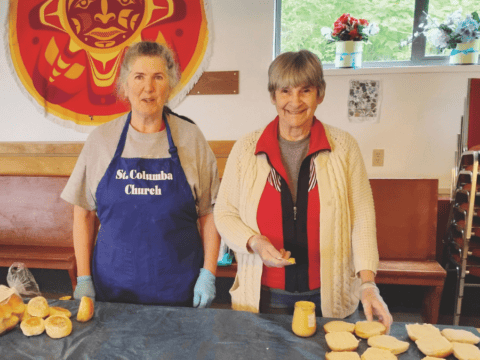
The congregation collectively decided to create a system of “faith circles.” Each household was assigned to one of seven groups, which rotate responsibility for Sunday worship duties — from readings and greetings to food and beverage preparation. With more people involved in weekly operations, MacGregor says participation has become increasingly organic. Now, when the church plans additional events, services or community outreach — including its regular friendship lunches and cafés — she finds that more congregants are excited to step forward and take initiative. They have rosters of between 10 and 20 volunteers for each event.
More on Broadview:
- A church rethinks what it means to serve
- What if growth isn’t about getting bigger?
- What small churches know
“They’re in charge of defining who we are, how we will be and listening to where we feel we’re being called by God,” says MacGregor.
***
James Adair is a recent Broadview intern.
Thanks for reading
Independent journalism rooted
in faith and justice is under threat
Broadview is the only media organization in Canada offering thoughtful, values-driven journalism from an inclusive, progressive Christian perspective. But our work depends on your support. If you value what you've just read, please act now.
A gift today helps keep this journalism alive tomorrow.
With gratitude,