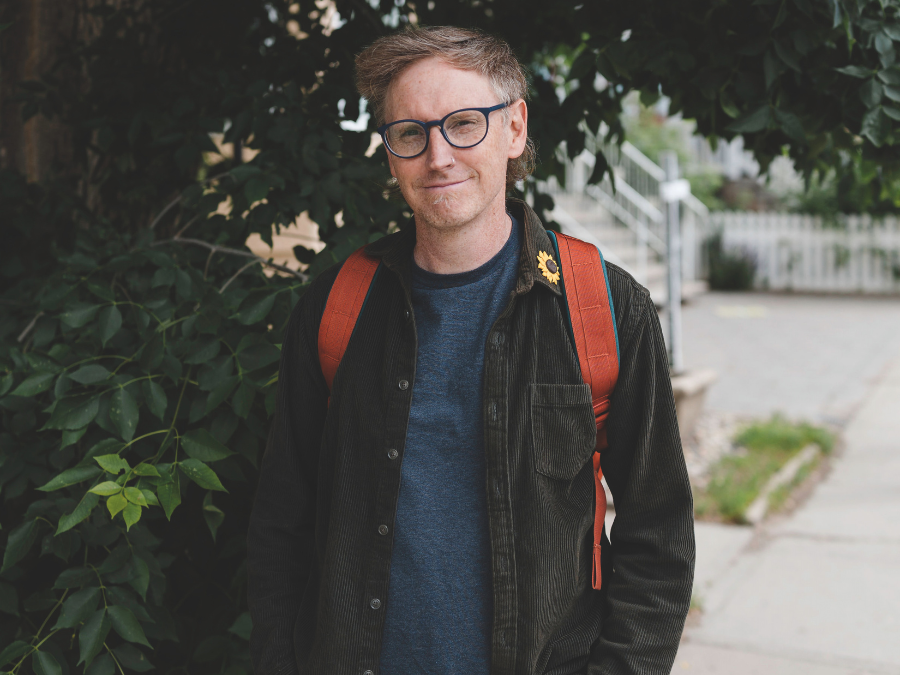
When most people think of church growth, they think of membership size. But Rev. Cameron Fraser, executive minister of growth and stewardship with The United Church of Canada, spoke to Broadview about how small churches can look at growth in more expansive ways, regardless of whether membership increases.
Ashely Crouch: What do growth animators do?
You may unsubscribe from any of our newsletters at any time.
Rev. Cameron Fraser: Growth animators work with small churches to help them strengthen their connections with neighbours and embody an invitational posture. The stewardship support staff who work alongside growth animators look at how these churches can develop and enhance a culture of generosity. What we are noticing is that small does not mean struggling. Many small faith communities have a beautiful, resilient, deeply connected ministry within their neighbourhoods.
AS: Is growth always about numbers?
CF: Growth can absolutely mean an increase, but growth can also mean developing a deeper capacity to love God and our neighbour, to articulate our faith and to offer beloved community. We are seeking to live into the growth that God is doing wherever we find ourselves. That will look very different in different places.
AS: How does a congregation discern its vision?
CF: We ask what makes them want to get out of bed in the morning. And then we invite them to be really curious and name the gifts and the challenges of their neighbourhood. And to look with honesty and compassion at how they are spending time as a church community. Are they seeking to do things that are exhausting them that make sense for some churches but don’t make sense for themselves?
More on Broadview:
- How congregants from a small-town church gave it an ‘extended life’
- Church founded by son of disgraced televangelists is small, humble
- What if small is enough?
AS: What does a realistic vision statement look like?
CF: I would invite a community to think long and hard about what they are hoping a vision statement will do for them. We are storytelling people as Christians. Perhaps instead of a vision statement, there is a story they feel they are living into. So a community that holds “God is making all things new” might always be looking for places where newness longs to be brought forward.
AS: What is a sustainable pace of change?
CF: Change happens at the speed of trust. Change requires us to grieve, to lament, to learn to let go. And so it’s important to do these things and do them well. We enter into these cycles every year in the liturgical calendar; we spend six weeks in Lent reminding ourselves that things end, that we die, that our world changes.
AS: What gives you hope?
CF: As we think about the future and what continued ecological and economic crises will ask of us, the capacity to respond in a nimble, personal, contextual way will be of utmost importance to churches. And I think small churches are uniquely poised to respond to the needs of their neighbours and the call of God in their moment.
***
Ashely L. Crouch is a freelance writer and editor based in Montreal.
This article first appeared in the September/October issue of Broadview with the title, “Small, faithful and deeply connected.”
Thanks for reading
Independent journalism rooted
in faith and justice is under threat
Broadview is the only media organization in Canada offering thoughtful, values-driven journalism from an inclusive, progressive Christian perspective. But our work depends on your support. If you value what you've just read, please act now.
A gift today helps keep this journalism alive tomorrow.
With gratitude,