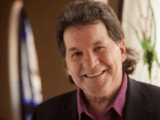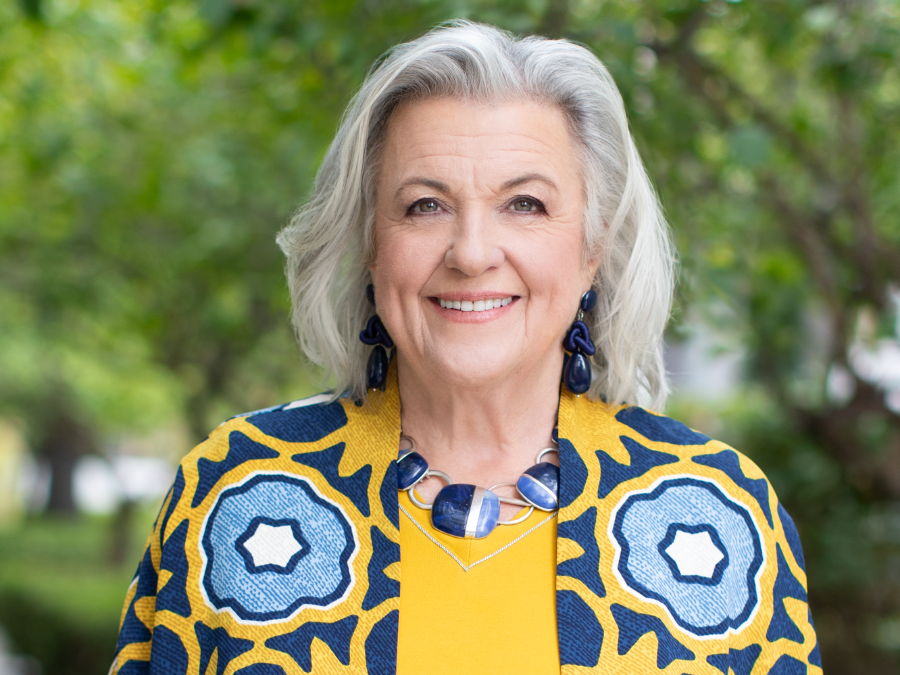
Kathy Baldock didn’t set out to write and publish three books at the same time. But when she started writing the first book, an expansion of the documentary she appeared in — 1946: The Mistranslation that Shifted Culture, her vision kept growing. That book, titled Forging a Sacred Weapon: The 1946 Bible Mistranslation Behind Anti-Gay Theology, examines how the use of the word homosexuals in the Bible led to decades of misunderstanding and persecution of LGBTQ+ people.
In the process of making the film and writing the book, Baldock met Rev. David Fearon. When he was still a seminary student, he wrote anonymously to the Bible translation committee in 1959, challenging its 1946 addition of “homosexual” to the text. Unbeknownst to him, his letter led to the New Revised Standard Version (NRSV) committee changing the translation in 1971. Meeting Fearon marked the beginning of Baldock’s Christian journey towards understanding and embracing the LGBTQ+ community.
You may unsubscribe from any of our newsletters at any time.
So this month, in addition to Forging a Sacred Weapon, she is also launching an accompanying discussion guide and a biography about Fearon, titled I Wish to Express. Broadview sat down with Baldock to discuss her discoveries, the ambitious three books and her hopes for expanding church inclusivity.
Ashely Crouch: You set out to write a book and ended up writing three! How did that happen?
Kathy Baldock: I loved the way I did [Forging a Scared Weapon]. But when I finished, I still didn’t get to tell all his story. And especially since he’s died [in 2023], I wanted to pay more tribute to him because this book never would have happened without him. I want to make him into an honoured statesman of the United Church, because his letter is the reason that I was able to confront this mistranslation. So it really, completely, comes down to David.
What I’m hoping to achieve with the guide is: you may not like this information, and you may not make the decision I would like you to make at the end, but at least your decision will be informed. That’s all I care about: that you will have to sit for eight weeks and struggle with this information and talk about it at this depth.
AC: Forging a Sacred Weapon explores the mistranslation and its negative consequences. How and why did this mistranslation come about?
KB: I was positive, because I knew so much history, that their decision was ideological and cultural, and not theological. What did they know about homosexuality in 1937… the assumptions around it? So that is what the [translation] team was working with. And if you understand the context, you cannot blame them for making the decision they made.
Paul says there’ are two males engaged in something that is so bad that it should send them to hell [1 Corinthians 6:9-10]. So anything that happened with the lurking man and a teenage boy,; this was the perception of who homosexuals were — they were predators, men after children. We didn’t even know how they got this way. Was it a body or brain defect? Were they molested? Mentally ill? They made this decision based on their culture’s assumptions.
AC: I noticed that when biblical scholars were having these conversations, the word that never comes in is love. It seemed to me that maybe they were speaking about abuse.
KB: At that time, in the 1930s and ‘40s, [homosexual] behaviour was not seen as love, it was seen as predatory. One group puts it in the Bible and no one seems to notice it. The first person that actually writes a letter to them and challenges them with solid reasoning is David. The academics aren’t there yet, but David senses. He knows that this [biblical scene] is not about equal status, love. He knows that this is abusive. It’s like a priest with a child, a teacher with a student. It’s this uneven, trusting relationship where one person is preying on another.
AC: The word homosexual didn’t even exist in the English language until almost 1900, so how did they arrive at that word?
KB: So a boy or a foreigner in this ancient culture was someone that’s captured, enslaved or prostituted. Another point I make in the book is there were no accessible academic books on the sexual ethics of Greco Roman times until 1978. That’s really late. So anyone doing work couldn’t have known that this was abusive sexual behaviour on enslaved people, boys or prostituted people. In the ancient world, those people had no ability to not consent. And this is what they all missed, this inability to consent. And until 1978, there’s no evidence. When the translation society realized they made the wrong decision, they were the first to backtrack. For the NRSV updated edition, they say men engaged in illicit sex. They have progressively moved away from homosexual language, while everybody else doubled down.
AC: David had no idea about his role in the translation changes. What happened when he learned all this? How did it affect him?
KB: He didn’t even realize until I talked to him that the letters still existed or that his letter was what changed the 1971 revision. He really thought his letter would have been, his words, “pitched in the dustbin.” He was shocked that the letter was saved and that it was his letter that changed the 71st edition.
AC: What do you want people to take away from reading these books?
KB: That here was a young man who spoke up. He didn’t take for granted that somebody else would take care of it. He went forward with his calling and operated as best he could under the restrictions. He just did what he knew was right to do. God equips those he calls.
Cultural assumptions are problematic, so I want people to understand that. I’ve been told by people that the other side is not going to know how to deal with this because it’s not the way we’ve had the conversation before. We’ve had the conversation around their sloppy theology, which is ideology. All of a sudden someone gives you 564 pages of information, and it engages all of history, and you don’t know how to have that conversation. So they’re not going to react fast.
I am not hopeful about denominations and mega churches and publishing houses and anti-gay authors. And the reason? Money. I’m hopeful in smaller churches and pastors that care, that have real pastoral hearts, [and in] parents of LGBTQ people, LGBTQ people that stay in the faith and allies.
I always say it’s about relationships and education. I know very few people that have come to affirming positions just through education. It’s not going to come from the top. It’s going to come from parents saying, wait a minute: this kid that was in vacation Bible school and baptized in this church’ just came out.
***
Ashely Crouch is a writer and editor in Montreal.
Thanks for reading
Will you help support United Church reporting?
Broadview is the only media organization dedicated to telling the stories of The United Church of Canada — its big decisions, perspectives and the faithful people and communities at its core. But this essential work depends on you.Make a tax-deductible gift today — 100% of your donation goes directly to supporting United Church coverage.

With gratitude,