Days after Manitoba declared a public health emergency over rising HIV rates, a Christian home for people living with the immunodeficiency virus is afraid it may have to close its doors, potentially leaving residents on the street.
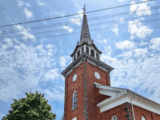
“Payroll is next week. We don’t have money to pay our staff,” said Moe Feakes, director of House of Hesed, a rambling two-storey red brick house on Edmonton Street currently home to nine people living with HIV.
You may unsubscribe from any of our newsletters at any time.
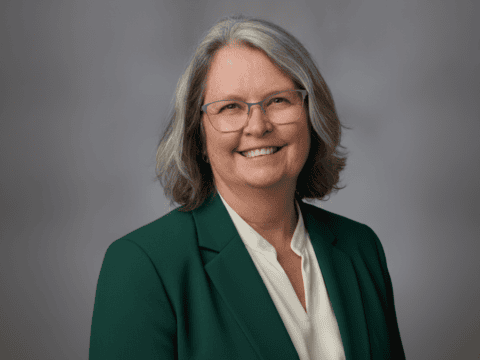
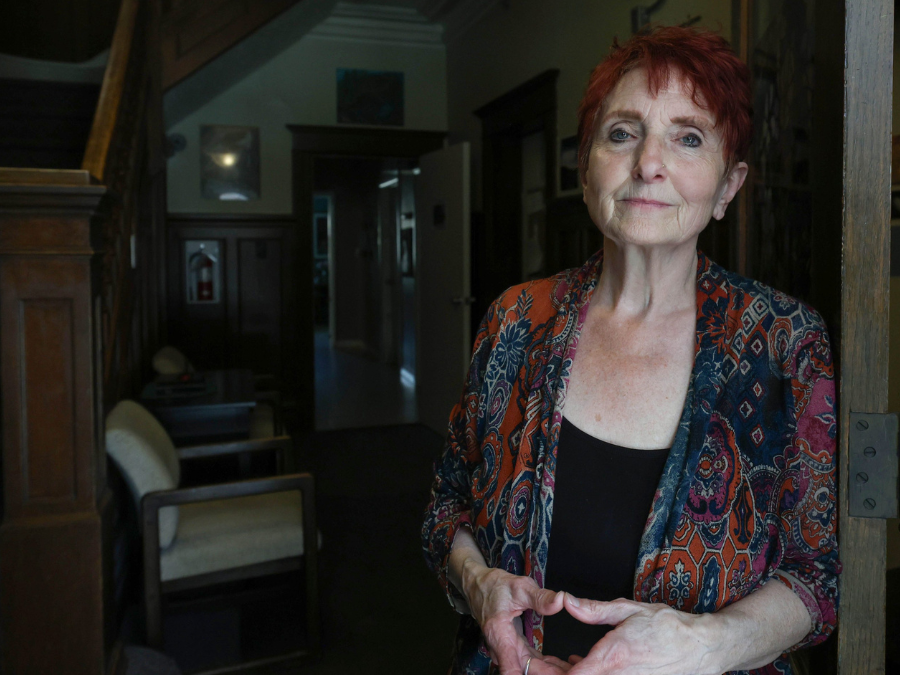
On a warm afternoon earlier this week, two residents were sitting on the front porch enjoying a smoke in the sunshine. But inside, in a hallway lined with inspirational Christian posters, Feakes, a wiry 69-year-old woman with a pixie cut dyed a fiery red, was pressing her palms into her cheeks, trying to keep from weeping.
Donations have dropped off and costs have spiked. House of Hesed operates on a monthly budget of about $25,000. Employment and Income Assistance provides $589 for each resident every month, the same amount provided to emergency and transitional shelters.
That adds up to less than $6,000. Everything else comes from private donors and seven churches that support the ministry.
Feakes wrote to the provincial government last year, pleading for more. She was told the amount is set by legislation and can’t be raised.
“I’m tapped. I don’t know what else to do. I don’t understand how anybody thinks that $589 is enough,” she said.
Feakes was in her mid-30s in 1992 when she held the hand of one of her best friends as he died of complications from AIDS. She then turned her grief into action. She began volunteering with an agency that paired volunteers and people living with HIV, helping them cook and taking them to medical appointments.
“I saw what deplorable conditions some people were living in,” she said. “Quite often they were all alone. The stigma was huge at the time. A lot of people were dying because they just lost hope.”
Some time later, Feakes, who is Christian, attended a social justice conference at a church. “I came home and I prayed for two days,” she said.
She said she felt God telling her to start a house for people living with HIV; she didn’t have any money, but she started telling friends about her vision.
Some Christians told her she was wasting her time, that AIDS was God’s punishment against LGBTTQ+ people. But Feakes didn’t believe that; she thought that Jesus himself would’ve hung out with people who had HIV.
Other Christians were sympathetic. David Ruis, then the pastor of the Winnipeg Centre Vineyard, supported her idea. Feakes met Christian philanthropists Herb and Erna Buller and told them what she was hoping to do.
“They said: ‘Let’s go buy a house,’” she said.
More on Broadview:
- Winnipeg exhibit helps tell story of Sikh immigrant who put life on line
- Broadview went searching through its past. The findings were uncomfortable.
- How restorative justice can heal communities
House of Hesed opened its doors on Langside Street in 1998. The house had seven bedrooms and was just down the street from Nine Circle Community Health Centre.
Hesed is a Hebrew word that describes the love of God, often translated with words like loyalty or merciful compassion. Feakes wanted the house to be a place of love and care.
Soon she was getting referrals from hospitals and social workers. She raised funds, worked at House of Hesed and continued to volunteer in the community while raising her young daughter.
At first, most of the staff were volunteers. “We didn’t have a hot clue what we were doing,” she said.
Many things have changed over the past 28 years, but not her unquenchable fire for justice and compassion. House of Hesed now has a staff of 10.
Residents have come and gone. Some of them, Feakes helped bury. There were people who got healthier and moved into independent housing, but others required more care than she and the staff could provide and had to go elsewhere.
One individual lived in the house for two decades before moving into long-term care last year.
Staff cook meals, help with medications and set up appointments with doctors, nurses, counsellors and mental-health professionals.
Antiretroviral drugs have made it possible for many people with HIV to live long and active lives. HIV isn’t the same public health crisis it was in the ’90s.
But in recent years, HIV rates in Canada have been rising sharply again, especially among heterosexual women and Indigenous people.
In 2025, Manitoba reported 328 new cases. (In 2019 that number was 90.) On May 7, the province declared a public health emergency. Chief provincial health officer Dr. Brent Roussin said the infection rates are being driven by injection drug use, homelessness, mental-health issues, unprotected sex and lack of access to medical care.
Before COVID, House of Hesed organized a series of dinner-theatre fundraisers every year. Tickets sold out quickly and a lot of money was collected. The pandemic put a stop to the events and Feakes hasn’t been able to revive them.
“How many churches are in this city?” she asked. “What if every church gave us $100?”
Her biggest fear is that her residents will end up on the street. Most of them need the kind of supports available at Hesed.
“Where would they go?” she asked.
George Koshurba has been living with HIV for 38 years. A year ago, he was living in a Manitoba Housing apartment but doing poorly. Koshurba is blind — fallout from a bad shingles infection — and he couldn’t read the letters the building manager pushed under his door. Once, he accidentally threw out his GST rebate cheque. Other residents bullied him. Then he found out he had leukemia.
“It was quite a shock for me to know that I’m dying,” he said. He found the support he needed when he moved into House of Hesed.
Koshurba describes himself as spiritual, but not religious. He said he doesn’t feel pressured to participate in prayer or Bible studies at House of Hesed, though there’s an open invitation.
“Religion isn’t slammed down your throat,” he said.
Koshurba calls House of Hesed his “five-star hotel.” He spoke to the Free Press from Riverview Health Centre, where he was staying because his condition had deteriorated and he needed regular blood transfusions. He is hoping he can go back to House of Hesed.
Feakes is also praying for Koshurba to get better. And if he does, she hopes there’s still a home waiting for his return.
***
Josiah Neufeld is a writer in Winnipeg and the author of The Temple at the End of the Universe.
This story was produced in conjunction with Broadview, as part of a joint Religion in the News partnership covering issues of faith in Manitoba and nationally.
Thanks for reading
Independent journalism rooted
in faith and justice is under threat
Broadview is the only media organization in Canada offering thoughtful, values-driven journalism from an inclusive, progressive Christian perspective. But our work depends on your support. If you value what you've just read, please act now.
A gift today helps keep this journalism alive tomorrow.
With gratitude,