
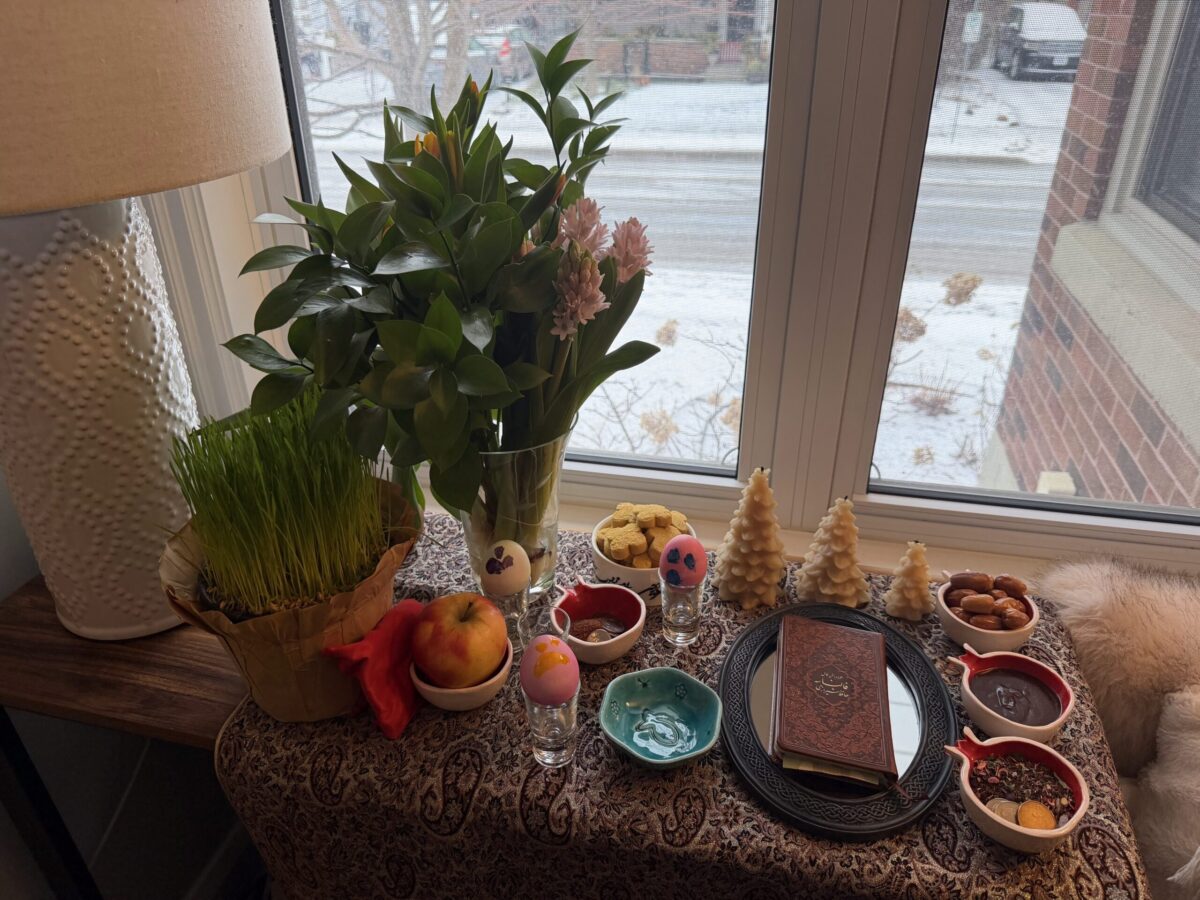
What does celebration look like in the middle of a war?
For many Iranians who marked Nowruz this year, celebration has meant holding onto tradition — gathering with family and setting the Haft-Seen table, a traditional display of symbolic items marking the new year — even as the United States and Israel carry out airstrikes and uncertainty deepens at home and across the diaspora.
You may unsubscribe from any of our newsletters at any time.
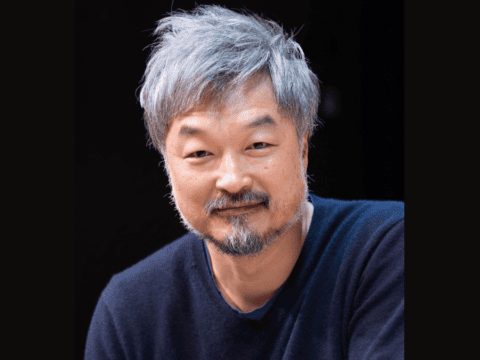
Broadview spoke with two Iranians separated by geography — Toronto-based visual artist and educator Amir Akbari and, in Iran, newspaper editor Barzin Jafartash.
After the attacks began, Jafartash says he left Tehran for his hometown in Mazandaran, a northern province along the Caspian Sea, at his family’s urging. Despite being able to hear the sound of fighter jets in the distance, he said spirits were high on March 20 as Nowruz celebrations in the region were “pretty much normal.”
“We bought flowers, nuts, cookies and sweets… we had family and friends over,” he said of the evening. He says he heard similar accounts from Tehran, where people still observed the holiday despite the ongoing bombardment. “The news I’m getting from friends and the videos, it seems that people are keeping their spirits, and Nowruz is still on.”
This year, Nowruz coincided with Eid al-Fitr, the Islamic holiday that marks the end of Ramadan, bringing together cultural and religious traditions. For Jafartash, the alignment is a “symbol for Iranians coming to terms with their nationalistic culture and religious culture.” He sees the tension between the two is beginning to ease.
“It’s going away because of the invasion of outsiders and the rally ‘round the flag effect,” he said, referring to a spike in support for a country’s government during times of crisis or war. Jafartash says that even among those who viewed foreign intervention positively, opinions are beginning to shift.
“That illusion is going away,” he says, pointing to incidents like the bombing of a school in Minab on Feb. 28 that killed nearly 200 schoolgirls.
While support for the Iranian government grows within the country, divisions among the Iranian diaspora have become more pronounced.
Akbari, who came to Canada at six as a refugee, says the war has challenged his own biases.“I feel like something actually shifted in me where I actually understood a little deeper what the struggle for sovereignty was,” he says.
At the same time, he understood his views would not be shared by everyone in his community. “I was worried there would be a divide. I felt like people were going to get sucked into this sort of lie that the biggest imperial force on the planet is going to come and liberate you.”
Differing views on the war have led to arguments within his family, he added, saying some families even hosted separate Nowruz celebrations to accommodate differing views on the war.
More on Broadview:
- How Quebec’s secularism law is forcing young women to rethink their futures
- United Church has ‘grave concerns’ about Iran’s airstrikes
- Broadview’s interns have Iranian roots – and strong opinions on the US-Israel attack
After the United States and Israel launched their first attacks on Iran in February, more than 40,000 Iranians marched in celebration in Richmond Hill, Ont. “Even within the diaspora, we gloss over some of those things and say: ‘It has to happen to take out the regime’.”
“But there are [international] laws, and you’re essentially saying it’s okay to break them if it’s in your favour. There are a lot of contradictions.”
Jafartash shares similar frustrations. He says that discussions about Iran, particularly in Western media and among diaspora communities, often overlooking the range of views held by people inside Iran. “There is diversity. There are some people who oppose the government… a small fraction of them welcome military intervention. I believe most are not supportive of the bombing.” He adds that those misconceptions are reinforced by media outside Iran.
Akbari agrees, saying some media coverage is disheartening. “It’s so heavily politicized that we can’t even speak the truth about what’s happening.”
Both say they hope Iran can maintain its sovereignty. “I can’t even begin to process or think of what’s in the future,” Akbari adds.
***
Paniz Vedavarz is a journalist in Toronto.
Thanks for reading
Independent journalism rooted
in faith and justice is under threat
Broadview is the only media organization in Canada offering thoughtful, values-driven journalism from an inclusive, progressive Christian perspective. But our work depends on your support. If you value what you've just read, please act now.
A gift today helps keep this journalism alive tomorrow.
With gratitude,






Are you really that naive to think that a newspaper reporter in any dictatorship would go on record with his name and criticize the regime? Really?! And where did you get the data that shows “growing support for the Iranian government within the country,”? From the same journalist or because the notoriously honest Iranian regime?!
This piece is not reporting this is spreading the regime’s propaganda. For the record: I am opposed to this war.