
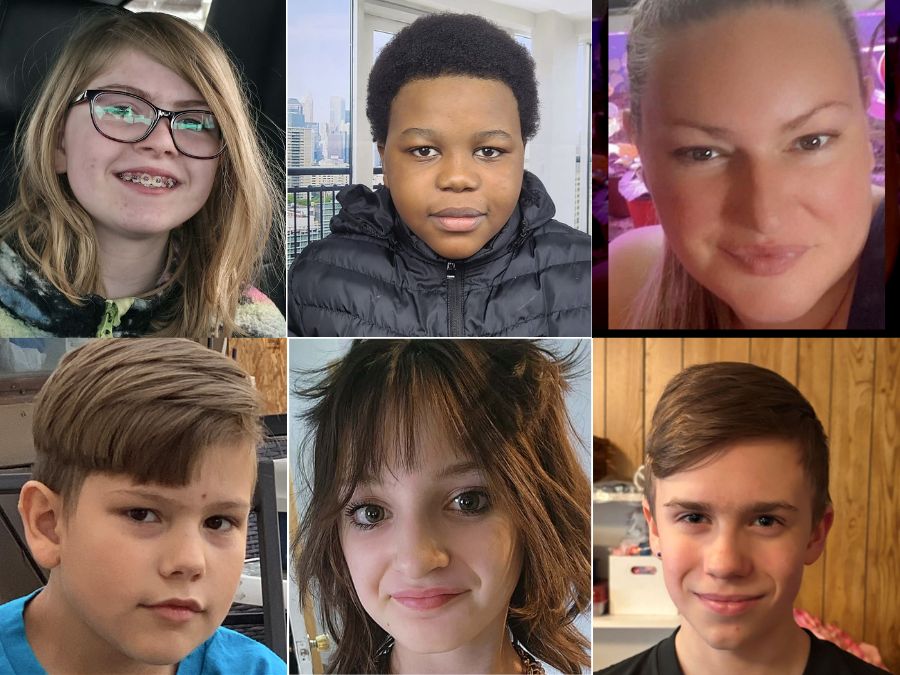
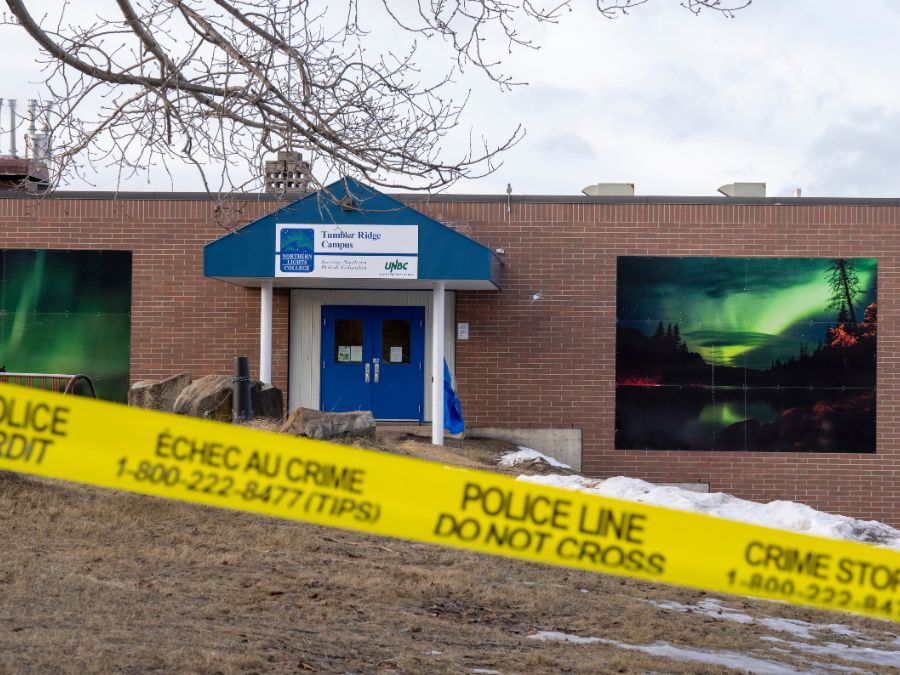
Tuesday, Feb. 10, 2026. Tumbler Ridge, B.C. A date and a place forever etched into the Canadian psyche. That afternoon, Jesse Van Rootselaar, age 18, shot and killed eight people, most of them children, and injured at least 25. She then took her own life with a self-inflicted gunshot wound.
These facts are disturbing, traumatic and frightening. Interpersonal mass violence roots itself in our consciousness, wrapping itself around us like a deep shadow that the light cannot penetrate. It grips our hearts and souls.
You may unsubscribe from any of our newsletters at any time.
The next evening, Wednesday, Parkdale United in Ottawa, where I serve as a minister, hosted a vigil on Zoom with support from nearby MacKay United’s music and meditation ministry. Several dozen households joined from across Turtle Island to be present and to hold space with one another. To listen, hear, ponder and pray.
One of the instrumental pieces that Parkdale’s worship arts director Keith Hartshorn-Walton shared was the spiritual “Were You There?” It took me back to every Good Friday service I’ve ever been part of. With tears in my eyes, like so many on the screen, the words that I remembered changed. They became, “Were you there, God, when shots rang out that day?” and “Were you there, Jesus, when bodies start to fall?” I don’t think I’ll ever experience that piece of music the same.
Events like Tumbler Ridge have ever-expanding ripples of impact. No one can predict the lasting trauma the town’s residents will endure. No one can predict what the future lives of survivors will be like. Without any doubt, the physical, mental and emotional consequences will be life altering.
As we paused Wednesday evening to name what we were experiencing, I was left with questions: “What is the church’s role?” “How does the church respond?” “What actions are we called to embody?”
I know that part of the answer is to do exactly what we did: gather people together. Name all our feelings, grounding them all in the Holy One. And yet, somehow, that didn’t and doesn’t feel like enough.
More on Broadview:
- Why a former evangelical author is challenging faith in firearms
- This Minneapolis church is providing frontline help amid ICE operations
- This United Church group fought 2SLGBTQ+ ordination in the 1980s
I’m a cisgender white male. I have a lot of privilege. I grew up in and have served in some small rural communities. I lived about 300 kilometres from Tumbler Ridge for nine years. I know the romantic stereotype of rural communities all too well — the homogeneous, loving groups of humans supporting one another. We don’t often talk about the challenges that a unified identity can create when you’re different. When you don’t think the same or hold the same fundamentalist religious views. When you dress, present, identify, love, talk and appear differently. Rural identity requires conformity. Full stop. You must conform or you don’t belong.
On social media, the focus on Van Rootselaar being transgender is a distraction of the highest order. Being trans doesn’t make you any more violent or prone to mass murder than anyone else. Nearly 90 percent of murders are committed by cisgender men. When a cis man murders someone, we don’t say “all men are murderers,” because we know that would be ridiculous.
Having elected officials, religious leaders and others imply any connection between violence and trans identity is vile. It is a kind of hatred that leads to 2SLGBTQ+ teenagers being one of the most marginalized groups in Canada right now. In case I’m not being clear, trans people are wonderfully and mysteriously made in the image of God. They are loved by God. As is. No preconditions. No reservations.
The more I pray about Tumbler Ridge, the more I’m convinced the key spiritual question facing us is: What kind of community do we believe Jesus is calling us to be?
The tension is lingering and deep. On the one hand, Jesse Van Rootselaar committed a heinous act. On the other hand, she is a person created in the image of God whom I am called to love as a disciple of Jesus. On the one hand, there is a community grieving beloved children and adults and preparing for funerals. On the other hand, there are hard conversations that need to be had about the kinds of communities we want to create. I know now isn’t the time for these discussions, and yet as a society, as a church, especially as disciples, we must have them.
My prayers have led me to a new conviction that what the church has to offer is the intentional creation of safer communities of belonging based on the radical love of God shown to us in Jesus. In many ways, I think this is the essence of the Gospel. Not “who is in” and “who is out,” or whether Genesis or Leviticus are meant to be taken literally. It is the creation of communities based on a love that knows no bounds. A community that can wrestle with the tensions between opposing extremes in a way that doesn’t insist on one or the other, but says, “Yes, this too can exist side by side.”
I don’t know if Jesse Van Rootselaar ever belonged to such a community. I don’t know if those who died or were injured or responded or are grieving or impacted ever belonged to or are now part of such a community. What I do know is that when disciples allow hate to fester unchecked, when disciples share the more comfortable conversation, when disciples embrace their own biases, then we’re misappropriating the Gospel and the world has enough of that already.
In the midst of our grief, our anger, our empathy and our love, it is time to be something different.
***
Rev. Bob Fillier is the coordinating minister at Parkdale United in Ottawa.
Thanks for reading
Independent journalism rooted
in faith and justice is under threat
Broadview is the only media organization in Canada offering thoughtful, values-driven journalism from an inclusive, progressive Christian perspective. But our work depends on your support. If you value what you've just read, please act now.
A gift today helps keep this journalism alive tomorrow.
With gratitude,








Thanks Bob Fillier!
Very well said and true.. Thanks
Thank you so much Dr. Rev. Bob for being able to express my own feelings which I was not able to gather into words. I realize that I have not really been breathing for a few days-and now, I will exhale and pray in thanks for your ability to express the truth. I miss you here in Prince George but knowing that you are as close as this message, brings me a sense of peace, in spite of the chaotic rhetoric I am viewing on social media, you are here and so is God. Thank you Jesus for loving us all.
Thank you, Bob, for the hopeful reminder to be a community where love has no bounds.