
After I turned 60 last October, I became consumed with thoughts of mortality. I worried that I was now on a fast track toward ill health, retirement blues and forgetful conversations filled with non-sequiturs. It’s not hard to see why. In 2023, the American Psychological Association wrote that “ageism is one of the last socially acceptable prejudices” in American culture. From shelves lined with anti-aging products, to punchlines about getting older to workplace bias, the message is clear: entering your senior years isn’t a positive thing.
But deep down, I knew that these ideas weren’t just wrong — they were harmful.
You may unsubscribe from any of our newsletters at any time.
According to research by Becca Levy, a professor of epidemiology in the Yale School of Public Health and a professor of psychology at Yale University, older people who have more positive beliefs about aging live as much as 7.5 years longer on average than older people with negative ones. Levy has also found that people in the former group are less likely to develop biomarkers of dementia.
For those like me who sometimes struggle to stay positive, Levy’s research should serve as motivation to do so. In North America, older people are too often diminished and dismissed, but in other countries, they are celebrated and revered. Take Japan, where elders are often featured as heroes in comic books or as heroines in love stories. They’re also active participants in society well beyond their retirement years. The result? Their life expectancy is among the highest in the world.
At Levy’s suggestion, I spent a week paying closer attention to how views on aging show up in my everyday life — in conversations, on the TV shows I watch and in how I think about myself. I quickly discovered that my greatest demons are the beliefs that I’ve internalized. I chastised myself for being bad at technology, for being constantly forgetful and for gaining weight in my 50s.
More on Broadview:
- Who should inherit my estate?
- Alex Neve on why Canada still falls short on human rights
- Ontario’s living wage just went up — here’s why that’s important
When I spoke with Chip Conley, founder of the Modern Elder Academy, which offers workshops on aging in Mexico’s Baja peninsula and in Santa Fe, N.M., he told me that “we ingest the societal bias against aging.” In other words, society’s criticism morphs into self-criticism.
Luckily, there are ways to challenge that. As Conley reminds me, many traits improve with age — particularly emotional intelligence, spiritual curiosity and our ability to value and invest in our relationships.
He adds that while our short term memory declines with age, “crystallized intelligence, which is our ability to think systemically and holistically and connect the dots,” actually improves into our 70s.
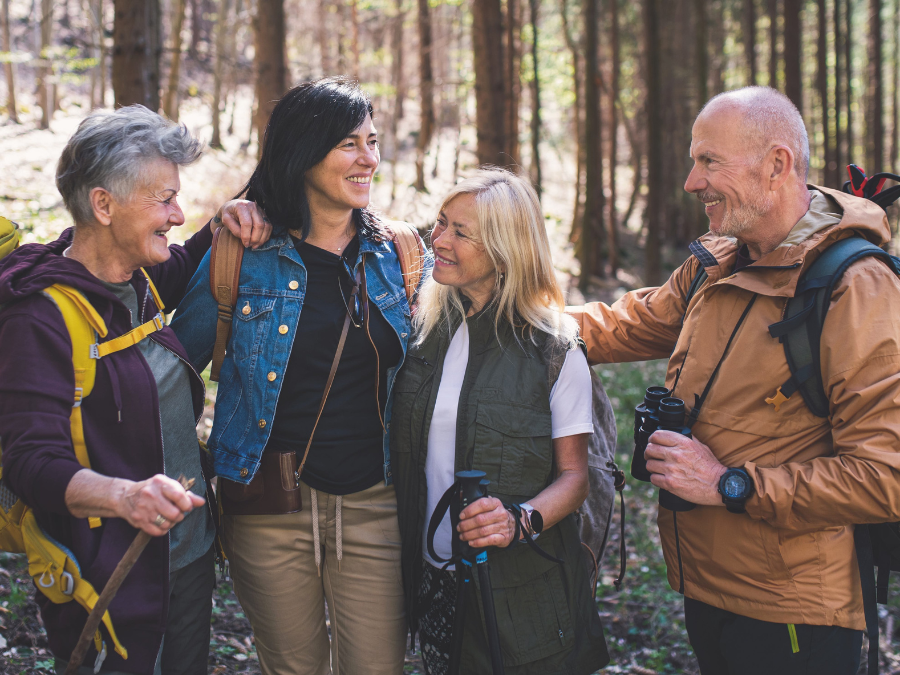
These days, I no longer dye my hair and am happy to tell anyone who asks how old I am. I also look for mentors who are older than me, rather than wasting time wishing I could be like people who are younger. On bike trips, I don’t feel defeated when women in their 70s barrel up a hill in front of me; I feel inspired. They know how to age well.
The third act now feels less like an ending and more like a new beginning, and I’m excited for what comes next.
***
Diana Ballon is a Toronto writer and editor who covers mental health, wellness and travel.
This article first appeared in Broadview’s January/February 2026 issue with the title “The Age-Old Fear of Getting Older.”
Thanks for reading
Independent journalism rooted
in faith and justice is under threat
Broadview is the only media organization in Canada offering thoughtful, values-driven journalism from an inclusive, progressive Christian perspective. But our work depends on your support. If you value what you've just read, please act now.
A gift today helps keep this journalism alive tomorrow.
With gratitude,







I always try to remind myself, “I’m one day closer to Heaven”. Ageism, in my opinion is the result of our culture not having a family nest. Parents do not need to live with their children, but they should be in contact from time to time.
The best way to “feel young again” is to be involved with youth. Ask your church to set you up for a night out with the youth, or find a way to mentor a small group of them. (ie Bible study, take them to a local food bank to help, just be around and ask them how school is doing (but be careful of becoming a busybody) Growing old can be despicable some times, we all go through it, and it’s a part of being human.
God grant me the senility
to forget the people I never liked anyway,
the good fortune to run into the ones I do,
and the eyesight to tell the difference. (Unknown)
Psalm 73:23-26; Job 12:12; 2 Corinthians 4:16
I expected to last till my 70s; but still found myself busy. I believed (and still do ) that if you don’t use it, you will lose it; so ekpt as active as possible. I am now 97. I see so many completely retire – and not live so much longer; so I am grateful that retirement for me was to slow down – but NOT quit! If your work is such that you cannot continue after “reirement”, there is lots of volunteer working begging for your time and energy. “IF YOU DON’T USE it (whatever that is :brain or brawn) YOU WILL LOSE IT!” DAVID
As someone turning eighty, when I hear a younger person say they are afraid of aging, I say, “Be afraid. Be very afraid.” Negative stereotypes, diminishing opportunities, deaths of friends, lack of social and economic support and deteriorating health are surely reasonable fears to have. It’s hard work to be taken seriously as a human being and to get the help one needs.