Canadian faith leaders and the country’s most prominent civil-liberties advocates are collectively rejecting the federal government’s most recent revamp of the country’s hate laws. Despite being told they’d be beneficiaries of increased protections, they argue that the measures would unduly reshape the policing of religious expression and peaceful protest.
Introduced earlier this year in response to rising hate-crime statistics, the Combating Hate Act — better known as Bill C-9 — aims to better protect communities from hate-motivated conduct and improve public safety, including for faith groups. The bill would criminalize intimidation or blocking access to schools, places of worship and other community spaces; ban the public display of certain hate and terrorism symbols; and streamline the process for laying hate-propaganda charges.
You may unsubscribe from any of our newsletters at any time.
Ottawa promoted the changes as a careful balance: preserving Charter freedoms while equipping police with clearer tools to confront hate.
But alarm bells rang earlier this month after the Bloc Québécois proposed an amendment to the bill that would remove the “good faith” religious exemption. The amendment, backed by Liberal MPs on the justice committee, would scrap a legal safeguard that allows someone charged with wilfully promoting hatred to say their words were sincere and drawn from religious teachings. Conservatives and some religious groups warned it could chill or even criminalize religious speech.
“This narrowly framed exemption has served for many years as an essential safeguard to ensure that Canadians are not criminally prosecuted for their sincere, truth-seeking expression of beliefs made without animus and grounded in long-standing religious traditions,” wrote Rev. Pierre Goudreault, president of the Canadian Conference of Catholic Bishops, in a public letter to Prime Minister Mark Carney. Justice Minister Sean Fraser insisted the change would not prevent clergy from reading sacred texts and noted that the exemption had never been used to acquit anyone.
Concerns about the broader legislation have popped up among other faith and civil-liberties groups. After reviewing the bill, a multifaith coalition led by the Canadian Muslim Public Affairs Council (CMPAC) and joined by Independent Jewish Voices, the Canadian Civil Liberties Association and the Canadian Council for Refugees, among others, called on the federal government to withdraw Bill C-9 entirely.
More on Broadview:
- Quebec’s struggling churches are finding new life as homeless shelters
- United Church leader who delivered landmark 1986 apology dies
- Alex Neve on why Canada still falls short on human rights
“Bill C-9 is not a hate-crime bill,” the coalition’s statement, which was published on Dec. 1, said. “It is Canada’s most significant attempt in a generation to restrict protest and silence dissent.”
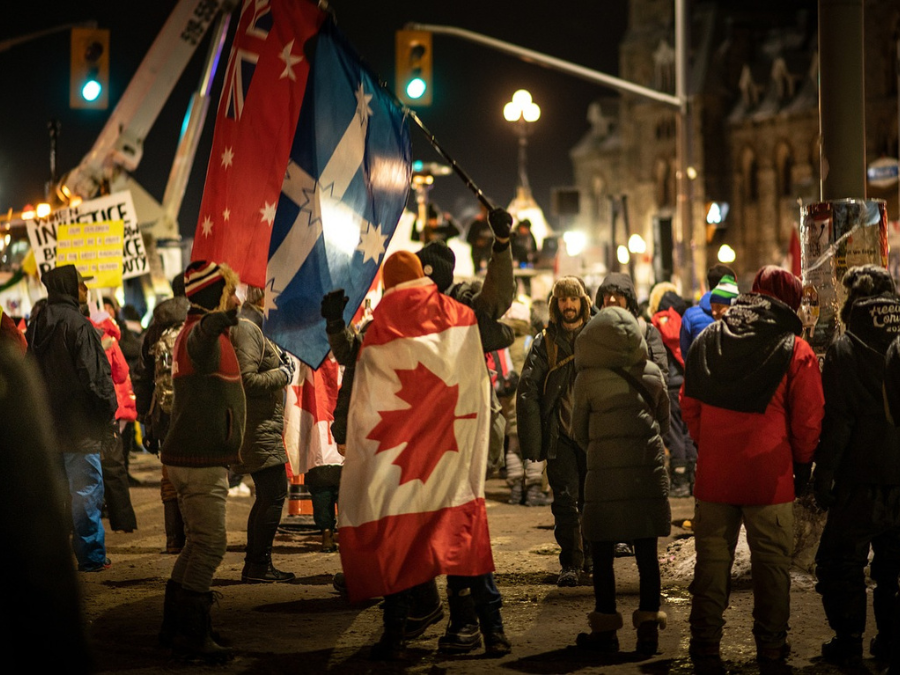
Amongst other things, coalition members criticized the bill’s protest-related provisions, which create new offences based on a person’s intent to “provoke a state of fear in another person.” Applied to peaceful demonstrations at schools, places of worship or community centres, such offences could carry criminal penalties of up to 10 years. The coalition argues that the bill’s language is inherently subjective and invites uneven enforcement.
“Research already shows that Black and racialized individuals are disproportionately perceived as threatening and are already subject to disproportionate surveillance, profiling and policing,” wrote the coalition. “Bill C-9 effectively codifies these racist perceptions into law.”
The statement, which was released before the news about the proposed removal of the religious exemption, does not comment on that amendment to the bill.
In October, the Muslim Association of Canada, one of the country’s largest faith‑based advocacy organizations, blasted Bill C‑9 as a misguided law that could turn heartfelt religious expression — and by extension pro‑Palestine protests — into a criminal act, chilling dissent rather than protecting Canadians.
The United Church of Canada (UCC) has joined CMPAC’s open letter, citing concerns about the amendment of the bill and its impact on faith‑based advocacy. However, Lori‑Ann Livingston, the church’s press and public-relations lead, said UCC is still reviewing the legislation as Parliament prepares to return at the end of January. She added that regional ministers have been hearing from clergy and congregants who are worried the bill could “stop them from preaching the gospel,” which led the church to clarify what the legislation actually does.
For civil-liberties groups, the stakes are clear. “We must all work together to combat hatred and build a more inclusive, equal society,” said Anaïs Bussières McNicoll, director of the Fundamental Freedoms program at the Canadian Civil Liberties Association, in a public statement.
“However, we must also remember that criminal law is not the solution to every social problem. As drafted, Bill C-9 risks criminalizing some forms of protected speech and peaceful protest – two cornerstones of a free and democratic society – around tens of thousands of community gathering spaces in Canada.”
***
Xavi Richer Vis is a Toronto-based writer and data journalist.
Thanks for reading
Independent journalism rooted
in faith and justice is under threat
Broadview is the only media organization in Canada offering thoughtful, values-driven journalism from an inclusive, progressive Christian perspective. But our work depends on your support. If you value what you've just read, please act now.
A gift today helps keep this journalism alive tomorrow.
With gratitude,