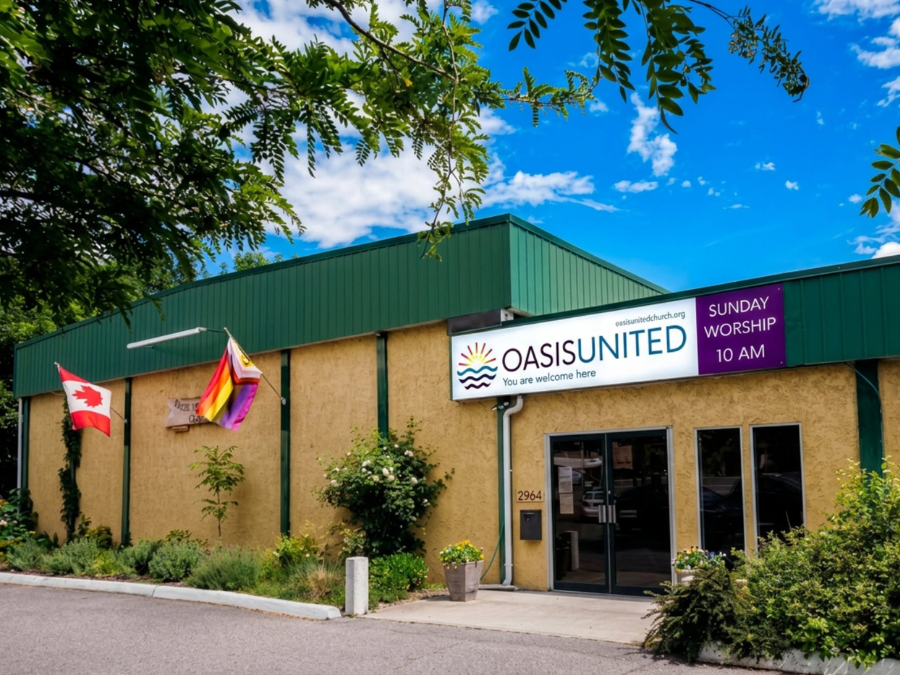
When the COVID-19 pandemic closed church doors across Canada, congregations were forced to ask themselves a serious question: how do you sustain a faith community when people can no longer gather in person? While many people saw digital outreach as a temporary fix, Oasis United in Penticton, B.C., made it a permanent part of its ministry.
It all began during lockdown when church leaders had to quickly figure out how to host online worship, while parishioners learned how to mute and unmute themselves on Zoom. Today, in addition to a hybrid Sunday service, which increased worshipper attendance by 43 percent, Oasis United now hosts multiple virtual and hybrid events each month.
You may unsubscribe from any of our newsletters at any time.
One of their most popular digital initiatives is its Thursday Zoom café, a weekly online social gathering from 10:30 to 11:30 a.m. that proved so meaningful to participants during the pandemic that the congregation still hosts it today. It “has become part of the heart of our community because people have gotten to know each other better,” says Rev. Keri Wehlander, minister of Oasis United.
That sentiment has influenced the church’s wider programming. Wehlander also hosts a weekly virtual Living Compassion meeting centred on developing compassion for oneself and others and an online monthly Communion and Contemplative Prayer meeting. On Christmas, New Year’s Eve, Valentine’s Day and St. Patrick’s Day, the church holds seasonal virtual events and parties. Wehlander says that all of these digital initiatives are meant to be accessible for congregants who may be sick, in hospice, live far away or simply want to stay home in their pajamas.
More on Broadview:
- Should kids under 16 be banned from social media and AI? We asked teens
- Mark Carney’s antisemitism announcement sparks mixed reactions from Jewish Canadians
- How Albertans of faith are countering separatist, anti-immigrant sentiment
“It’s not that we all knew how to do this, but we weren’t afraid of it,” says Wehlander.
Wehlander explained that while they were developing their digital programming, the church hired a tech person to help with Sunday service. Other members of the congregation made a real effort to improve their digital literacy so they can help out. “I have relied on the openness of the congregation to try these things, even if they’ve been hard,” she says.
A grant from the United Church of Canada Foundation also helped Oasis develop its online presence by starting a newsletter, an Instagram page and posting reels on Facebook. Since 2020, their Facebook views are up 176 percent and YouTube views have risen by 571 percent.
“There’s a constant desire to reach beyond the walls of the building and say, ‘How can we make sure that we’re not isolated from those around us? How can we be engaged and involved?’” says Wehlander. “I can’t imagine the life of our community without these online offerings … it has opened up so many possibilities.”
***
Charlotte MacDonald is Broadview’s summer intern.
Thanks for reading
Independent journalism rooted
in faith and justice is under threat
Broadview is the only media organization in Canada offering thoughtful, values-driven journalism from an inclusive, progressive Christian perspective. But our work depends on your support. If you value what you've just read, please act now.
A gift today helps keep this journalism alive tomorrow.
With gratitude,