
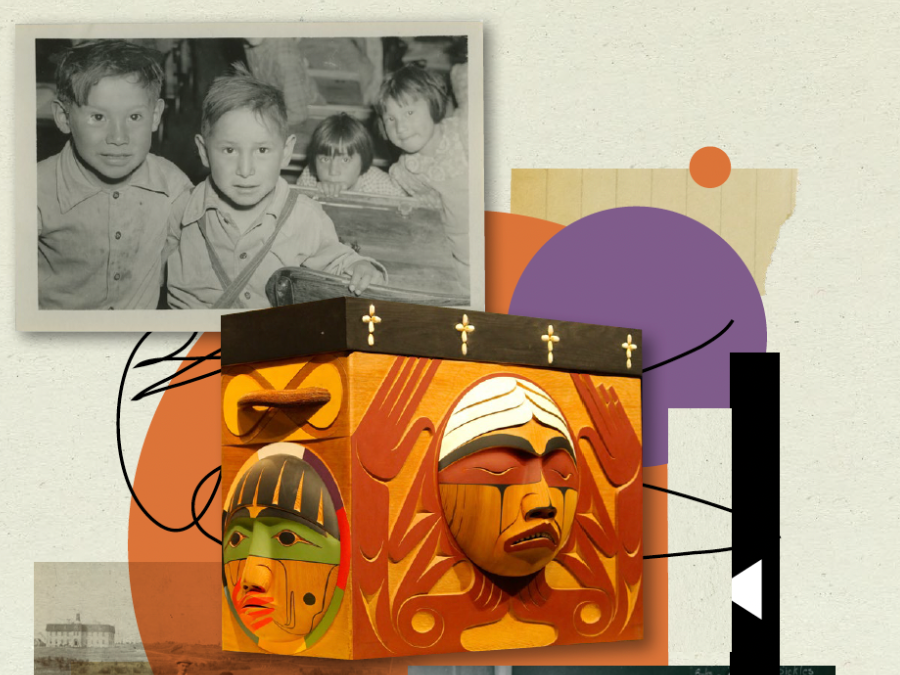
Back in 2018, a National Geographic headline caught my attention: “For decades, our coverage was racist. To rise above our past, we must acknowledge it.” The subhead explained that a historian had investigated their coverage of people of colour in the United States and abroad and now they were publishing the findings.
I read that headline in the same year I became editor and publisher of The United Church Observer, a publication with a history stretching back to 1829 and a Methodist paper called The Christian Guardian. The National Geographic piece made me wonder: if we dove into our own archive, would we also find racism?
You may unsubscribe from any of our newsletters at any time.
The question collected dust on a back shelf in my brain for a few years while I grew into my new job and rebranded our publication to Broadview.
But then, in 2021, Rev. David Kim-Cragg approached me with an idea. Kim-Cragg is a United Church minister, a doctor of history and a person deeply engaged in intercultural, antiracist and Indigenous reconciliation movements. He’s also a longtime family friend.
He told me the United Church of Canada Archives had recently digitized the complete Christian Guardian collection, creating an unprecedented opportunity to study how the newspaper presented Indigenous Peoples over time. My National Geographic moment had arrived.
Five years later, Kim-Cragg has published four longform features in Broadview about The Christian Guardian’s treatment of Indigenous Peoples, including, in this issue, “How Munificently Our Dominion Government Has Provided” (page 39). A fifth feature also explores the United Church’s early days of operating residential schools.
Kim-Cragg documents The Christian Guardian’s casual racism, white supremacy and colonial attitudes, while also uncovering powerful examples of Indigenous voices speaking truth, asserting their rights and demonstrating resilience. These stories aren’t just about the Guardian; they’re about the events and ideologies that shaped our nation.
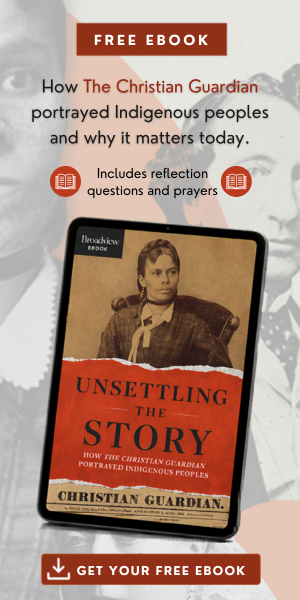
This spring, we have gathered the whole series into a free ebook called Unsettling the Story, which is available to download here. With each article, we’re adding thought-provoking questions and a prayer for personal reflection or group study. And to bring in more perspectives, we’re including writings from former United Church moderator Very Rev. Stan McKay of the Fisher River Cree Nation; Rev. Teresa Burnett-Cole, of Mohawk and European descent; sensitivity consultant Vanessa Kennedy, a member of Wasauksing First Nation; and Shenaz Kermalli, who teaches decolonizing journalism at the University of Toronto.
More on Broadview:
- How one Cree grandmother is reshaping the future of law in Canada
- My mom donated her body to science
- How restorative justice can heal communities
I won’t claim, as National Geographic did, that this series of articles allows us to “rise above” our past. In fact, what I like about these stories is quite the opposite: the opportunity to get grounded in our history, to sit quietly with its victims and its heroes and to let them speak to my heart. My hope, in compiling these stories for you, is that you will feel the same. The more we engage with our past, the better equipped we are to shape our present and future.
***
Jocelyn Bell is the editor and publisher of Broadview.
This story first appeared in Broadview’s May/June 2026 issue with the title “Book of Reckoning.”
Thanks for reading
Independent journalism rooted
in faith and justice is under threat
Broadview is the only media organization in Canada offering thoughtful, values-driven journalism from an inclusive, progressive Christian perspective. But our work depends on your support. If you value what you've just read, please act now.
A gift today helps keep this journalism alive tomorrow.
With gratitude,







This book is excellent. I just wished it had two more pieces: “How did the United Church get involved with Residential Schools” by Rev. Dr Kim-Cragg and a piece from 2015 “United Church Observer” by Larry Krotz “The Perils of too much certainty”. Both are excellent factually and ethically. Thank you for this book.
Tried using the link to download the ebook but it seems to have signed me up for your newsletter instead. Can this be fixed?
Hi Sara! Adding your email automatically puts you on our newsletter list, in addition to sending you the e-book. Can you confirm if you did receive the e-book in your inbox?
And if you’d like me to remove you from our newsletter list, I’m happy to do that.
Received the book and unsubscribed myself; thanks.