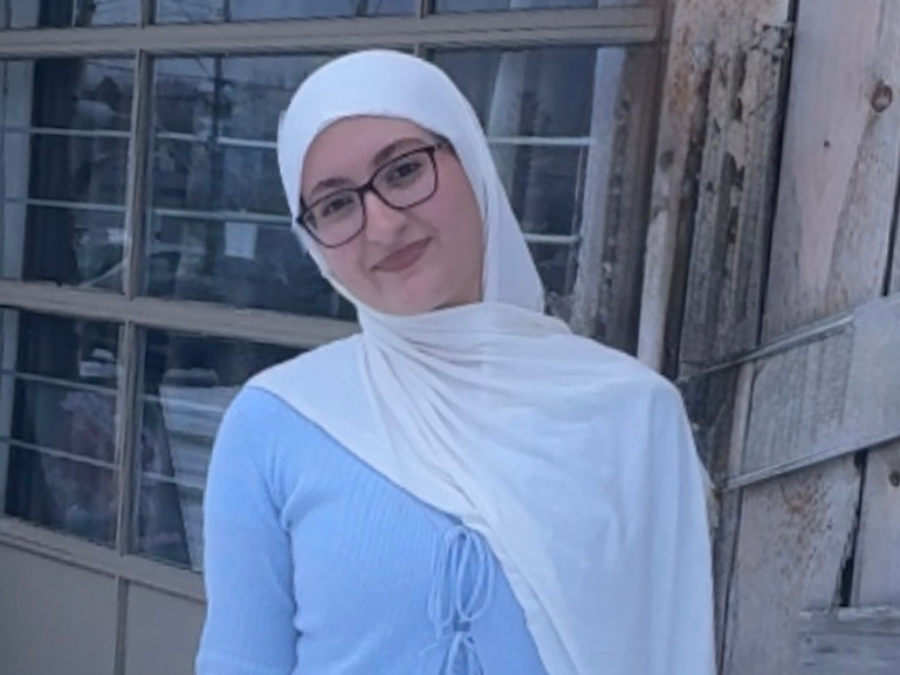
Zeinab Kabeel dreamed of becoming a prosecutor.
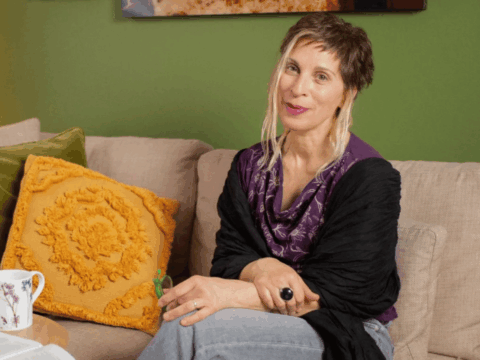
Nevien Waly aspired to become a teacher, after stepping away from a career in finance.
You may unsubscribe from any of our newsletters at any time.
Both their dreams are on hold as the Supreme Court of Canada debates the constitutionality of Bill 21, a Quebec law first passed in 2019 that restricts public sector workers “in positions of authority” – such as prosecutors, police officers and public school teachers – from wearing religious symbols such as the hijab, the kippa or the Sikh turban while performing their duties.
The Quebec government pre-emptively invoked the notwithstanding clause in a failed attempt to shield the bill from court challenges; the pre-emptive use of the clause is now itself being challenged in court.
The tension at the heart of Bill 21 is not confined to Quebec. Just hours before the Supreme Court of Canada heard arguments on the law, Prime Minister Mark Carney spoke at a national prayer breakfast, suggesting that religious values can and should shape how politicians act. The juxtaposition is striking: as Quebec defends a model of state neutrality that restricts visible expressions of faith, Canada’s political leadership continues to affirm a role for religion in public life.
While the case brought by the National Council of Canadian Muslims, the World Sikh Organization, the Canadian Civil Liberties Union, the English Montreal School Board and the Fédération autonome de l’enseignement teachers’ union has made its way through the courts, the Coalition Avenir Québec government has gone further. Bill 94 extends the restrictions to volunteers, school board members and support staff, while Bill 9 would add private school and daycare employees.
Waly, 44, and Kabeel, 18, both hijab-wearing Muslim women who have lived their entire lives on Montreal’s South Shore, say the law makes them feel they don’t belong in the only province they’ve ever called home.
Waly stepped away from a job in finance several years ago to raise a family and retrain as a teacher. She completed a certificate in special education and hoped to get a teaching certificate through a fast-track program created by the Quebec government to solve a drastic pandemic-era teacher shortage.
At the time, she was already a committed volunteer at her children’s school, where no one looked twice at a hijabi mom staffing the bake sale. Earlier this year, she got an email from the school. “They said, ‘We respect you, and we respect diversity, and we love your support … but there’s this law, and we have to respect the law,’” she recalls. Rattled and upset, she asked for clarification and was told she could no longer volunteer with students.
Waly began wearing the hijab in her 40s to feel more connected to her faith and more comfortable in her own skin. “It’s like a person who decides to get tattoos — because they feel good about it, because it’s part of their identity. This is how I feel comfortable. I don’t even consider it a religious sign.”
Waly says she believes in freedom of expression and has no intention of removing her hijab. “Even if you were to take this off, what’s next? Am I going to sit at the back of the bus? Are you going to tell me I’m not allowed to speak a different language in the street anymore? We’re losing our freedoms as a society, and as women, we are losing our rights as human beings and being treated as second-class citizens.”
More on Broadview:
- Manitoba program helps incarcerated parents read to their kids
- How Albertans of faith are countering separatist, anti-immigrant sentiment
- Canadian churches have unfinished business with Indian day schools
She says she finds the law divisive and discriminatory, and a distraction from other problems affecting the province, such as homelessness and the fraying health-care system. “We have a lot of issues to concentrate on instead of ‘What are you wearing?’”
Kabeel, the 18-year-old, started wearing the hijab at 13 to feel more connected to her faith and community. She once planned to become a police officer but the lack of women role models in law enforcement discouraged her. “And then this law appeared, and I thought, Okay, if I were to study to be a police officer, nothing would come of it. So I gave up on that.”
She then considered law school, only to realize that Bill 21 also affected prosecutors. She’s now considering psychology or international development instead.
“My goal has always been to go to McGill University law school, but now I know that even if I were to get a law degree, I would either have to leave Quebec or do something else completely,” she says. “If I leave Quebec for university, there’s no point in coming back because if Bill 21 [stays in force], I won’t be able to do anything here.” She says she and several of her Muslim classmates — even those not directly affected — are considering leaving the province. “Once the law is in place, it’s easier to expand it, so I think it’s going to impact other careers.”
Giving up her hijab, she says, would be like turning her back on her faith and her identity. “It’s not just a piece of cloth like people say it is; you can’t just take it off. When you’re walking down the street and you see another hijabi, you immediately make a connection. It’s like a big community that I’m not ready to let go of, and I don’t think I ever will be.”
***
Ruby Pratka is a freelance journalist and editor in Montreal.
Thanks for reading
Independent journalism rooted
in faith and justice is under threat
Broadview is the only media organization in Canada offering thoughtful, values-driven journalism from an inclusive, progressive Christian perspective. But our work depends on your support. If you value what you've just read, please act now.
A gift today helps keep this journalism alive tomorrow.
With gratitude,