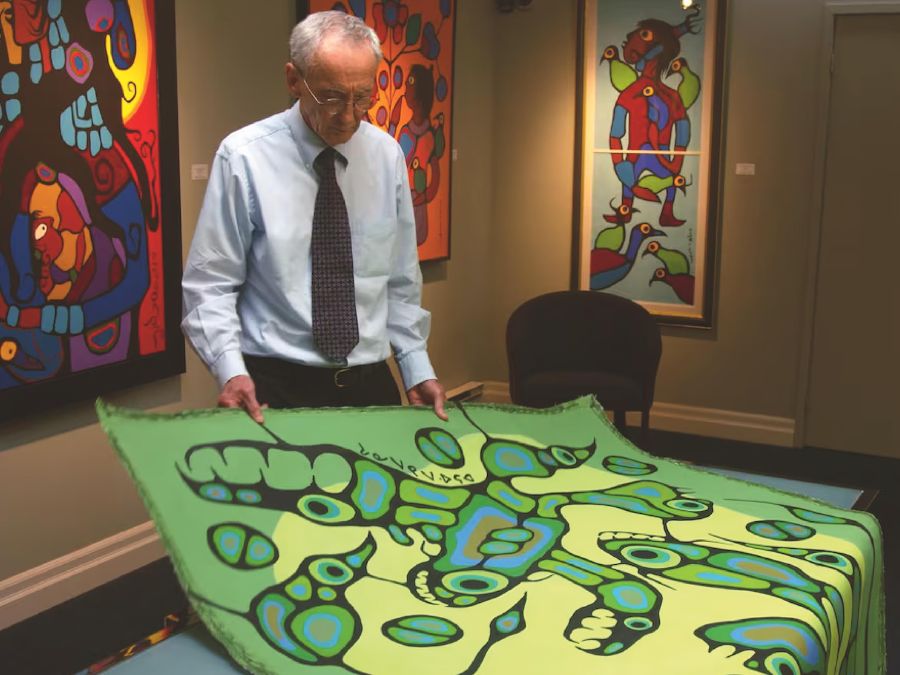
Growing up Anishinaabe in Winnipeg, I was surrounded by art. From a young age, I marvelled at vibrant X-ray-like images of the natural world — two-dimensional compositions featuring charismatic animals and important figures framed by trees, water and earth. This style, known as the Woodland School, had a profound effect on me, shaping my eventual career as a visual artist working in the style of four generations of artists who came before me.
The most well-known of those artists is the late Norval Morrisseau, founder of the Woodland School of Art and the first Anishinaabe artist to achieve international fame for his work. Often called the “Picasso of the North,” Morrisseau shared vibrant visions of a spirit world through the lens of a shaman. His art now hangs in major galleries around the world.
You may unsubscribe from any of our newsletters at any time.
Morrisseau, who died in 2007 at age 75, is our cultural grandfather; his work is our birthright. I have been practising in this style since 2017 and consider my art a form of healing medicine — an uplifting offering to those who encounter it. But in recent years, an alarming rise in forged Morrisseau paintings has harmed not only his legacy, but also the livelihoods and credibility of working Indigenous artists today.
More on Broadview:
- Wab Kinew is just getting started
- Colour the Trails helps racialized Canadians enjoy the outdoors
- Ontario church hit with nasty comments over ICE resistance singing event
In 2019, the Thunder Bay, Ont., police service launched an investigation into a major fraud ring in and around Thunder Bay after forged Morrisseaus started surfacing across the country. They later discovered that for decades, three distinct but intertwined groups in Ontario had pumped thousands of fake paintings into the art market. Some of these works were certified by appraisers and displayed at Rideau Hall in Ottawa and the Winnipeg Art Gallery. Eight people were ultimately convicted of fraud-related crimes, with two receiving prison sentences.
The most obvious victims include the Morrisseau estate — estimated to have lost $100 million — along with his family, the galleries that bought and sold these works and buyers who spent thousands on pieces with no real value. But its impact extends further, harming current living Woodland artists, too.
With thousands of fakes still out there, appetite for Woodlandstyle art seems to have disappeared just as many of us, myself included, were trying to make our marks as practising artists.
For those of us who follow in Morrisseau’s footsteps, our work is inherently spiritual. It is an inventory of everything we have held close in order to survive as descendants of our parents and grandparents who attended residential schools and never came home whole, if at all.
I understand why galleries and buyers alike view the Woodland School with suspicion. The risk of buying a fake is real. But over time, I hope that will change.
Woodland art offers a vibrant way through the darkness. Stories are still waiting to be told — ones that deserve to become part of the artistic fabric of this country.
***
Mike Alexander is originally from Swan Lake First Nation, Man., and currently lives in Vancouver, where he’s a full-time visual artist. His work has appeared in galleries across British Columbia.
This article first appeared in Broadview’s March/April 2026 issue with the title ‘Guardians of the Woodlands.’
Thanks for reading
Independent journalism rooted
in faith and justice is under threat
Broadview is the only media organization in Canada offering thoughtful, values-driven journalism from an inclusive, progressive Christian perspective. But our work depends on your support. If you value what you've just read, please act now.
A gift today helps keep this journalism alive tomorrow.
With gratitude,