
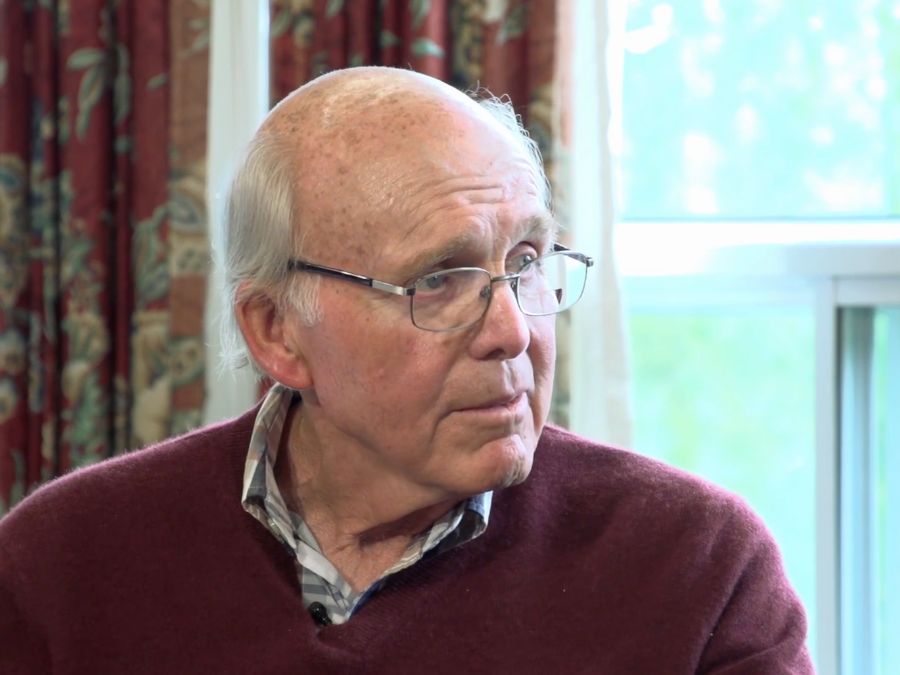
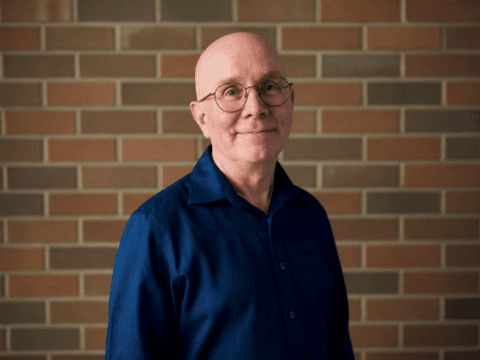
Very Rev. Robert F. Smith, a former United Church of Canada moderator, died Dec. 8 in Sechelt, B.C. He was 91.
Smith served as moderator from 1984 to 1986, and is best known for his apology to Indigenous peoples for the United Church’s role in colonization.
You may unsubscribe from any of our newsletters at any time.
“We did not hear you when you shared your vision. In our zeal to tell you of the good news of Jesus Christ we were closed to the value of your spirituality,” he said in 1986 at the 31st General Council in Sudbury, Ont.
“We confused Western ways and culture with the depth and breadth and length and height of the gospel of Christ.”
Smith’s daughter, Marnie, said that as an Indigenous person whom Smith and his wife, Ellen, adopted during the Sixties Scoop, she had “watched his career around his working with Indigenous people with a lot of pride.”
She said that he overcame many challenges in his career, not the least of which were negative reactions in the church to the idea of offering an apology.
“How do you bring that to light in a compassionate way that is going to be received in God’s grace? And to be perfectly honest, that’s when I really doubted the church. The reaction was very difficult for me,” she said. “Not for my dad, because he understood that [the church was] rewriting history in a way and that is extremely difficult and has to be done with patience and grace.”
Former United Church moderator Mardi Tindal, who served in the role from 2009 to 2012, told Broadview that the words of the apology — the first made by any Canadian church — were Smith’s own.
“Those were Bob’s wise and heartfelt and to-the-core-of-it words,” she said. “‘We didn’t listen.’ And he spoke for the church in a way that we could all kind of fall into those words with gratitude that he was the one who spoke for us in that moment with such humility and love. And from that point on, he dedicated himself to living up to those words of apology, because, as you know, they were received and not fully accepted.”
Very Rev. Stan McKay, the first Indigenous moderator of the United Church, says that he remembers Smith walking down a hill at Laurentian University in Sudbury, Ont., where the 31st General Council was held, to first deliver the apology to about 12 to 15 elders in a teepee and then to a group of 300 to 400 people gathered around a sacred fire in a parking lot. He remembers Smith’s patience, humility and clarity in the message he brought to the elders.
“It still rings in my ears,” he said of the apology. “…The central phrase that came out for me in that statement is that ‘we tried to make you like we were. We tried to make you in our image.’ So the cultural genocide was central to the apology,” he said.
In 1988, the Indigenous church acknowledged the apology but stopped short of accepting it.
“The Native People of The All Native Circle Conference hope and pray that the Apology is not symbolic but that these are the words of action and sincerity,” said representative Edith Memnook.
McKay said that when he visited Smith three years ago at his home, Smith “expressed to me some disappointment [about] there not being more done with the intent of the apology.”
More on Broadview:
- Presbyterians reassess office-share deal after Anglican exit shakes ecumenical plan
- Interned for being Japanese, my family found hope thanks to one minister
- United Church moderators reflect on the past, present and future
Robert Frederick Smith was born in Montreal in 1934, the son of a United Church minister. He told Ken Wotherspoon in a 1984 interview on the Interchurch Television program Pressure Point that he had never known anything but the United Church.
“It’s been a place where I’ve been able to exercise my gifts,” he said. “It’s been a place where I’ve received a lot of ego massage, let’s say, and therefore it feels like a very pleasant and normal place for me to be.”
Smith was ordained in 1958 and worked in congregational ministry in British Columbia, Alberta and Ontario as well as in Quincy, Mass., at Memorial Congregational Church of Atlantic. He also served on several national church committees and in positions at the local and Conference level.
When he was elected moderator in 1984, the United Church was mired in debate over the ordination and commissioning of gay and lesbian ministers and wouldn’t vote in favour of it until 1988. In the same Pressure Point interview, Smith would not say whether he supported gay ordination, but Marnie says her father advocated for 2SLGBTQ+ acceptance: “He felt that we had to accept people for who they are, as created out of God’s image.”
Smith was also clear that the church’s approach to Scripture should evolve with the times, and that for many conservative members, it had not. “It’s not possible to hold the view of women, for instance, that the New Testament does, and call that Christian,” he told Wotherspoon in the 1984 interview.
In an emailed statement, current moderator Rt. Rev. Kimberly Heath said that the United Church is grateful for Smith’s life, “for his many years of service in congregations and his leadership at every level of the church, including as the 30th Moderator of the United Church.”
“His apology on behalf of the church to Indigenous peoples and his opening up of the scriptures for fresh interpretation are among the legacies that we will remember him for,” she wrote.
Smith lived in Sechelt, B.C., with his wife, Ellen, where he was a longtime member of St. John’s United. Marnie said that in the last few years, her father developed a degenerative disease called amyloidosis and died “very peacefully.”
She said Smith helped his five children see that the world was full of complexity. He served as an emotional, moral and spiritual support for others during challenging times.
“He felt that that was his role, to move and change in the world with compassion,” she said, and he wanted to help people reflect on challenges and to ask themselves, “Are we truly enacting God’s message when we make these choices?”’
EDITOR’S NOTE: This story has been updated on Dec. 11 to better reflect Marnie Smith’s thoughts, and Dec. 12 to include some quotes from Very Rev. Stan McKay.
***
Emma Prestwich is the digital and United Church in Focus editor at Broadview.
Thanks for reading
Will you help support United Church reporting?
Broadview is the only media organization dedicated to telling the stories of The United Church of Canada — its big decisions, perspectives and the faithful people and communities at its core. But this essential work depends on you.Make a tax-deductible gift today — 100% of your donation goes directly to supporting United Church coverage.

With gratitude,


What a beautiful man and clearly Christian witness – from the heart and not using these so-called ‘inclusive’ euphemisms. It would be interesting if Broadview showed us what were the reactions to the apology in the “Observer” back then…
Rev. Bob was my minister at Richmond Hill United Church. Our CGIT group really loved him. Great memories of his sermons.